2026.08.22
Types of Kanzashi: Tama, Hana, Tsumami, Bira-Bira & How to Choose
kimono rental
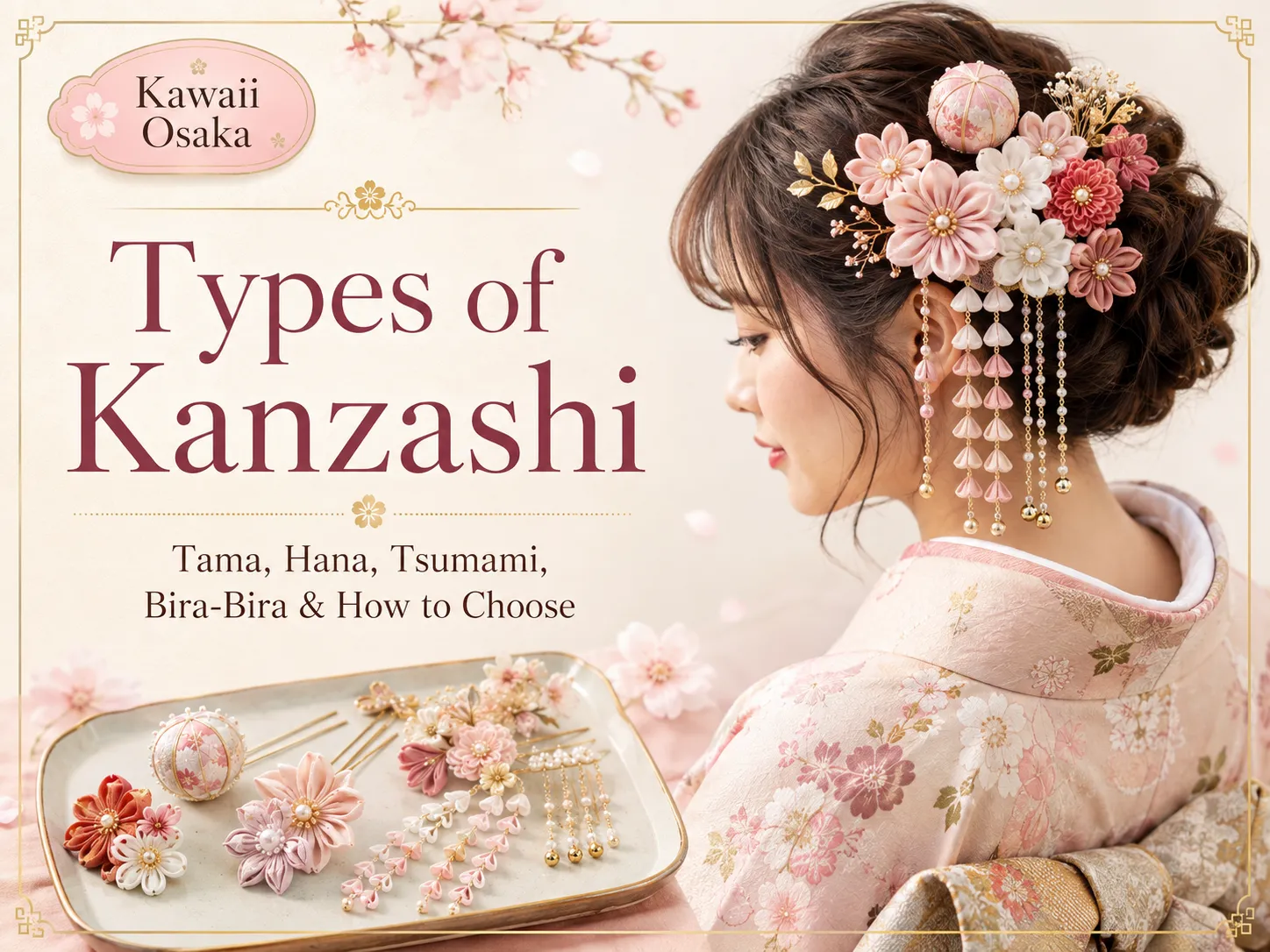
Kanzashi are Japanese hair ornaments worn with kimono, yukata and other traditional outfits. They range from a single ball on a slim pin to silk flowers, decorative combs and ornaments that move as you walk.
If you are choosing one for the first time, the names can be confusing. Tama, hana, tsumami and bira-bira describe different shapes, techniques and styles, and some terms overlap rather than fitting into one simple classification.
You also do not need a traditional Japanese hairstyle to enjoy kanzashi today. A modern updo, half-up style or even short hair can work, depending on the type of ornament and how securely it can be attached.
Seasonal flowers and traditional rules are part of kanzashi culture, but travelers wearing kimono or yukata for sightseeing do not need to copy the formal customs of maiko or ceremonial dress exactly. The more useful question is which ornament works with your outfit, hairstyle and plans for the day.
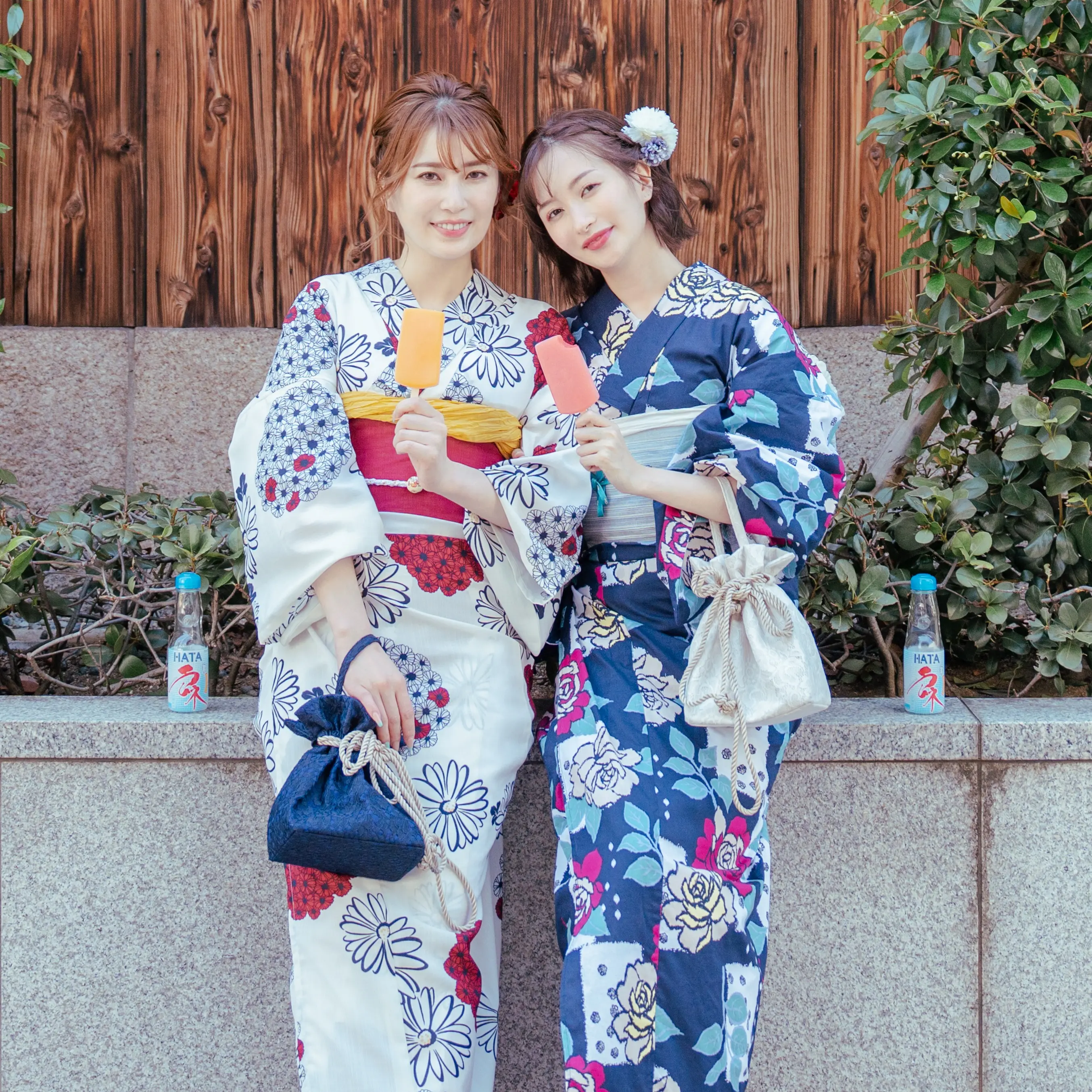
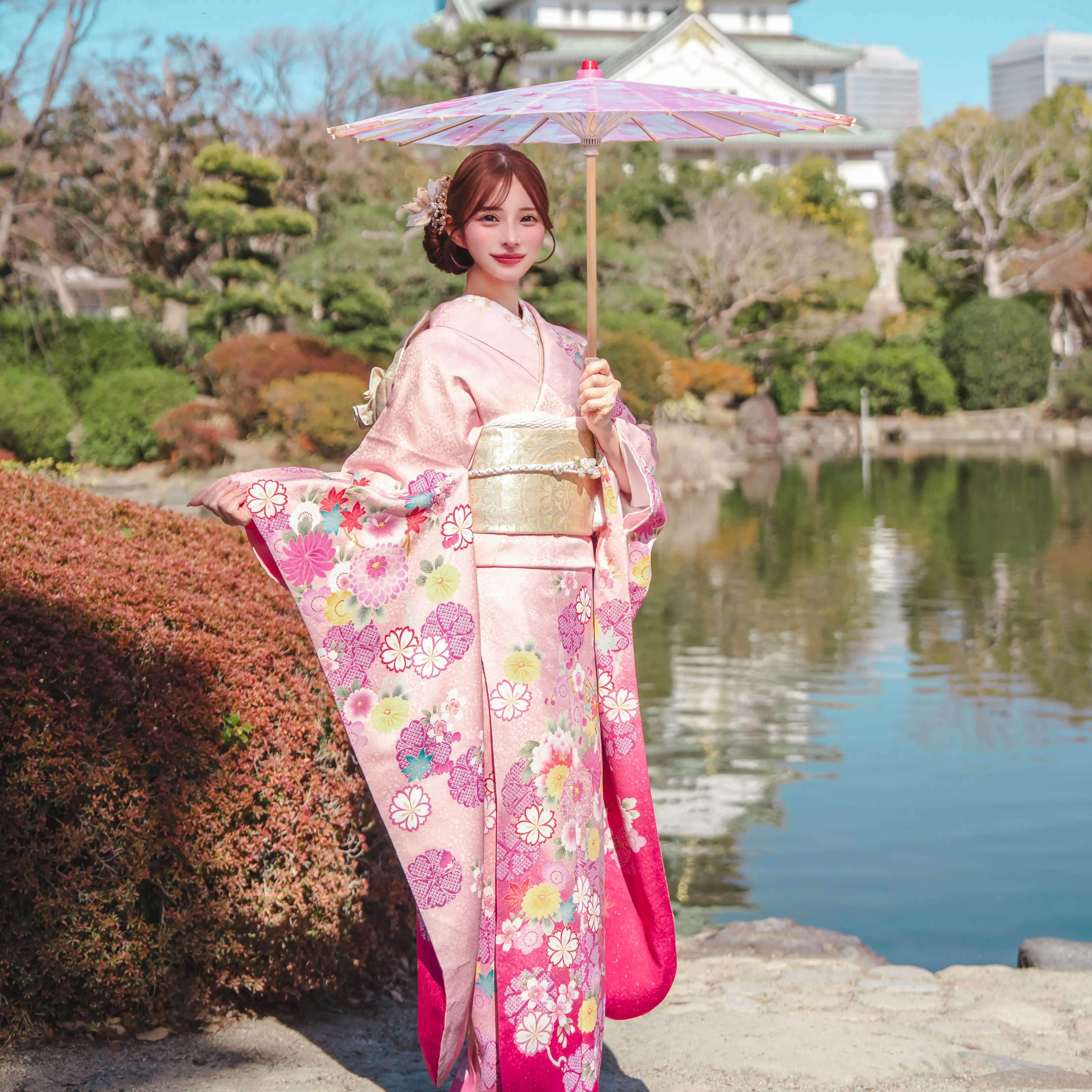
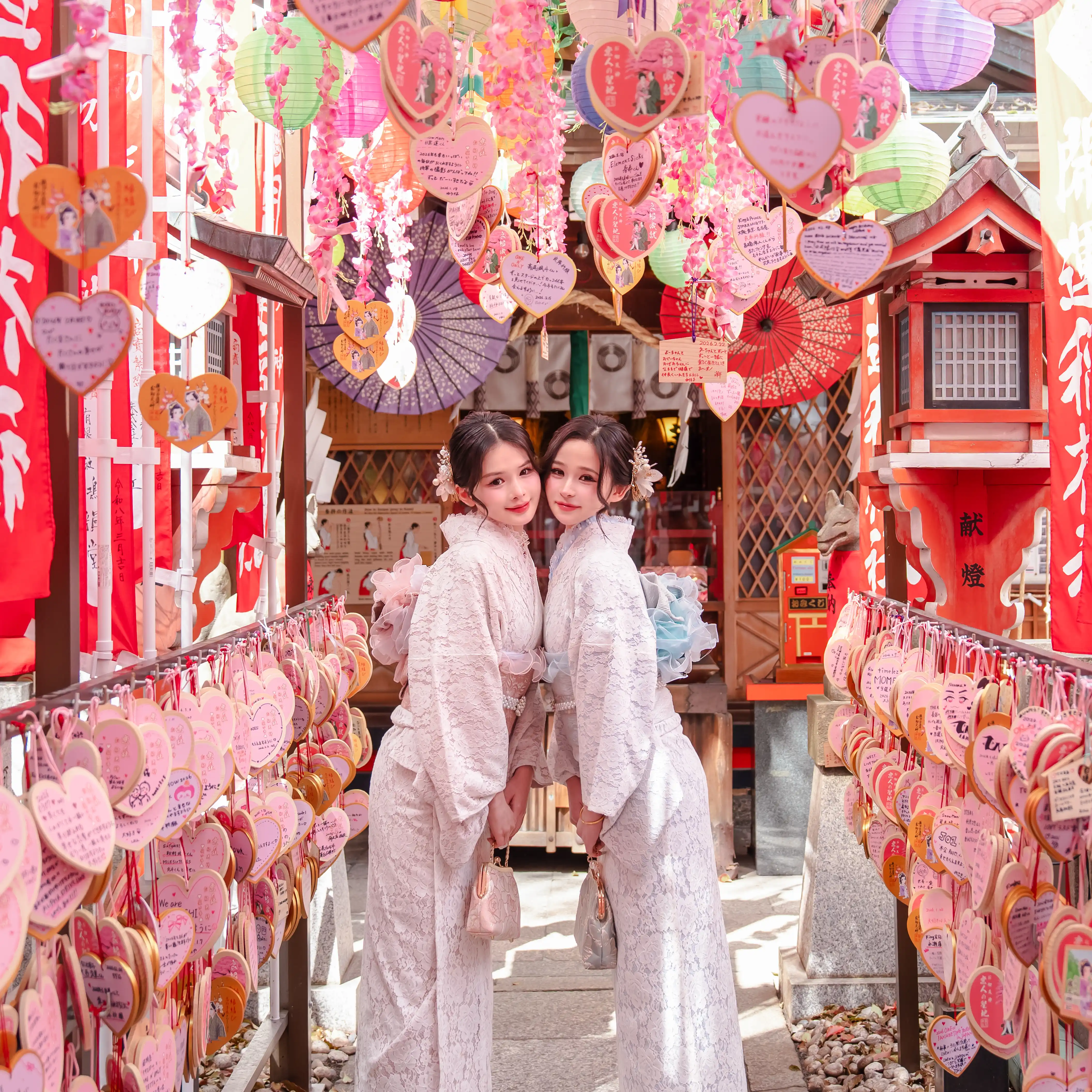
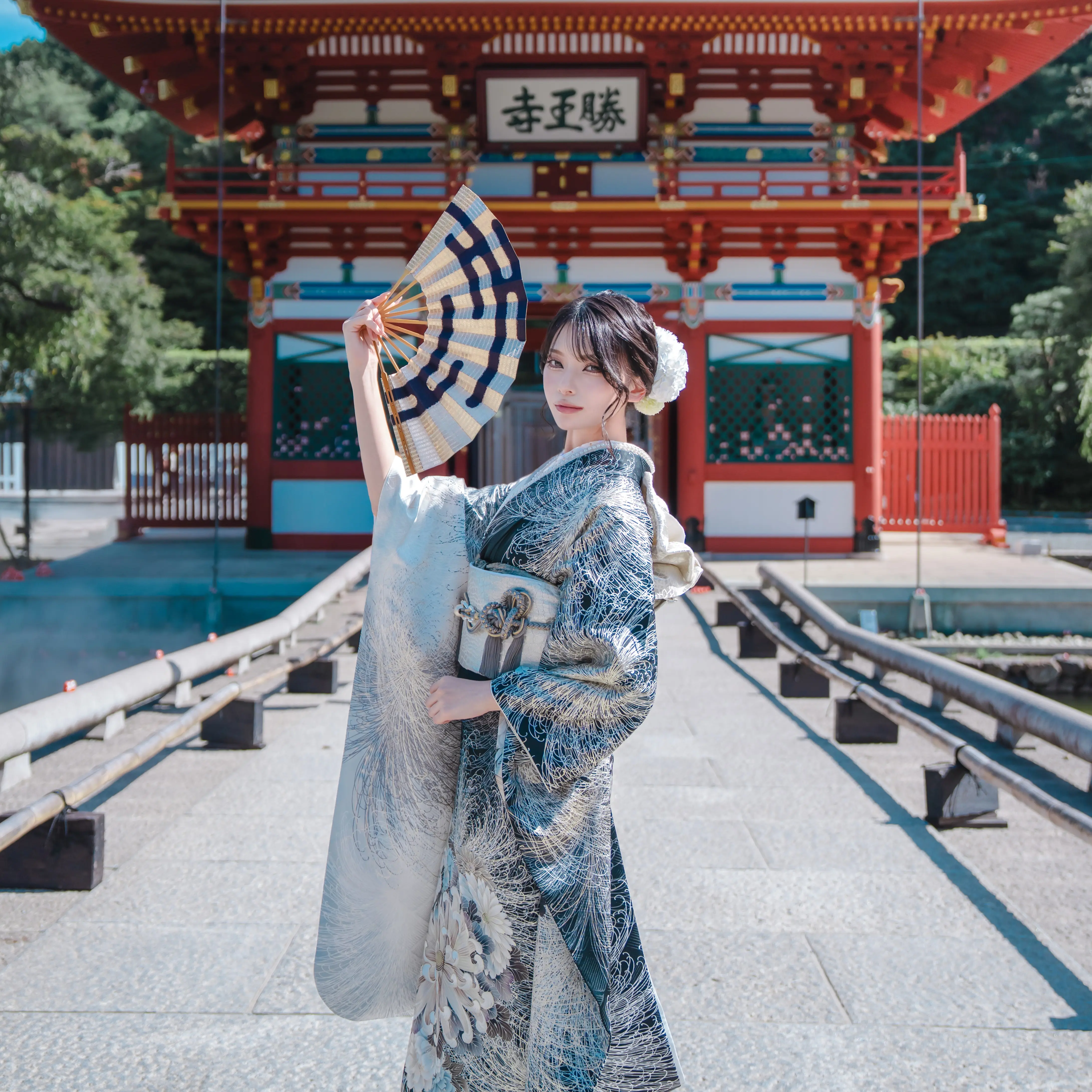
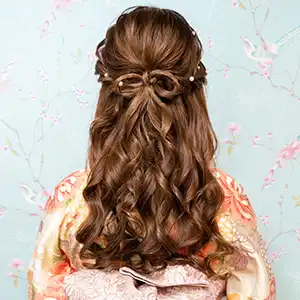
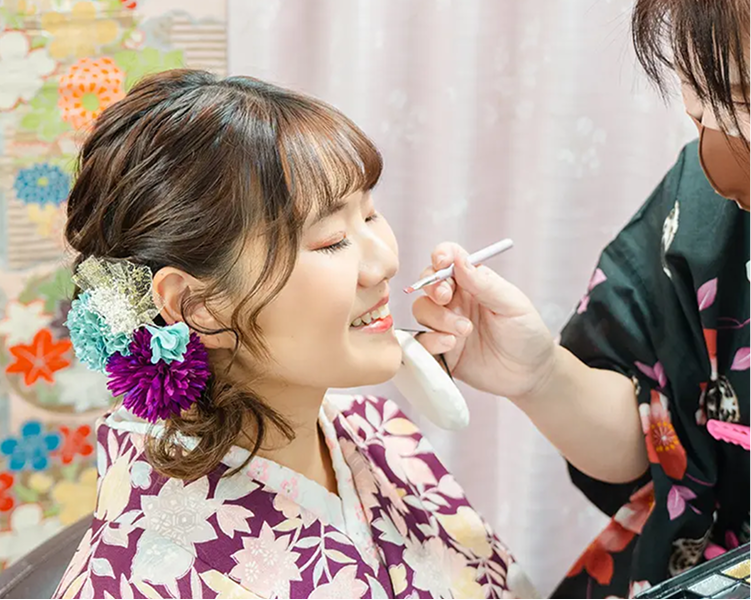
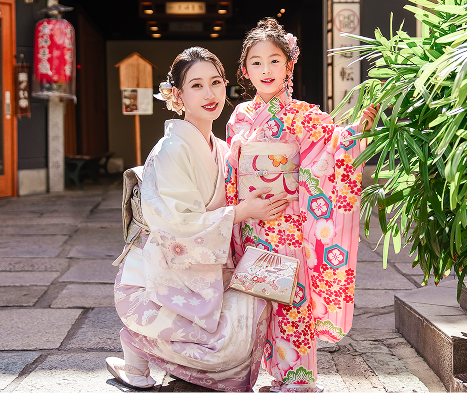
At Kawaii Osaka, hair accessories and professional hair styling can be added to a kimono or yukata experience, so you can choose the finished look after seeing the outfit you will actually wear.
See Kanzashi and Hair Accessories at Kawaii Osaka
What Are the Main Types of Kanzashi?
Kanzashi is not the name of one specific hairpin design. It covers several forms of traditional Japanese hair ornaments, including pins, combs, flowers and moving decorations.
For first-time visitors, the most useful types to recognize are tama kanzashi, hana kanzashi, tsumami kanzashi, bira-bira kanzashi, kushi, kogai and hirauchi.
Tama Kanzashi
Tama means “ball” in Japanese.
A tama kanzashi has a round ornament at the end of a relatively simple hairpin. Traditional examples have used materials such as coral, jade or glass, while modern versions come in a much wider range of colors and materials.
The simple shape makes tama kanzashi easy to coordinate without making the hairstyle feel too elaborate.
Hana Kanzashi
Hana means “flower.”
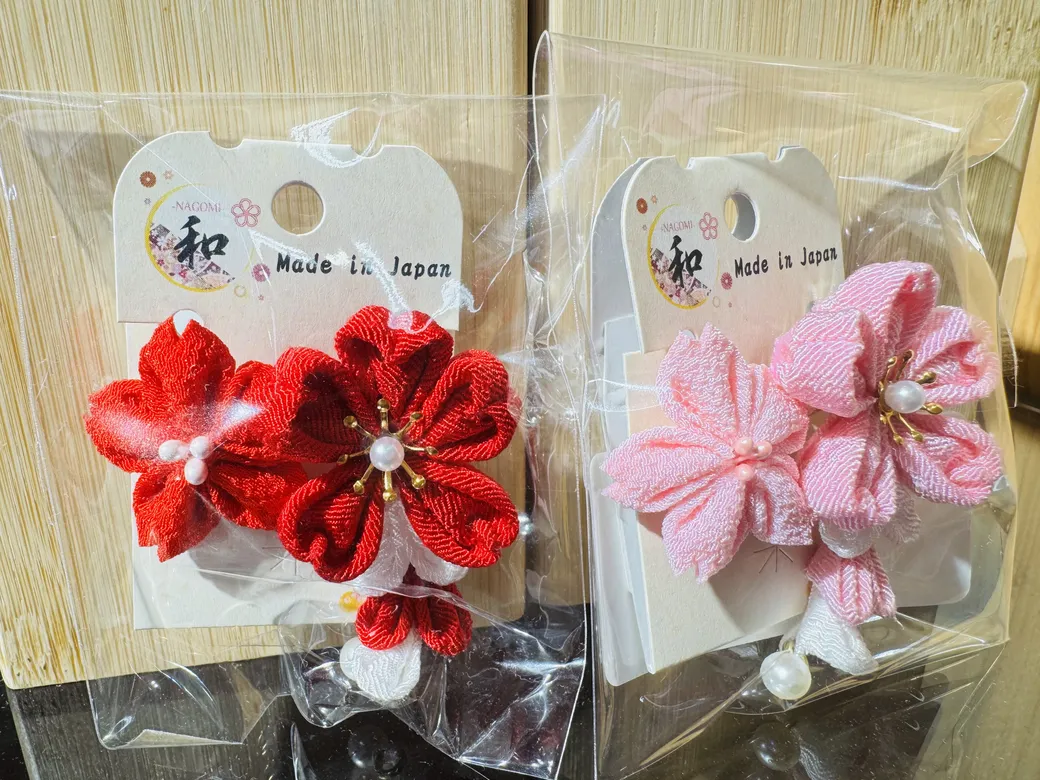
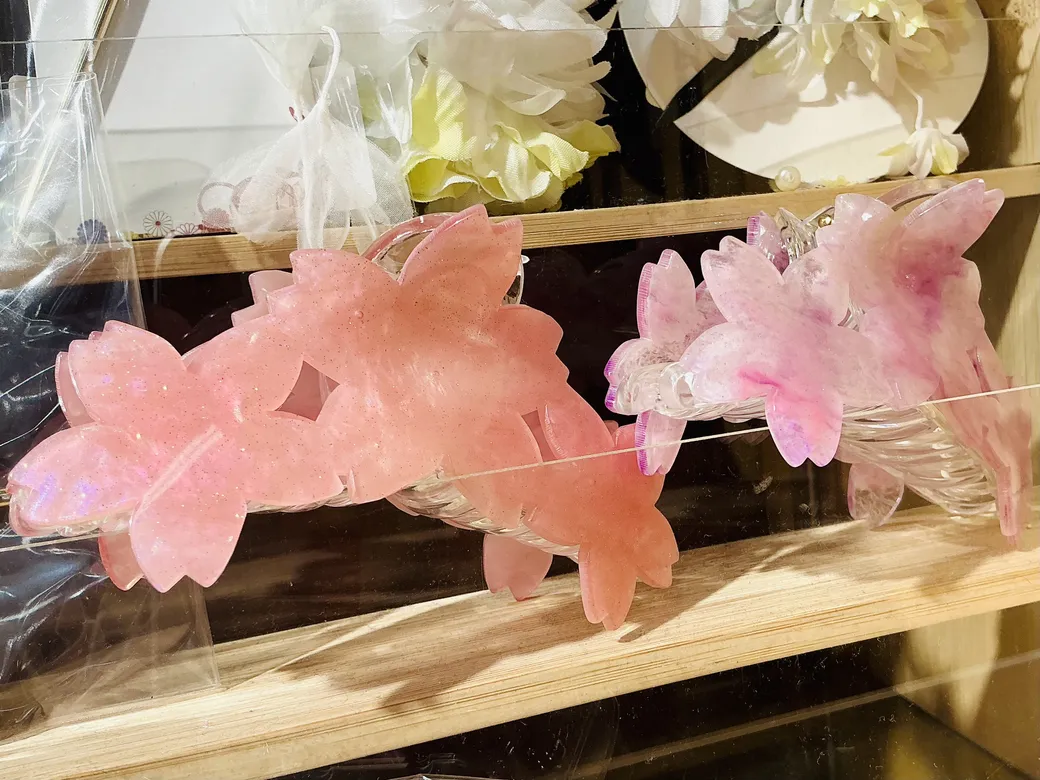
Hana kanzashi are floral hair ornaments, ranging from a single flower to larger arrangements with several blossoms and hanging details.
The flowers may reflect the season, the colors of the kimono or the mood of the hairstyle. Elaborate seasonal hana kanzashi are especially associated with maiko, but floral hair ornaments are also widely used with modern kimono and yukata styling.
Tsumami Kanzashi
Tsumami kanzashi are made using a folding technique called tsumami zaiku.
Small squares of fabric are folded with tweezers and arranged into petals, leaves, birds or other shapes. Traditional Edo tsumami kanzashi often use finely woven silk, with many small folded pieces combined to create one detailed ornament.
The finished design is often floral, which is why the terms “hana kanzashi” and “tsumami kanzashi” are sometimes used as though they mean the same thing.
They do not always mean exactly the same thing.
Bira-Bira Kanzashi
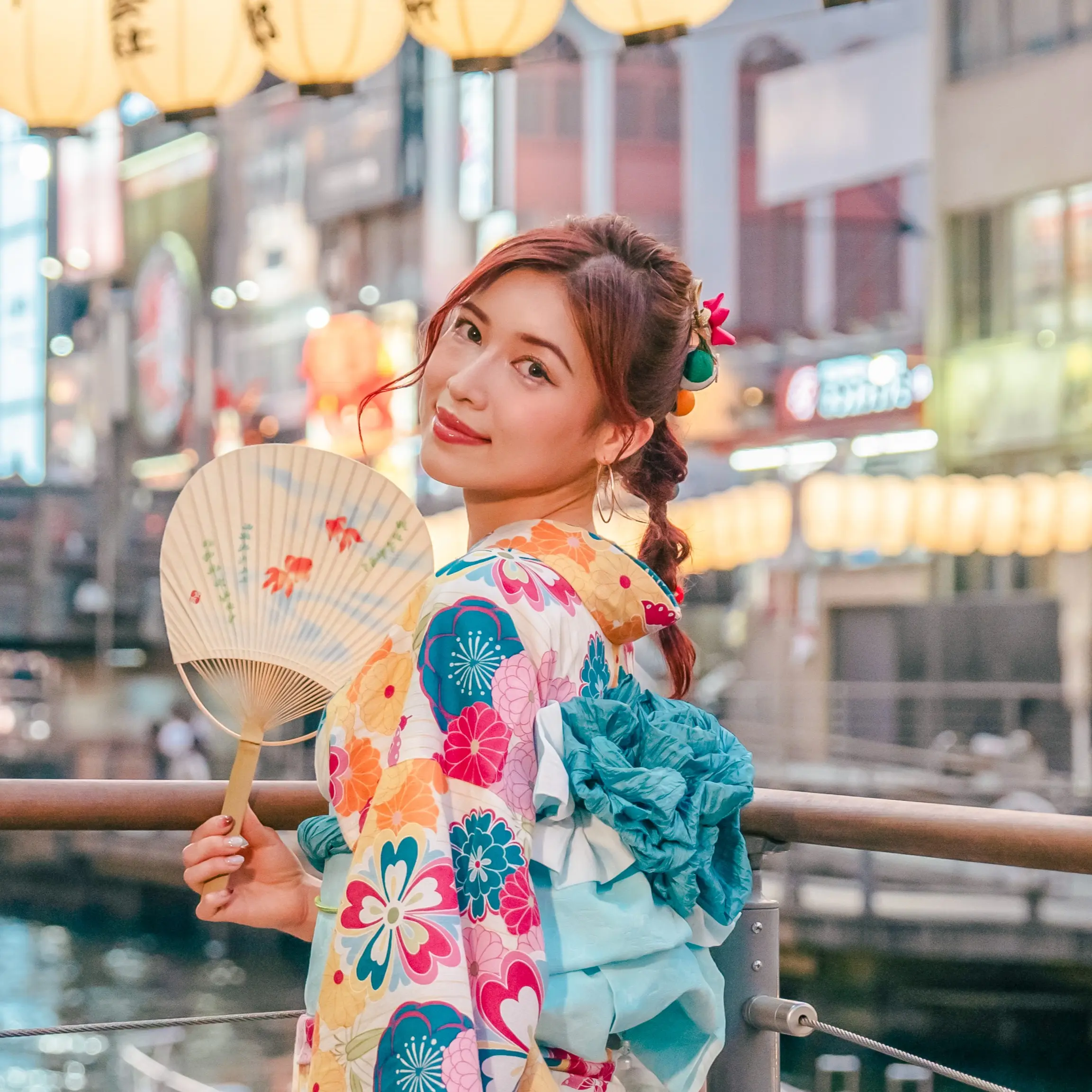
Bira-bira kanzashi have thin decorative pieces that hang below the main ornament and move when the wearer turns or walks.
Traditional examples may use small metal strips, chains or dangling decorative shapes.
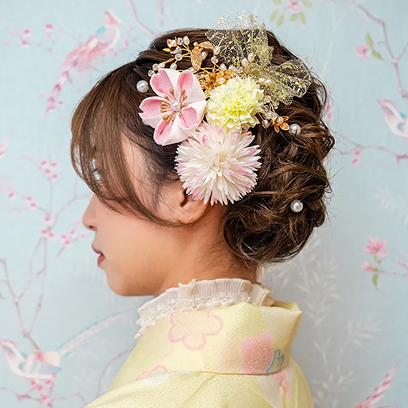
Compared with a simple tama kanzashi, bira-bira creates much more movement around the face. That can make it particularly noticeable in side-profile photos or when the hairstyle is viewed from several angles.
Kushi, Kogai and Hirauchi Kanzashi
Not every traditional Japanese hair ornament looks like a long decorative pin.
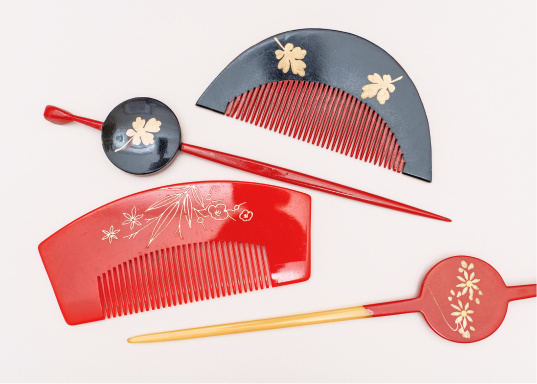
Kushi is a decorative comb inserted into the finished hairstyle.
Kogai is a long, rod-like hair ornament with a different historical form and function from a standard kanzashi. Kushi and kogai were also made as coordinated sets.
Hirauchi is a flatter style of kanzashi, traditionally characterized by a flat decorative top. Historical examples include floral designs, symbols and family crests.
These shapes show why “kanzashi” is better understood as a broad family of hair ornaments rather than one single product.
How Are the Different Types of Kanzashi Different?
The biggest differences are shape, movement, size, material and how the ornament sits in the hair.
You do not need to memorize every traditional category before choosing one. Look first at how the ornament will affect the finished hairstyle.
Hair Pins vs Decorative Combs
A pin-style kanzashi is inserted into hair that has enough structure to hold it securely.
A kushi sits more like a decorative comb and can create a wider accent across the hairstyle.
If your hair is already arranged into a bun or compact updo, both shapes may be possible.
If there is very little hair available to anchor a long pin, a smaller comb, clip or lighter accessory may be easier.
Simple Designs vs Elaborate Kanzashi
A small tama kanzashi adds one clear point of color without competing with a detailed kimono.
Larger floral arrangements can become one of the main features of the entire look.
Neither approach is automatically better.
If your kimono already has large flowers, strong colors and a decorative obi, a simple hair ornament can keep the overall styling balanced.
With a quieter outfit, a larger floral kanzashi can add more color around the face.
Still Ornaments vs Dangling Designs
Tama, hirauchi and many comb-style ornaments stay relatively still once secured.
Bira-bira and some elaborate hana kanzashi include pieces that hang and move.
That movement changes how the ornament appears in photographs.
A dangling design may be attractive when you want detail around the side of the face, while a fixed ornament can feel cleaner and less distracting during a long sightseeing day.
How Materials Change the Look
Kanzashi have historically been made from many different materials, including metal, wood, lacquer, glass, coral and fabric.
Tsumami kanzashi are especially recognizable for their folded fabric work.
Material changes the impression of the ornament. Polished metal can look sharp and graphic, while folded fabric flowers create a softer texture.
For sightseeing, weight matters too. A heavy ornament that feels fine for ten minutes may become noticeable after several hours.
Casual Styles vs More Formal Kanzashi
There is no single rule that makes one kanzashi “formal” and another “casual.”
Size, material, motif, hairstyle, kimono type and occasion all matter.
If you are attending a wedding, tea event or other formal occasion, the styling deserves more careful coordination.
For sightseeing in a rental kimono or yukata, you have more freedom. Focus on an ornament that looks balanced with the outfit and stays comfortable for the time you plan to wear it.
What Is Tama Kanzashi?
Tama kanzashi is one of the easiest styles to recognize because the design is built around a single round ornament.
Its simplicity also makes it a useful choice for people who want traditional detail without a large floral arrangement.
What Does Tama Kanzashi Look Like?
The basic shape is a long pin topped with one ball.
The ball may be plain, patterned or made from a material that becomes the main visual feature.
Because there is usually no large cluster of petals or hanging decoration, the outline stays clean.
What Materials Are Used for the Tama?
Historical tama kanzashi have used materials such as coral, jade and glass.
Modern versions may use many other materials as well, so appearance and weight can vary considerably.
When choosing one to wear rather than collect, look at the color and scale before worrying about the traditional material.
When Is Tama Kanzashi Worn?
Tama kanzashi can work when you want a restrained accent rather than a highly decorative hairstyle.
It pairs easily with a compact bun or updo and can also complement a kimono with a busy pattern.
For a first kimono experience, its straightforward shape is less visually demanding than several large ornaments placed together.
Who Does Tama Kanzashi Suit?
Choose tama kanzashi when you prefer:
・A minimal hairstyle
・One clear accent color
・Less movement around the face
・A kimono with a detailed pattern
・An ornament that does not dominate photographs
It is also a useful style to consider if the outfit already has several decorative elements around the obi and collar.
Is Hana Kanzashi the Same as Tsumami Kanzashi?
Not always.
Hana describes a flower-based design, while tsumami describes a traditional folding technique used to make decorative shapes from small pieces of fabric.
The two often overlap because tsumami zaiku is frequently used to make flowers.
What Does Hana Kanzashi Mean?
Hana simply means “flower.”
A hana kanzashi is therefore a floral kanzashi.
The term describes what you see rather than one single construction method.
Flowers may be made from folded fabric, other textiles or different decorative materials depending on the piece.
What Does Tsumami Kanzashi Mean?
Tsumami refers to the technique.
For traditional Edo tsumami kanzashi, small squares of silk are picked up with tweezers and carefully folded.
Different folds create different petal shapes. Rounded folds can give petals a softer outline, while sharper folds create more pointed forms.
Those individual pieces are then arranged to create flowers, birds and other motifs. The technique itself is recognized as a traditional craft in Tokyo. ([東京の歯科情報][1])
How Is Tsumami Zaiku Used to Make Flowers?
A finished flower may contain many separate pieces of folded fabric.
Each small square becomes part of a petal or leaf, and the pieces are placed together one by one.
This is why a detailed tsumami flower looks very different from a single piece of fabric cut into the shape of a blossom.
Look closely and you can usually see the individual folds that form each petal.
Why Are Hana and Tsumami Kanzashi Often Confused?
Many of the best-known examples of tsumami kanzashi are flowers.
As a result, English-language descriptions sometimes use “hana kanzashi,” “tsumami kanzashi” and even “kanzashi flower” for visually similar pieces.
For a traveler choosing a hair accessory, the distinction is simple:
Choose by appearance if you only care about the finished styling.
Pay attention to “tsumami” when you are interested in how the piece was made and the craft behind it.
What Is Bira-Bira Kanzashi?
Bira-bira kanzashi are designed to move.
Thin metal pieces, chains or dangling ornaments hang below the main decoration and shift with the wearer's movement.
What Are the Dangling Parts of Bira-Bira Kanzashi?
Traditional bira-bira designs can include thin metal strips or hanging chains with small decorative elements.
Some are relatively short and subtle.
Others extend farther down beside the face and become a major part of the hairstyle.
The exact construction varies, so “bira-bira” is more useful as a description of the moving decorative effect than as one identical shape.
How Does Bira-Bira Kanzashi Move When Worn?
The hanging sections respond to small movements of the head.
That means the ornament does not look exactly the same in every photograph.
From the front, you may see only part of the design. From the side, the hanging details become much more visible.
If you enjoy candid walking photos rather than only posed portraits, this movement can add detail to the finished look.
When Does Bira-Bira Kanzashi Suit the Hairstyle?
Choose bira-bira when you want the hair ornament to be noticeable.
It works particularly well when the ornament has enough open space around it and is not hidden behind loose hair.
If you plan to walk around Osaka for several hours, consider the size and weight before choosing the most elaborate option.
A smaller moving ornament can give a similar effect without feeling as heavy.
What Are Kushi, Kogai and Hirauchi Kanzashi?
These traditional forms show how varied Japanese hair ornaments became as hairstyles developed.
Historical collections include elaborate combs, ornamental hairpins and kogai made from materials such as wood, metal, lacquer and glass. ([国土交通省][2])
What Is Kushi Kanzashi?
Kushi means comb.
A decorative kushi is inserted into the hairstyle so the decorated upper section remains visible.
Unlike an ordinary comb used only to detangle hair, the purpose here is decorative.
Its wide shape can work well when you want one horizontal accent rather than several individual pins.
What Is Kogai Kanzashi?
Kogai is a long, straight hair ornament traditionally associated with Japanese hairstyling.
Historical examples were also made as matching sets with decorative combs.
Kogai should not simply be treated as another name for every long kanzashi. It has its own form and history within traditional hair ornament culture.
What Is Hirauchi Kanzashi?
Hirauchi kanzashi traditionally have a flat decorative top.
The ornament may feature a flower, crest or geometric motif.
Compared with a large hana kanzashi, the visual effect is more graphic and compact.
This can suit someone who wants the hairstyle to feel traditional without adding a large cluster of fabric flowers.
Do Kanzashi Have Seasonal Rules?
Yes, traditionally, but the rules depend on who is wearing the kanzashi and for what occasion.
Seasonal flowers and motifs have long played an important role in Japanese dress. The highly specific monthly kanzashi associated with maiko are part of a professional tradition and should not be treated as a universal dress code for every visitor wearing a kimono. ([京都プロジェクト][3])
Why Are Some Kanzashi Linked to Specific Seasons?
Japanese clothing and decorative arts often reflect plants, flowers and events associated with particular times of year.
A cherry blossom naturally suggests spring.
Other flowers and plants can create a similar seasonal association.
Matching the ornament to the season adds another layer of coordination, but it is not the only factor to consider. Color, kimono pattern and hairstyle also affect the finished look.
Why Do Maiko Change Their Kanzashi Throughout the Year?
Maiko are apprentice professional entertainers in Kyoto's traditional kagai districts.
Their clothing, hairstyles and hair ornaments follow traditions connected with their profession, seniority and the time of year.
Elaborate hana kanzashi are especially associated with this world, and seasonal changes are an important part of their appearance.
A tourist wearing a rental kimono is in a completely different situation.
You can appreciate that tradition without trying to reproduce every rule.
Which Flowers Are Associated with Different Seasons?
Flowers that naturally signal a season are easy choices.
For example:
・Plum blossoms suggest late winter and early spring
・Cherry blossoms are closely associated with spring
・Wisteria and iris suggest the transition into early summer
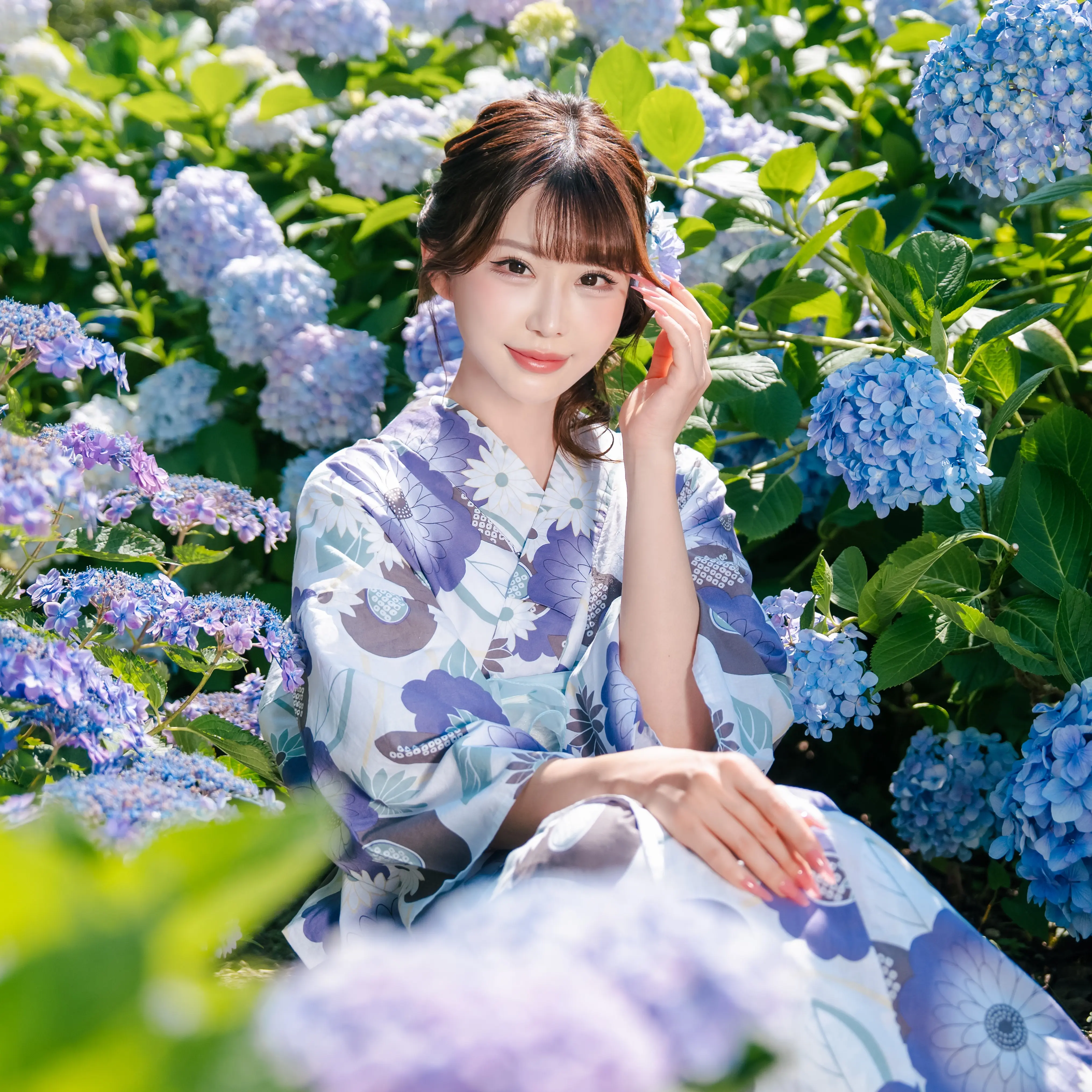
・Hydrangea is associated with Japan's rainy season
・Chrysanthemum is strongly associated with autumn
You do not need to build your entire hairstyle around a seasonal calendar.
If the flower also appears in your kimono pattern, using a similar motif in the hair can create an easy visual connection.
Do Travelers Need to Follow Seasonal Rules Strictly?
No, not for a casual sightseeing experience.
This is one of the questions that often causes unnecessary worry for first-time kimono wearers.
Kimono enthusiasts themselves discuss how strictly seasonal motifs should be followed, especially as weather and personal styling vary. ([Reddit][4])
For sightseeing, choose something that suits the outfit and feels appropriate for the season without treating the rules as an exam.
If you are dressing for a formal ceremony or a highly traditional event, ask for more specific guidance.
Do You Need a Traditional Japanese Hairstyle to Wear Kanzashi?
No.
Traditional kanzashi developed alongside Japanese hairstyles such as nihongami, but modern wearers also use kanzashi with contemporary updos and other styles. ([東京都多文化共生ポータル (TIPS)][5])
What matters most is whether the hair can hold the particular ornament safely and comfortably.
Can You Wear Kanzashi with a Modern Updo?
Yes.
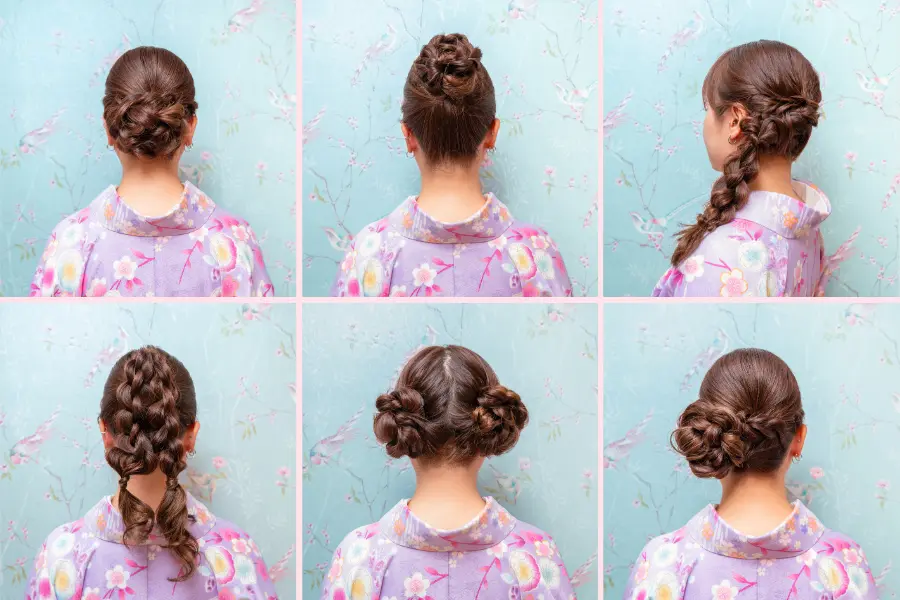
A modern bun, braided updo or pinned hairstyle can provide enough structure for many types of kanzashi.
You do not need to recreate an elaborate historical hairstyle just to wear one hair ornament.
For travelers, a contemporary updo often makes more sense because it is designed to stay comfortable through walking, eating and taking photos.
Can You Wear Kanzashi with Short Hair?
Yes, depending on the accessory.
Short hair may not have enough structure to hold a long, heavy traditional pin by itself.
A smaller flower, clip-style ornament or lightweight decorative piece can be easier to secure.
This is a real concern for first-time kimono wearers with short or natural hair, and modern flower clips are one practical option when a traditional stick cannot be anchored securely. ([Reddit][6])
Kawaii Osaka also has a separate guide for travelers with curls, coils, braids and other hair textures.
See Kimono Hair Styling Options for Curly, Coily and Braided Hair
Can You Wear Kanzashi with Hair Down?
Sometimes, but the ornament needs something to hold onto.
A long stick-style kanzashi is much easier to secure in a bun or pinned section than in completely loose hair.
If you want to keep most of your hair down, a half-up style can create a small anchored section for the ornament.
For very short or fine hair, clips and smaller accessories are often more practical.
Which Kanzashi Are Easier for First-Time Wearers?
Start with something lighter and simpler.
Good first choices include:
・A small tama-style accent
・One fabric flower
・A compact decorative comb
・A lightweight clip-style hair ornament
A very large dangling arrangement may look striking, but it also requires more secure styling.
If you will spend the entire day sightseeing, comfort matters more than choosing the most elaborate piece in the display.
Which Type of Kanzashi Should You Choose?
Choose the kanzashi that matches the effect you want, rather than assuming the most traditional-looking ornament is automatically the right one.
The outfit, hairstyle and length of your sightseeing day all matter.
Choose Tama Kanzashi for a Simple Look
Tama kanzashi works when you want one clean detail.
It is especially useful when the kimono already has a large pattern or several strong colors.
Choose a ball color that repeats one smaller color from the kimono or obi, and the whole outfit can feel more coordinated without becoming busy.
Choose Hana or Tsumami Kanzashi for Flowers and Color
Choose a floral design when you want the hairstyle to become a noticeable part of the outfit.
Flowers are especially easy to coordinate with kimono because floral motifs already appear frequently in textile designs.
The hair ornament does not need to match the kimono flower exactly.
Repeating one color is often enough.
Choose Bira-Bira Kanzashi for Movement
Choose bira-bira when you want movement beside the face.
This can work particularly well in side-profile photographs and walking shots.
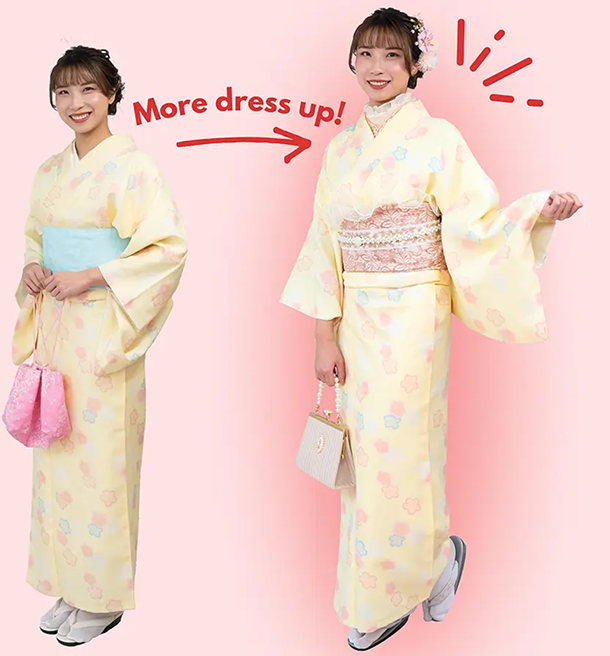
If the rest of the styling already includes lace, a decorative obi and several accessories, consider a smaller bira-bira piece rather than adding the largest option available.
Choose Kushi for a Comb-Style Accent
A decorative comb gives the hairstyle a wider focal point.
It can look particularly balanced at the back or side of a neat updo.
This is useful when you prefer one substantial ornament to several small pins.
Choose by Hairstyle, Outfit and Occasion
Before choosing, look at all three together:
・Your hairstyle
・Your kimono or yukata
・What you will do after dressing
A large kanzashi may look excellent in a close-up photo but feel unnecessary if you plan to spend six hours walking through Namba and Dotonbori.
A smaller ornament can be the better choice for a long sightseeing day.
Which Kanzashi Works with Kimono or Yukata?
There is no single kanzashi reserved only for kimono or only for yukata.
The difference is usually in how formal, light or decorative you want the complete outfit to feel.
Choosing Kanzashi for Kimono
Kimono can support anything from a minimal tama kanzashi to a detailed tsumami flower arrangement.
Look first at the pattern around the shoulders and upper body because that is what will appear closest to the hair in photographs.
If the kimono has large flowers near the shoulder, repeating one of those colors in the kanzashi can connect the two areas.
For a quieter kimono, the hair accessory can provide the strongest accent.
Choosing Kanzashi for Yukata
Yukata is a lighter, more casual form of traditional Japanese clothing commonly worn in summer and at festivals.
Floral hair accessories work especially naturally with this relaxed style.
You do not need an elaborate formal arrangement.
A single flower, small tsumami piece or bright accent can be enough to complete the look without feeling heavy in warm weather.
Matching Kanzashi with Kimono Colors and Patterns
Exact color matching is not necessary.
Three simple approaches work well:
・Repeat one color already in the kimono
・Choose a contrasting color that appears in the obi
・Use a neutral or metallic ornament when the outfit already has many colors
Avoid choosing every accessory independently.
Kimono, obi, collar details and hair ornaments are easier to balance when at least one color connects them.
Choosing a Hair Ornament for a Long Sightseeing Day
Think beyond the dressing room mirror.
If you plan to walk around Dotonbori, Namba or other parts of Osaka for several hours, the ornament needs to stay comfortable as well as photograph well.
A heavy decoration can pull on a small section of hair.
Long dangling pieces may also be more noticeable in wind or crowded spaces.
A secure updo with one or two carefully placed accessories is often easier for sightseeing than filling the hair with several heavy pieces.
Can You Wear Kanzashi with Modern Clothes?
Yes.
Kanzashi do not have to remain inside a full traditional outfit.
Modern kanzashi are also worn with contemporary hairstyles and clothing, and traditional forms can be used as individual accents when the styling supports them. ([Kawaii Osaka][7])
Using One Kanzashi as a Simple Accent
One ornament is the easiest way to avoid making a modern outfit feel costume-like.
A tama kanzashi or small decorative comb can add Japanese detail without changing the rest of the look.
Let the kanzashi be the focal point rather than adding several competing accessories around it.
Pairing Kanzashi with a Modern Updo
A low bun, twisted updo or braided arrangement can give the ornament a secure base.
This works particularly well with contemporary clothing because the hairstyle itself does not need to imitate nihongami.
The result can feel modern while still showing the distinctive shape or craft of the kanzashi.
When a Smaller Kanzashi Is Easier to Style
Smaller pieces are easier when the rest of the outfit is Western or casual.
They also work better with short hair, fine hair and simpler updos that cannot support a large ornament.
If you are buying a kanzashi as a souvenir rather than only wearing it with a rental kimono, think about whether you can use it again with clothes you already own.
That can make a smaller piece more practical than an elaborate ceremonial-looking design.
Choose a Kanzashi for Your Kimono Day in Osaka
You do not need to know every traditional kanzashi name before wearing one.
Tama kanzashi gives you a simple accent. Hana and tsumami designs add flowers and texture. Bira-bira creates movement, while kushi gives you the wider shape of a decorative comb.
Traditional seasonal customs are worth knowing, especially when looking at maiko styling, but a sightseeing kimono experience does not require you to reproduce those rules exactly.
Your hairstyle matters just as much as the ornament. Long pins need a secure base, while shorter hair may work better with lightweight flowers, clips or smaller accessories.
At Kawaii Osaka, the currently listed hair-set option is
¥2,200 including tax. Hair accessories are also listed among the available kimono options, with
one accessory from ¥550 and an
unlimited-accessory option at ¥2,200. Availability and options can change, so check the current selection when you visit. ([kawaii-osaka.jp][7])
Seeing the kimono, obi and hairstyle together makes the final choice much easier than selecting a kanzashi in isolation.
Choose the ornament that feels comfortable, suits the outfit and gives you the look you want for your day around Osaka.
Explore Kimono, Yukata and Hair Styling at Kawaii Osaka

 06-6732-8070
  KIMONO RENTAL
SET CONTENT
KIMONO RENTAL
SET CONTENT
 KIMONO RENTAL
HAIR SET/MAKE UP
KIMONO RENTAL
HAIR SET/MAKE UP
 KIMONO RENTAL
Accessories for Kimono & ITEMS
KIMONO RENTAL
Accessories for Kimono & ITEMS
 WAGASA
 KATANA
 LOCATIONSHOOTING