2026.08.18
Sukunahikona Shrine in Osaka: Why Is This Medicine Shrine
kimono rental
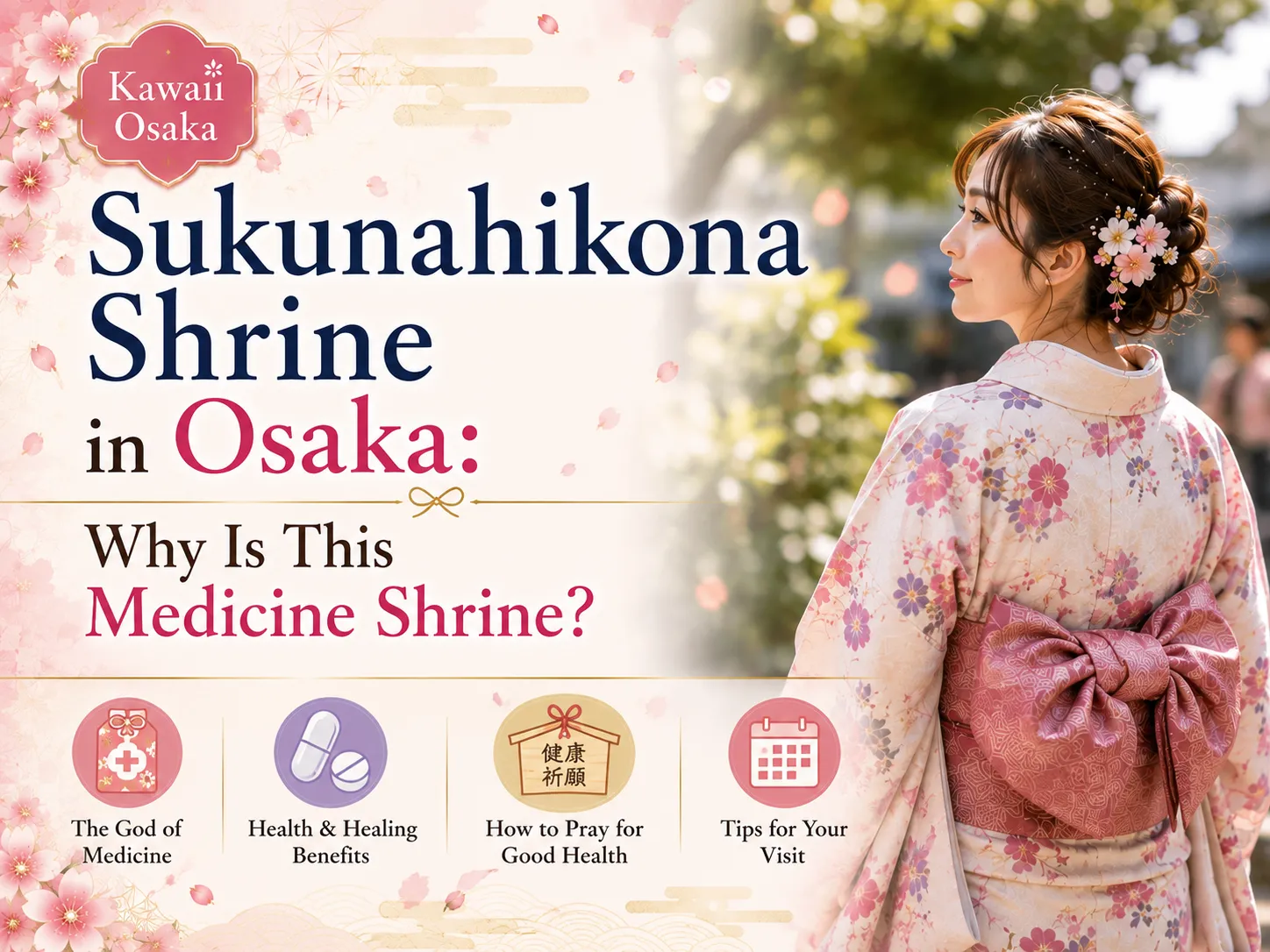
Tucked between office buildings in Osaka's Doshomachi district, Sukunahikona Shrine is easy to walk past without realizing why it's unusual. Short answer: this small urban shrine is closely connected to Osaka's centuries-old pharmaceutical district and is especially known for prayers for health, its medicine-related history, and distinctive tiger charms. If you're looking for something quieter and more local than Osaka's major sightseeing landmarks, it's an interesting stop — especially once you understand why a medicine shrine ended up here in the first place. Here's what to look for, how to visit, and why the tigers matter.
What Is Sukunahikona Shrine?
Sukunahikona Shrine, also affectionately known as Shinno-san, is a Shinto shrine in Doshomachi, Chuo Ward, Osaka. Rather than standing in a large wooded precinct, it sits right in the middle of a business district — which makes its location part of the story.
The shrine is dedicated to two deities associated with medicine: Sukunahikona-no-Mikoto, a Japanese deity connected with medicine and healing, and Entei Shennong, or Shinno in Japanese, the legendary Chinese figure associated with medicine and agriculture.
According to the shrine's official history, drug merchants in Doshomachi brought Sukunahikona-no-Mikoto from Kyoto's Gojo Tenjin Shrine in 1780 and enshrined the deity together with Shinno, who was already worshipped by the local pharmaceutical community.
That's why this isn't simply a shrine that happens to be near pharmaceutical companies. The shrine and Osaka's medicine trade developed together.
You can read more about the background on the official Sukunahikona Shrine history page.
Why Is There a Medicine Shrine in the Middle of Osaka?
The location makes much more sense once you know a little about Doshomachi. For centuries, this part of Osaka has been associated with the buying, inspection, and distribution of medicines.
During the Edo period, merchants dealing in medicinal ingredients became concentrated here. In 1722, a group of 124 medicine wholesalers in Doshomachi received official privileges related to inspecting and distributing imported Chinese medicines and Japanese medicinal materials throughout the country.
Medicine was obviously not an ordinary product. Merchants were handling substances directly connected to people's health, so quality and trust mattered enormously. The pharmaceutical community's worship at Sukunahikona Shrine grew within that environment.
Even today, Doshomachi retains its identity as Osaka's “medicine town.” Walk around the neighborhood and the contrast is interesting: an old religious tradition survives inside a modern district of office buildings and pharmaceutical businesses.
That's also why it's worth looking beyond the shrine gate. Sukunahikona Shrine makes more sense when you see it as part of the neighborhood rather than as an isolated attraction.
Why Are There Tigers at Sukunahikona Shrine?
One of the first things you may notice at Sukunahikona Shrine is the tiger motif. The tiger isn't simply a cute mascot added for tourists — it comes from a much older story connected with illness in Osaka.
In 1822, during a cholera outbreak in Osaka, local medicine merchants prepared a medicine known as Kotou Sakkio-gan and distributed it after prayers together with paper-mache tiger charms. The shrine explains that the association between the illness, the medicine, and the character for “tiger” led to the use of the paper tiger as a protective charm.
That tradition continued, and the paper tiger became one of the shrine's distinctive symbols for wishes connected with good health and protection from illness.
Today, tiger-themed charms remain one of the most recognizable things to look for here. Osaka's official tourism information also highlights the shrine's distinctive paper-tiger-inspired charms.
So when you see tigers around the shrine, you're looking at a visual reminder of a real episode in Osaka's medical history — not just a decorative animal motif.
What Do People Pray for at Sukunahikona Shrine?
Health is at the heart of the shrine. Visitors come to pray for things such as good health, recovery from illness, and protection from sickness.
That doesn't mean you need to be ill to visit. A prayer for continued health is just as natural, and the shrine remains closely connected with people and businesses involved in medicine and pharmaceuticals.
For an international traveler, the most interesting part may simply be seeing how religious tradition, medicine, commerce, and neighborhood history have become intertwined in one very compact place.
The Tiger Charms Are Worth Looking For
If you like bringing home something more meaningful than a standard souvenir, take a look at the shrine's omamori. Omamori are Japanese protective charms associated with particular prayers or wishes.
At Sukunahikona Shrine, tiger-themed charms are especially distinctive because they connect directly to the shrine's history. Some styles feature the familiar paper tiger motif, while other charms and seasonal items may be offered at different times of year.
Don't assume every design you see online will always be available. Shrine charms can change, and some items are connected with specific festivals or seasons.
The current official schedule lists amulet distribution from 9:00 AM to 4:30 PM, so visit during those hours if choosing a charm is an important part of your trip.
Can You Get a Goshuin at Sukunahikona Shrine?
Yes. Sukunahikona Shrine offers goshuin, the calligraphic seals and inscriptions collected by visitors at Japanese shrines and temples.
The shrine currently lists goshuin distribution hours as 9:30 AM to 4:00 PM. It also regularly introduces monthly, seasonal, and limited-edition designs, so what is available can depend on the date of your visit.
This is one detail worth checking shortly before you go. Certain standard designs may be temporarily paused while seasonal versions are being offered, and some limited designs can end once supplies run out.
If collecting goshuin matters to you, check the current Sukunahikona Shrine goshuin information rather than relying on an older photo from social media.
First Time at a Shinto Shrine? Here's How to Visit
If this is your first shrine visit in Japan, don't let etiquette make you nervous. You don't need to perform everything with perfect precision, but knowing the basic sequence makes the experience easier to understand.
- Bow before passing through the torii gate. The shrine's English guide recommends a shallow bow before entering.
- Use the purification basin if available. Traditionally, you rinse your hands before approaching the worship hall.
- Make an offering. Place a coin in the offertory box rather than throwing it from a distance.
- Bow twice. Make two deep bows at the worship hall.
- Clap twice. Bring your hands together and clap twice.
- Finish with one bow. After your prayer, make one final deep bow.
The shrine provides its own English explanation of the full procedure, including purification etiquette. You can check the official English worship guide before visiting.
When Should You Visit Sukunahikona Shrine?
The shrine's current official visitor information lists the gates as open from 8:00 AM to 5:00 PM.
The main times to remember are:
- Shrine gates: 8:00 AM–5:00 PM
- Amulets and charms: 9:00 AM–4:30 PM
- Goshuin: 9:30 AM–4:00 PM
If you only want to see the shrine, the wider gate hours give you some flexibility. But if you want a tiger charm, goshuin, or time to explore the nearby museum, arriving in the middle of the day is much more practical than turning up just before closing.
Opening arrangements can change for ceremonies or special events, so check the official shrine access and visiting-hours page before making a tightly timed itinerary.
Visiting in November? Look Out for the Shinno Festival
If your Osaka trip falls in late November, Sukunahikona Shrine feels very different from an ordinary weekday visit.
The shrine's annual Shinno Festival is held on November 22 and 23. For 2026, the official schedule lists festival hours from 10:00 AM to 8:00 PM on both days.
The tiger tradition becomes especially visible during the festival. Paper tiger charms are attached to five-leaf bamboo together with shrine talismans as a prayer for household safety and good health, while Doshomachi itself becomes much livelier with decorations and festival stalls.
It's a fascinating time to visit, but don't expect the same quiet atmosphere you would find on a normal day. The shrine warns that the festival can become particularly crowded during parts of the afternoon.
If the festival is the reason for your visit, check the latest official Shinno Festival information before you go.
How to Get to Sukunahikona Shrine
Sukunahikona Shrine is located at 2-1-8 Doshomachi, Chuo-ku, Osaka.
According to the shrine's current access information:
- Osaka Metro Kitahama Station: About a 5-minute walk from Exit 6.
- Osaka Metro Yodoyabashi Station: About a 10-minute walk from Exit 11.
- Keihan Kitahama Station: About an 8-minute walk from Exit 27.
For most travelers, Kitahama is the straightforward station to remember. Once you're in the neighborhood, keep an eye out for the entrance — the shrine is compact and sits between modern buildings, so it doesn't announce itself like one of Japan's huge temple complexes.
Don't Leave Right Away — Explore Doshomachi Too
Sukunahikona Shrine itself is compact, which is exactly why it makes sense to combine the visit with a walk through Doshomachi. The neighborhood gives the shrine its context.
One of the easiest additions is the Doshomachi Pharmaceutical and Historical Museum, located on the third floor of the shrine office building. The museum preserves documents and objects connected with the history of medicine and the pharmaceutical trade in the area.
The current museum schedule lists opening hours from 10:00 AM to 4:00 PM on weekdays and Saturdays, with last admission at 3:30 PM. Admission is free. It is closed on Sundays, public holidays, August 11–16, and from December 28 through January 4.
Because the exhibits can change seasonally, think of it less as a giant museum to check off your list and more as an extra layer of context. After seeing the shrine, the museum helps explain why this small part of Osaka became so closely associated with medicine.
Check the official Doshomachi Pharmaceutical and Historical Museum information before visiting.
Is Sukunahikona Shrine Worth Visiting in Kimono?
Yes — particularly if you're looking for a quieter cultural stop rather than a huge photo attraction.
Sukunahikona Shrine isn't the kind of place where you'll spend hours walking through giant gates, gardens, and temple halls. Its appeal is almost the opposite. You step out of modern Osaka, find a compact shrine hidden among office buildings, and discover a story connecting Japanese worship with centuries of pharmaceutical history.
That makes it a good match for travelers who want their kimono day to include more than the busiest landmarks. You can enjoy the lively atmosphere of Namba and Dotonbori, then travel toward Kitahama and see a much quieter side of central Osaka.
If you're wearing kimono or yukata, keep the walking plan realistic. The shrine itself doesn't require a long walk, but your total day may include stations, Doshomachi streets, and other sightseeing stops, so footwear and timing still matter.
Start in Namba, Then See a Different Side of Osaka
If you're staying around Namba, one option is to begin your day in the city's liveliest sightseeing area and then head north toward Kitahama and Doshomachi.
Kawaii Osaka Kimono Rental & Sales is located at 1-9 Soemoncho, Chuo-ku, Osaka, close to Dotonbori and the Namba area. Current store information lists business hours from 10:00 AM to 10:00 PM.
Starting near Dotonbori gives you the option of taking a few classic Osaka photos first, then changing the mood of the day completely by visiting Doshomachi. Instead of spending the entire rental period in one crowded sightseeing zone, you get two very different sides of central Osaka.
Curious? Check out the kimono rental option below.
Book a Kimono Rental in Osaka
FAQ
Q. What is Sukunahikona Shrine famous for?
A. Sukunahikona Shrine is best known for its connection with health and medicine, its location in Osaka's historic pharmaceutical district of Doshomachi, and its distinctive tiger charms. It enshrines Sukunahikona-no-Mikoto and Entei Shennong, both closely associated with medicine.
Q. Why are there tiger charms at Sukunahikona Shrine?
A. The tradition dates back to an 1822 cholera outbreak in Osaka, when local medicine merchants distributed a prepared medicine together with paper-mache tiger charms after prayers for protection from illness. The tiger later became one of the shrine's best-known symbols.
Q. What time does Sukunahikona Shrine open?
A. The shrine's current official information lists gate hours from 8:00 AM to 5:00 PM. Amulets are distributed from 9:00 AM to 4:30 PM, while goshuin are available from 9:30 AM to 4:00 PM.
Q. Can tourists receive a goshuin at Sukunahikona Shrine?
A. Yes. Goshuin are available during the shrine's listed distribution hours, but designs and availability can change. Seasonal and limited-edition goshuin are also offered at certain times, so check the shrine's official page before visiting if you want a particular version.
Q. Which station is closest to Sukunahikona Shrine?
A. Kitahama Station is the most convenient option for many travelers. The shrine lists a walk of about five minutes from Exit 6 of Osaka Metro Kitahama Station.
Q. Is there anything else to see near Sukunahikona Shrine?
A. Yes. The Doshomachi Pharmaceutical and Historical Museum is located in the shrine office building and introduces the area's long relationship with medicine. Walking through Doshomachi itself also helps explain why the shrine is here in the first place.
The Bottom Line
Sukunahikona Shrine isn't one of Osaka's biggest landmarks — and that's part of what makes it interesting. Hidden among the buildings of Doshomachi, this small shrine tells a much bigger story about the city's pharmaceutical trade, prayers for health, an 1822 epidemic, and the tiger charms that still symbolize that history today. Visit the shrine, look around the medicine district, and add the nearby museum if it's open. And if you're exploring Osaka in kimono, it's an easy way to trade the neon crowds of Namba for a quieter piece of the city's history without leaving central Osaka.

 06-6732-8070
  KIMONO RENTAL
SET CONTENT
KIMONO RENTAL
SET CONTENT

 KIMONO RENTAL
HAIR SET/MAKE UP
KIMONO RENTAL
HAIR SET/MAKE UP
 KIMONO RENTAL
Accessories for Kimono & ITEMS
KIMONO RENTAL
Accessories for Kimono & ITEMS
 WAGASA
 KATANA
 LOCATIONSHOOTING