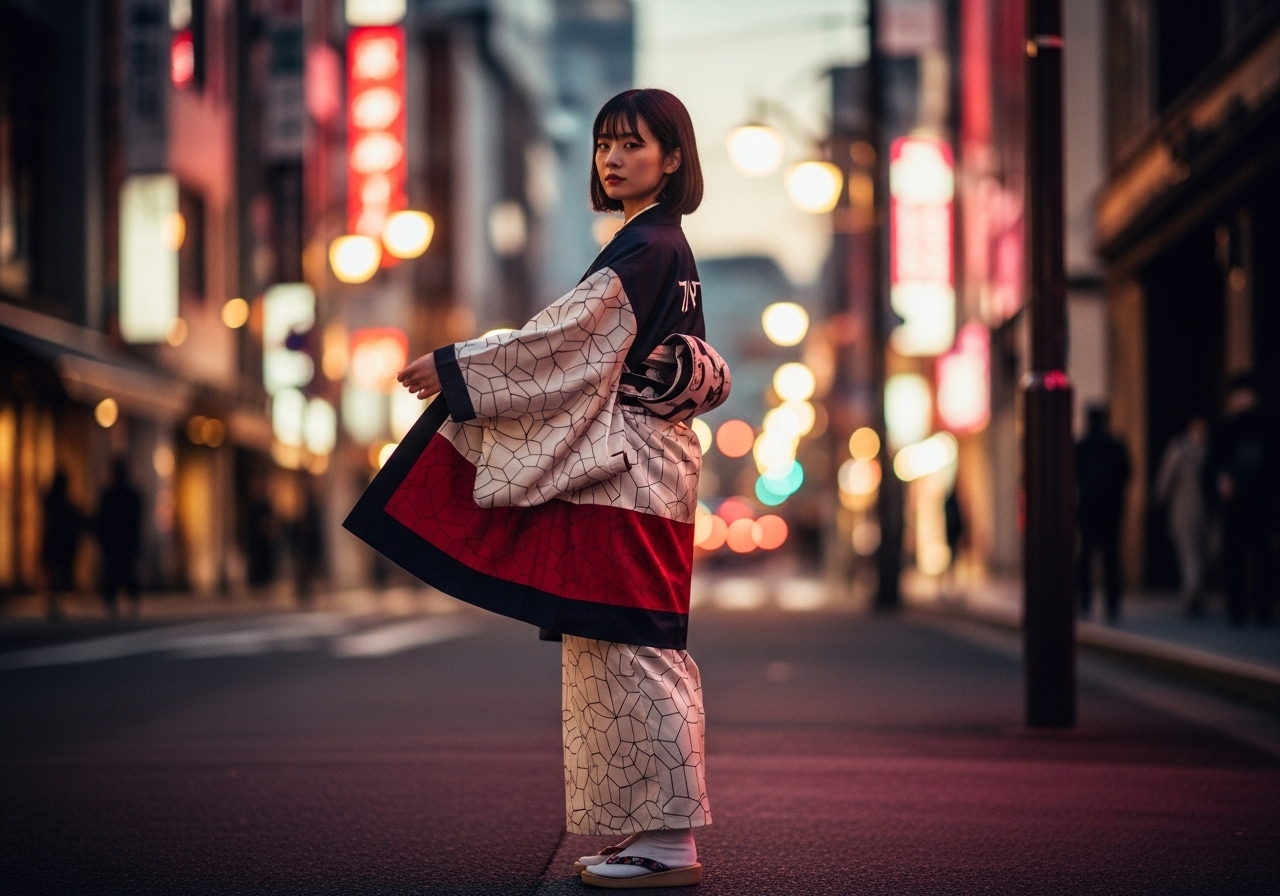
From Kimono to Cosplay: How Anime Turned Tradition into Style
What was once a formal garment worn in temples and tea houses has now become a global fashion symbol — thanks, in part, to anime.
From Demon Slayer to Spirited Away, Japanese animation has reintroduced the kimono to the world — not as an artifact of the past, but as a living, wearable form of storytelling.
In 2025, the kimono isn’t just tradition. It’s trend, identity, and art — woven into the fabric of global pop culture.
1. The Kimono Was Never “Just Clothing”
The kimono has always carried meaning.
Each pattern, color, and motif — from cranes symbolizing longevity to waves representing perseverance — tells a story.
In Japan, the act of wearing one expresses not only beauty but respect, balance, and seasonal awareness.
For centuries, that symbolism remained local.
Then came anime — Japan’s most powerful cultural export — and suddenly, millions around the world were seeing those meanings in motion, through characters they loved.
2. How Anime Reimagined the Kimono
The shift began in the early 2000s, with classics like InuYasha, Rurouni Kenshin, and Spirited Away.
Their characters wore traditional clothing not as “costumes,” but as expressions of personality and narrative.
In Spirited Away, Chihiro’s pink work kimono marks her transformation from innocence to resilience.
In Rurouni Kenshin, Kenshin’s red haori contrasts his pacifist nature — a visual echo of his internal struggle.
In InuYasha, the white-red kimono (hitoe) represents both purity and danger — timeless dualities in Japanese folklore.
These details weren’t lost on viewers.
They gave Western audiences their first real exposure to the depth of Japanese clothing — and made the kimono feel emotionally alive again.
3. The Demon Slayer Effect: Fashion Meets Myth
When Demon Slayer: Kimetsu no Yaiba premiered in 2019, it sparked what experts now call “the kimono renaissance.”
Its visual world — bold patterns, intricate layers, and historical authenticity — turned traditional attire into pop fashion.
Each character’s outfit has hidden meaning:
Tanjiro Kamado’s green and black checkered haori symbolizes balance and perseverance.
Nezuko’s pink asanoha (hemp leaf) pattern represents growth and protection.
Rengoku’s flame kimono reflects passion and moral strength.
These visual cues resonated deeply — so much that Demon Slayer-inspired kimono prints began appearing in streetwear, cosplay, and luxury fashion.
By 2022, online searches for “kimono jacket Demon Slayer” had grown over 700% globally (Google Trends).
Japanese textile shops even reported a spike in sales for traditional asanoha fabrics — the same pattern Nezuko wears.
4. Cosplay: The Bridge Between Culture and Fashion
The rise of cosplay — dressing as fictional characters — transformed how the world interacted with Japanese clothing.
At events like Anime Expo (Los Angeles), Japan Expo (Paris), and Comic-Con, thousands of fans now wear kimonos, yukata, and haori not as “costumes,” but as tributes.
Unlike imitation, cosplay is participatory appreciation.
It’s a global community that learns how to wear, fold, and move in traditional garments — often more accurately than expected.
Many cosplayers source their outfits directly from Japanese vintage stores or Kyoto rental shops, preserving traditional craftsmanship while giving it new life.
This blending of fandom and fashion has turned the kimono into what scholars call a “transcultural icon” — a shared symbol of creativity between Japan and the world.
5. When Anime Meets Runway
Fashion houses have noticed.
In 2021, Dior collaborated with Japanese artist Kim Jung Gi on kimono-inspired pieces for its Tokyo Capsule Collection.
In 2023, Gucci introduced silk robes referencing Jujutsu Kaisen aesthetics, pairing them with modern tailoring.
In 2024, Vogue Japan’s April issue featured models wearing Demon Slayer-patterned haori in Kyoto’s Gion district — a mix of heritage and high fashion.
Meanwhile, smaller Japanese brands like Rumi Rock and Modern Antenna are turning anime motifs into wearable art for a new generation of fans.
Their collections blend manga-style graphics with traditional kimono weaving — bridging street culture and craftsmanship.
6. Cultural Exchange, Not Appropriation
As the kimono spreads worldwide, conversations about cultural respect have grown louder.
Japan’s own designers are leading the dialogue — teaching, collaborating, and reinterpreting the garment authentically.
For example, Kyoto’s Chiso Company, one of Japan’s oldest kimono makers (est. 1555), now partners with global creatives to educate them on fabric symbolism and dyeing traditions.
The result? A new kind of cross-cultural fashion that honors heritage while embracing innovation.
“We’re not exporting the kimono,” says Chiso’s creative director Naoko Yamashita.
“We’re sharing its heart — the idea that clothing connects people.”
7. From Screen to Street: Everyday Kimono Revival
Walk through Shibuya, Seoul, or Paris’s Marais district today, and you’ll spot modern kimono jackets styled with sneakers, denim, or corsets.
Influencers like @TokyoMori, @MikanKimono, and @WearJapanDaily are turning traditional silhouettes into fashion statements for Gen Z audiences.
Even major retailers like UNIQLO, ZARA Japan, and Urban Outfitters now carry kimono-inspired outerwear — proof that what began as fandom has evolved into fashion culture.
8. What This Means for the Future
The kimono’s journey from anime to everyday fashion isn’t about commercialization.
It’s about connection.
Anime made the kimono relatable.
Cosplay made it accessible.
Fashion made it universal.
Together, they turned an ancient garment into a 21st-century symbol of identity — something that transcends geography, language, and trend cycles.
Final Thoughts: Tradition, Translated
The kimono was once a garment of silence — graceful, composed, deeply personal.
Anime gave it a new voice.
Now, every cosplay, every runway, every Instagram photo continues the same story — a celebration of Japanese artistry told through fabric and imagination.
From Kyoto’s looms to Comic-Con’s halls, the kimono reminds the world that tradition doesn’t have to stay still.
It can move, transform, and shine again — one sleeve, one fan, one story at a time.






 BOOK NOW