Kimono Sleeves Trend: The Japanese Silhouette Dominating Western Fashion
The fashion world has always borrowed ideas from the East, but in 2025, it isn’t embroidery, prints, or fabrics leading the wave — it’s the sleeves.
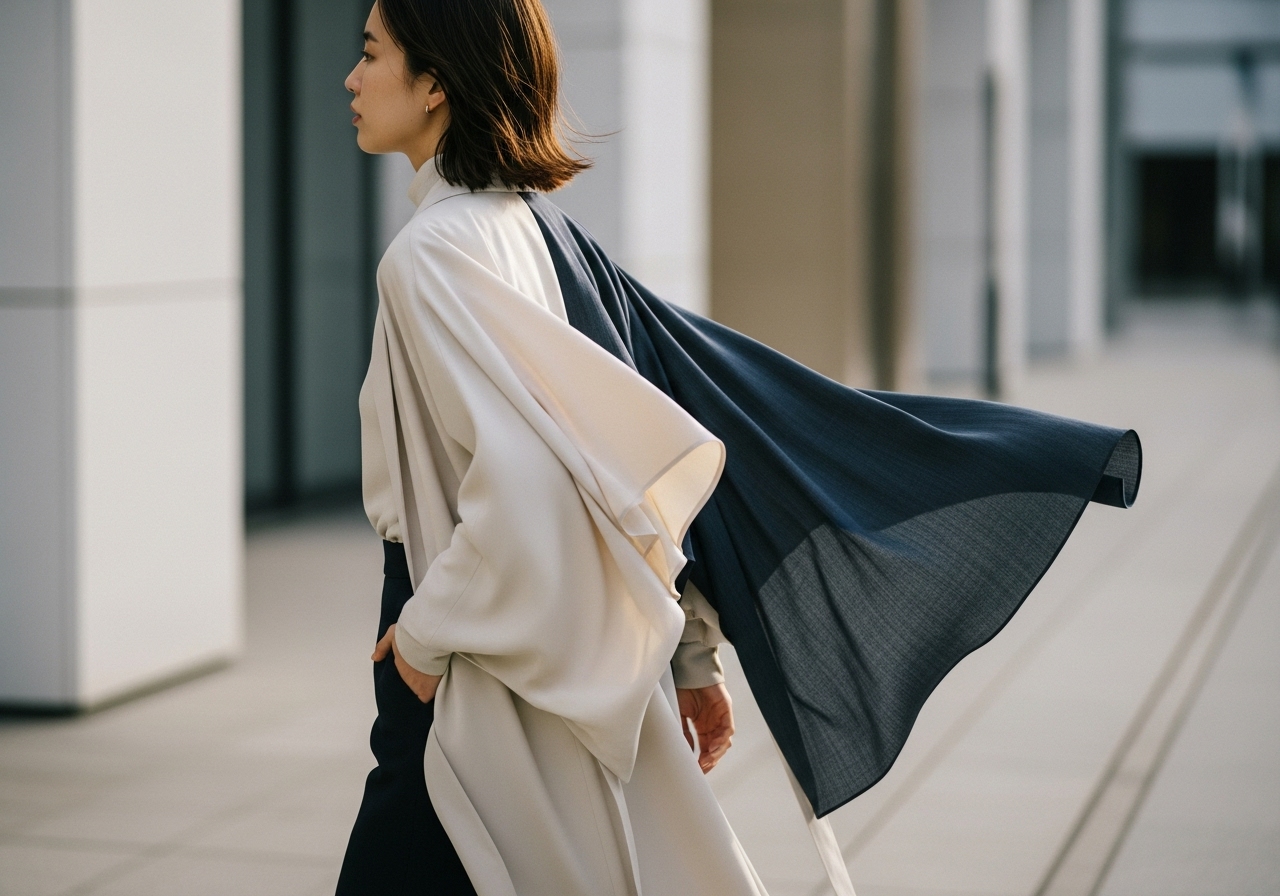
Wide, fluid, and impossibly elegant, kimono sleeves have become the most influential silhouette of the year, appearing everywhere from minimalist Scandinavian labels to luxury Parisian runways.
It’s more than a design revival — it’s a shift in mindset.
The kimono sleeve represents movement, mindfulness, and the quiet power of less structure — ideas the modern world desperately craves.
???? 1. What Exactly Are Kimono Sleeves?
Originally, kimono sleeves (sode) were cut as one continuous piece of fabric with the body, allowing a natural drape that followed the arm’s motion.
They weren’t tailored for fit — they were designed for flow.
In contrast to Western sleeve construction (which defines the shoulder line), the kimono sleeve softens the human form, creating harmony between body and fabric.
That effortless grace has now inspired a generation of Western designers who are embracing looseness over restriction.
“Kimono sleeves are about freedom, not fashion,” says British designer Stella McCartney, whose 2025 resort collection featured organic silk blouses with Japanese-inspired sleeves.
“They let the body breathe — physically and emotionally.”
???? 2. The Rise of the Kimono Silhouette in 2025
Searches for “kimono sleeve dress” and “kimono sleeve top” have doubled year-over-year (Google Trends, 2025).
Runway reports from Copenhagen, Milan, and New York show the same trend: wider sleeves, boxier shoulders, and more fluid tailoring.
Here’s where it’s taking over:
The Row: Using neutral palettes and soft crepe, the Olsen twins revived the kimono sleeve coat for luxury minimalists.
Totême (Sweden): Introduced a kimono-sleeve trench in their SS25 collection, merging Japanese drape with Scandinavian restraint.
Tomo Koizumi (Japan): Sent technicolor organza kimonos down the runway in Paris, blurring art and fashion.
COS & Arket: Mass-market retailers have released capsule lines of kimono-sleeve cardigans and wrap tops — translating the look into everyday wear.
Even streetwear brands like Ader Error and Maison Kitsuné are adopting the shape, styling it with high-waisted pants and platform shoes for a structured-meets-fluid aesthetic.
???? 3. Why Western Designers Are Obsessed
✨ a. Freedom of Movement
After years of corseted silhouettes and “clean-girl minimalism,” fashion has shifted toward comfort with intention.
Kimono sleeves move with the body — they’re expressive, cinematic, and photogenic.
They flow in the wind and fold naturally when you walk — perfect for social media aesthetics and lifestyle campaigns.
???? b. Mindful Design
The silhouette reflects the global sustainability mindset.
It doesn’t force the body; it respects it.
The design requires less cutting and waste, since the sleeve and torso can be cut from one continuous panel — aligning perfectly with zero-waste design philosophies now championed by eco-conscious designers.
???? c. Cultural Influence
Japanese culture has long valued balance, impermanence, and fluidity — ideas expressed through clothing.
Western fashion is now catching up, not through imitation, but through philosophical alignment.
Designers reference the kimono not as costume, but as concept: serenity in motion.
???? 4. Celebrity and Pop Culture Impact
The moment that cemented the kimono sleeve’s comeback?
When Zendaya appeared at the 2024 Venice Film Festival in a custom Louis Vuitton kimono-sleeve gown — a modern reinterpretation of traditional Japanese draping.
Soon after, Florence Pugh and BLACKPINK’s Jisoo wore similar silhouettes on red carpets and magazine covers.
On TikTok, the hashtag #Kimonosleeve surpassed 90 million views in early 2025.
Creators showcase easy DIY tutorials for transforming oversized shirts into kimono-style jackets — proving that this trend isn’t just luxury, it’s accessible creativity.
???? 5. From Haute Couture to Homewear
The appeal of kimono sleeves extends far beyond formal fashion.
In 2025, they define both comfort and sophistication.
At home: Linen kimono robes dominate wellness and spa collections from brands like Oysho and Eiyo Kimono UK.
At work: Fluid-sleeve blazers and cardigans create relaxed professionalism for hybrid offices.
At events: Kimono-sleeve wrap dresses offer elegance without effort — worn by influencers and executives alike.
The same shape seamlessly transitions from morning rituals to night events, reflecting how lifestyles have become more fluid — just like the sleeves themselves.
???? 6. The Cultural Line Between Inspiration and Appropriation
As the silhouette gains traction, designers are also learning to treat its origins with care.
Many brands now collaborate with Japanese artisans to credit their sources.
For example, London’s Victoria & Albert Museum held the 2024 exhibition “Reinventing the Kimono,” featuring cross-cultural collaborations where Western designers worked alongside Kyoto dyers and textile historians.
Such projects ensure the design’s authentic spirit — respect, simplicity, continuity — remains intact.
Fashion journalist Aya Watanabe notes:
“The kimono sleeve isn’t about copying Japan. It’s about learning from its rhythm — the way fabric and air can coexist.”
????️ 7. Why the Kimono Sleeve Is Here to Stay
The modern kimono sleeve hits the perfect intersection of art, comfort, and consciousness.
It’s flattering on every body type, sustainable by nature, and steeped in storytelling.
Unlike fleeting Y2K revivals, it speaks to something deeper — a universal desire for calm and connection in an overstimulated world.
That’s why fashion houses from Hermès to JW Anderson are building collections around it — not as a novelty, but as a new design foundation.
???? Final Thoughts: When Fabric Becomes Philosophy
In an era where fashion often feels disposable, the kimono sleeve reminds us that design can have meaning.
It teaches that movement is beauty, that balance is elegance, and that clothing can express peace, not just power.
So next time you slip into a kimono-sleeve blouse or coat, take a moment to feel how it moves —
not around you, but with you.
That’s the secret behind why this 1,200-year-old Japanese silhouette is quietly dominating Western fashion in 2025 — not through noise, but through grace.






 BOOK NOW