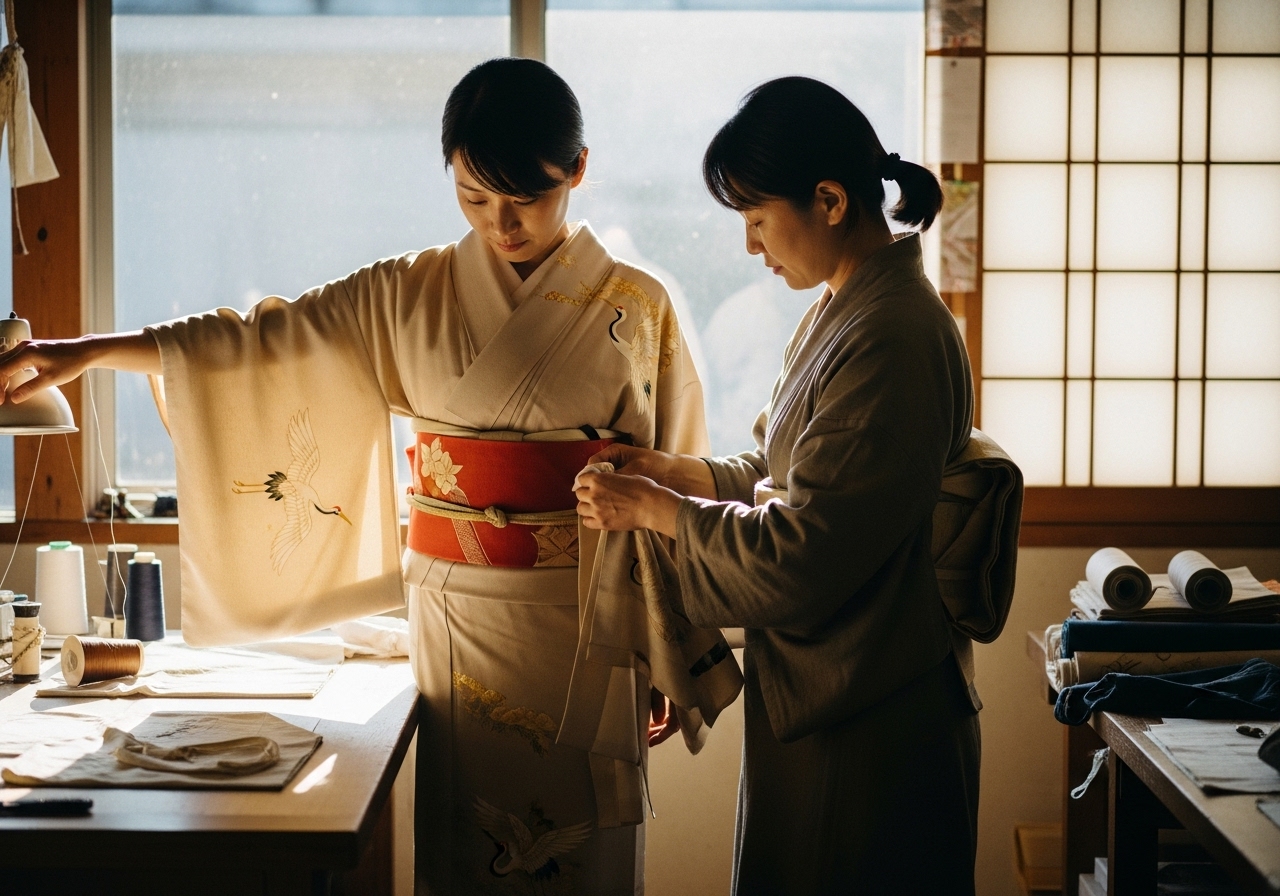
Upcycled Kimonos Are Taking Over Sustainable Fashion in 2025
In the heart of Kyoto’s quiet alleys, rolls of century-old silk wait patiently in storage — shimmering with gold thread, faded with time, and carrying stories of weddings, festivals, and family ceremonies.
But in 2025, these once-forgotten textiles are being reborn — not as museum pieces, but as the centerpiece of a global fashion revolution: upcycled kimono fashion.
What began as a niche movement among Japanese artisans has now spread to Europe, North America, and beyond — transforming the way the world thinks about clothing, sustainability, and culture.
???? A Revival Rooted in Respect
The kimono was never meant to be disposable.
In traditional Japan, each one was made to last a lifetime — hand-dyed, hand-sewn, and handed down through generations.
When a kimono grew too worn, its silk was taken apart, re-dyed, and remade into something new: a child’s garment, a wall hanging, or a small pouch called a kinchaku.
That same ethos of reuse and respect has quietly inspired the upcycling movement we see today.
As fast fashion dominates global production, the kimono’s cyclical philosophy feels almost radical — a reminder that beauty doesn’t have to mean waste.
“Every kimono has a soul,” says Yuko Arai, founder of Rumi Rock, a Tokyo-based brand known for repurposing vintage silk into jackets and accessories.
“When we upcycle, we’re not creating something new — we’re continuing its life.”
???? From Kyoto to Copenhagen: The Global Spread
Between 2018 and 2024, exports of secondhand kimono fabrics from Japan grew by over 60%, according to Japan’s Ministry of Economy, Trade and Industry.
Most of these went to France, Germany, and the U.K., where small ateliers and sustainable brands began transforming them into modern pieces.
Mikan Kimono (Berlin) — turns vintage furisode (long-sleeved kimonos) into tailored coats and handbags.
Sonia Taouhid Studio (Paris) — collaborates with Kyoto dyers to create limited-edition kimono jackets.
Studio Preta (Los Angeles) — fuses antique Japanese silk with recycled denim for a street-luxury hybrid.
In Japan, brands like Chiso (founded in 1555) and Ichiroya in Osaka have opened online archives, making authentic kimono textiles available for global reuse.
This cross-border collaboration is not fast fashion — it’s slow exchange.
???? The Craft Behind the Rebirth
Unlike recycled polyester or machine-cut remakes, upcycling a kimono requires deep craftsmanship.
Each vintage piece is unique in dye, weave, and structure — so no two creations are identical.
Artisans must unpick the original stitching by hand, wash and realign fragile silk, and carefully cut without losing the traditional pattern’s balance.
That process can take 20–40 hours per garment — a level of labor unthinkable in mass production.
As a result, each upcycled piece carries a traceable identity: the fabric’s origin, the artisan’s name, and the motif’s symbolism.
For conscious consumers, that transparency has become more valuable than luxury logos.
???? Why Upcycled Kimonos Fit the 2025 Sustainable Fashion Movement
2025’s fashion consumers are voting with their wallets.
According to GlobalData Fashion Insights, 73% of Gen Z buyers in Europe and 68% in the U.S. prefer brands that use reclaimed or natural materials.
The kimono’s cultural DNA — “repair, reuse, respect” — aligns perfectly with these values.
Beyond ethics, there’s emotional appeal.
Each piece is one-of-a-kind, a wearable story rather than a seasonal item.
Fashion psychologist Dr. Emily Langer notes that garments with cultural roots “promote emotional durability,” meaning people keep them longer — a key factor in sustainability.
“Wearing an upcycled kimono is like wearing history,” says Langer.
“It satisfies our desire for uniqueness, mindfulness, and connection.”
???? The Aesthetic Appeal: East Meets West
Upcycled kimonos aren’t just sustainable — they’re stunning.
Designers mix Japan’s vibrant textile art with Western silhouettes: bomber jackets lined with obi silk, trench coats woven from vintage brocade, and evening dresses made of antique yuzen prints.
The London Fashion Week 2025 featured several kimono-inspired looks under the “Regenerative Fashion” category.
In New York, the Metropolitan Museum of Art’s “ReWear Japan” exhibit drew global attention to kimono upcycling as cultural preservation.
On Instagram, hashtags like #UpcycledKimono and #ReworkedJapan surpassed 1.3 million posts this year.
What began as local craftsmanship is now a global aesthetic language — where East meets West, tradition meets innovation.
????️ The Meaning Behind the Movement
The upcycled kimono isn’t just an object of beauty.
It represents a deeper question that modern fashion is now asking itself: What if progress meant returning to our roots?
In Japan, the philosophy of mottainai — meaning “what a waste” — encourages gratitude for every material thing.
This principle has quietly shaped the upcycled kimono movement: valuing what already exists rather than constantly seeking newness.
As the fashion industry faces pressure to reduce waste, the kimono’s patient craftsmanship offers a blueprint for renewal — both aesthetic and ethical.
???? The Future: From Heritage to Habit
With major retailers like Farfetch and Etsy now creating “Reclaimed Kimono” sections, and Kyoto’s textile cooperatives offering training programs for international designers, the movement is scaling — without losing its soul.
By 2030, experts predict that Japan’s upcycled textile exports could surpass ¥12 billion, supported by tourism, e-commerce, and collaborations with European eco-fashion councils.
But even as it grows, the essence remains simple:
Every upcycled kimono is a quiet act of resistance — against waste, against uniformity, and against forgetting where beauty comes from.
???? Final Thoughts
In 2025, sustainable fashion is full of buzzwords — circular, green, conscious.
But the kimono has practiced those principles for over a thousand years.
It teaches that sustainability isn’t a marketing slogan — it’s a mindset.
When you wear an upcycled kimono, you’re not following a trend.
You’re participating in a centuries-old conversation between humans, hands, and heritage.
And that’s what makes this movement truly timeless.






 BOOK NOW