Why the World Fell in Love with the Kimono: A Cross-Cultural Fashion Story
Few traditional garments have crossed borders as gracefully as the Japanese kimono.
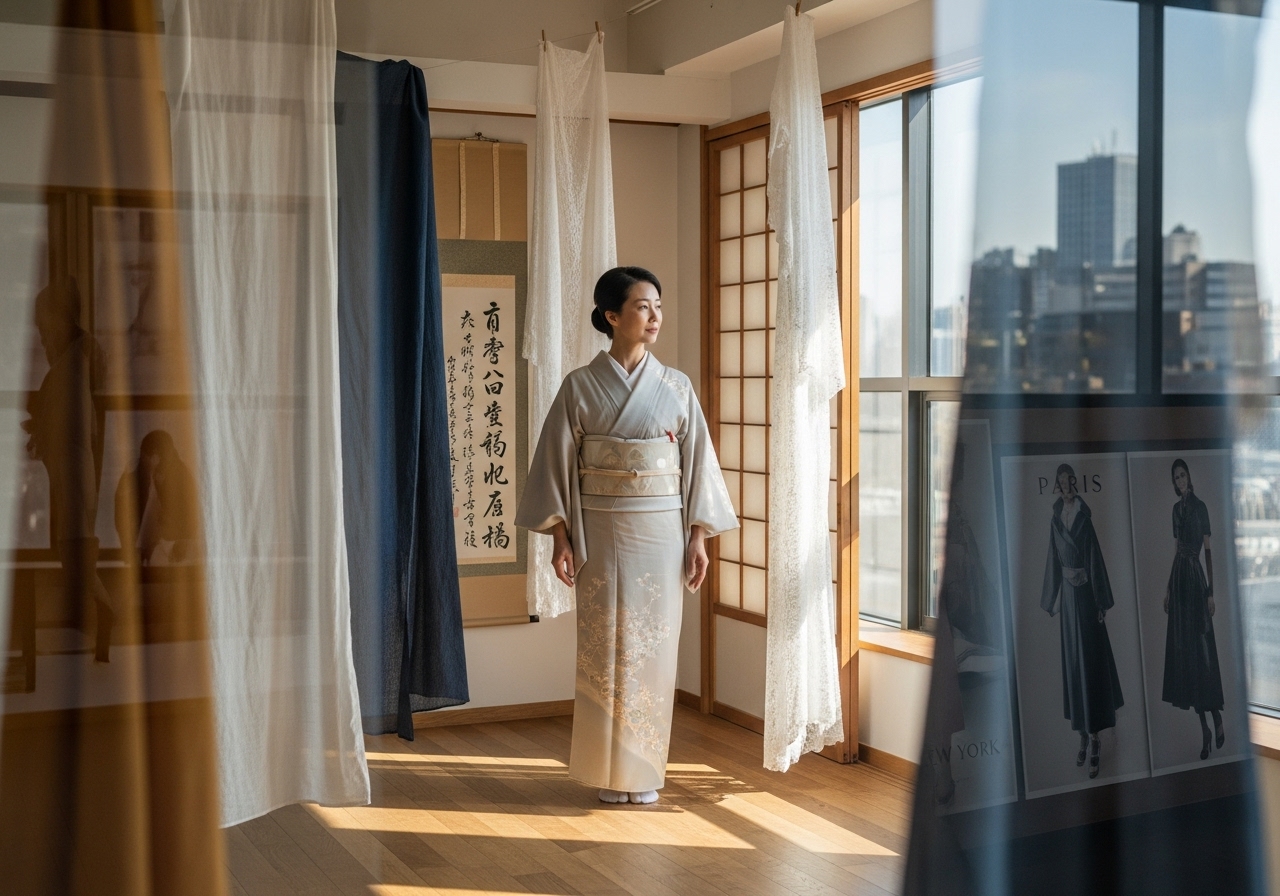
From Tokyo’s historical tea houses to runways in Paris and New York, this centuries-old robe has captured global admiration — not because it’s exotic, but because it’s timeless.
In the last two decades, the kimono has appeared in museums, pop culture, and even sustainable fashion projects.
Here’s how and why the world fell in love with Japan’s most iconic garment.
???????? 1. The Kimono Represents a Universal Idea of “Beauty in Simplicity”
In Japanese culture, beauty often lies in subtlety — a philosophy known as wabi-sabi.
The kimono embodies this perfectly: clean lines, natural fabrics, and deliberate symmetry.
Unlike Western garments designed to shape the body, the kimono celebrates the beauty of form itself — a straight silhouette that allows fabric, color, and texture to speak.
This minimal aesthetic resonated deeply with Western designers in the 20th century.
When the world was chasing complexity and volume, Japanese fashion offered balance and calm.
Designers such as Yohji Yamamoto, Issey Miyake, and Rei Kawakubo introduced these ideas globally, showing that elegance could exist without extravagance.
“It’s not about decoration,” said Yohji Yamamoto in a 1983 interview.
“It’s about silence — the space between the folds.”
That idea still defines modern luxury today.
???? 2. Western Designers Found Endless Inspiration in Its Structure
In the 1960s and 70s, the kimono began to appear in haute couture.
Designers like Yves Saint Laurent, John Galliano, and Jean Paul Gaultier reinterpreted it through Western tailoring.
The wide sleeves, the belt (obi), and the wrap-style front became symbols of “oriental elegance” — though not without controversy.
At the same time, Japanese pioneers such as Miyake and Kawakubo were showcasing in Paris.
They didn’t “borrow” from the kimono — they redefined it.
Their collections used geometric draping and oversized silhouettes inspired by kimono architecture, earning international praise for innovation.
In 1994, Issey Miyake’s Pleats Please collection brought kimono-inspired folds to everyday wear, merging tradition with practicality.
Today, brands like Haori de TiTi in London and Maison de Soir in Los Angeles continue this legacy, selling kimono jackets and robes that reinterpret Japanese aesthetics for global audiences.
???? 3. Pop Culture Made the Kimono Familiar, Not Foreign
While designers were exploring its form, pop culture was introducing the kimono to mainstream audiences.
Films like Memoirs of a Geisha (2005) and anime such as Demon Slayer (Kimetsu no Yaiba) and Spirited Away presented kimono as both elegant and emotionally symbolic.
In Demon Slayer, for example, each character’s kimono pattern carries meaning — from Tanjiro’s green and black check (representing perseverance) to Nezuko’s pink hemp leaves (symbolizing growth).
These visual codes connected millions of global viewers with Japanese design principles without them even realizing it.
As cosplay communities grew in North America and Europe, interest in real kimono and yukata followed.
Cultural festivals like Japan Expo Paris and Hyper Japan London now feature kimono runways and live dressing demonstrations every year.
???? 4. The Rise of Kimono as Sustainable Fashion
In an era dominated by fast fashion, the kimono’s slow craftsmanship feels revolutionary.
A single handmade kimono can take months to produce.
Silk is hand-dyed, motifs are painted by artisans, and every piece is made to last for decades — not a single season.
In the 2010s, vintage kimono exports from Japan rose steadily.
According to Japan’s Ministry of Economy, over 1.2 million used kimonos were shipped overseas between 2018 and 2023, mainly to Europe and North America, where they were remade into modern garments.
Small brands such as Rumi Rock (Tokyo) and Mikan Kimono (Berlin) now upcycle antique kimono fabrics into new fashion pieces.
This “reclaimed kimono movement” reflects a global desire for sustainability, authenticity, and story-driven fashion — values deeply tied to Japanese craftsmanship.
???? 5. Cross-Cultural Collaboration, Not Appropriation
While the line between appreciation and appropriation has often been debated, today’s kimono culture thrives on collaboration.
Japanese artisans and foreign designers now work together to reinterpret the garment respectfully.
For instance, The Kyoto Costume Institute partners with international museums like the Victoria & Albert Museum in London to exhibit authentic kimono history alongside modern reinterpretations.
Meanwhile, Kyoto-based studio Chiso, founded in 1555, collaborates with young European designers to produce limited kimono collections using centuries-old dyeing techniques.
This mutual respect has transformed the kimono from a misunderstood “exotic costume” into a celebrated example of living cultural exchange.
???? 6. Why the World Still Loves It Today
The world’s love affair with the kimono isn’t about nostalgia — it’s about what it represents.
In an age of speed and digital noise, the kimono stands for balance, craftsmanship, and presence.
It slows you down. It asks you to notice how the fabric moves, how colors reflect light, how one’s posture changes when wearing it.
It’s not only fashion; it’s mindfulness in motion.
That’s why, even in 2025, global fashion weeks continue to feature kimono-inspired collections — and why travelers in Kyoto or Osaka still line up to rent one for a day.
They’re not just taking photos. They’re participating in a centuries-long story of beauty, patience, and respect.
???? Final Thoughts
The kimono’s journey from Japanese streets to global stages is more than a story of fabric — it’s a reflection of how art, culture, and humanity connect.
From the tea ceremony to the runway, from samurai armor to sustainable fashion, it has adapted without losing its soul.
The world didn’t just fall in love with the kimono because it looked beautiful.
It fell in love because the kimono means something — serenity, craftsmanship, and the quiet power of tradition evolving gracefully in a modern world.






 BOOK NOW