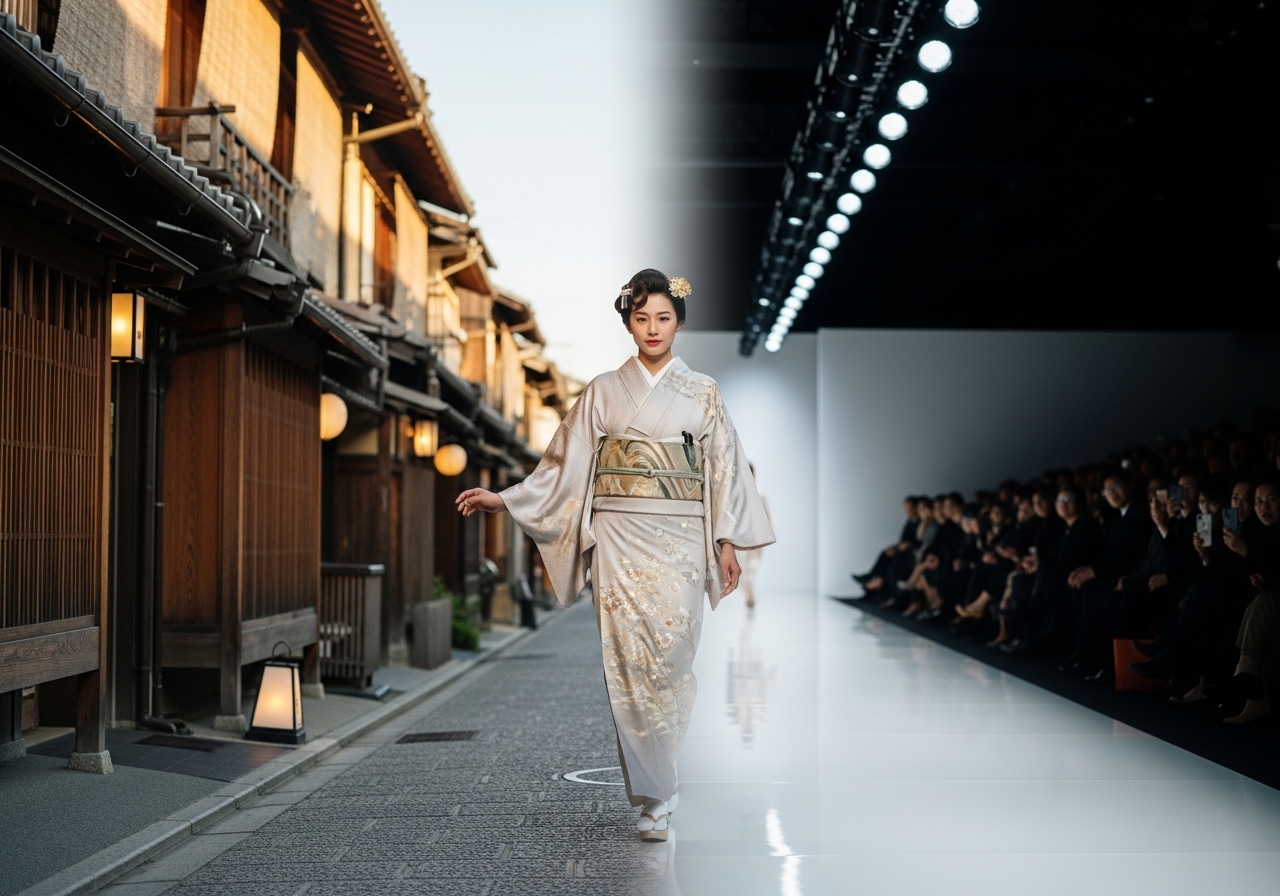
The Evolution of Kimono Fashion: From Tradition to Global Runway
Few garments in the world carry as much history, emotion, and artistry as the Japanese kimono.
Once reserved for aristocrats, samurai, and ceremonial occasions, this elegant robe has transformed through centuries—shifting from a symbol of tradition to an icon of global style.
Today, you’ll find kimono-inspired silhouettes on Paris runways, New York streets, and Instagram feeds alike.
But how did this timeless piece of Japanese culture travel so far beyond its roots?
Let’s explore the fascinating evolution of kimono fashion—from ancient craftsmanship to its modern-day rebirth in global fashion.
???? A Garment Born from Harmony and Precision
The kimono’s story begins in the Heian period (794–1185), when Japanese court nobles adopted flowing silk robes that reflected both status and season.
Every fold, every color, and even the way a kimono overlapped (always left over right) carried meaning.
Wearing a kimono wasn’t just about dressing—it was about communicating who you were.
Over the centuries, the kimono evolved through the Edo period’s vibrant merchant culture and the Meiji era’s Western influences.
It absorbed subtle touches of modernization while preserving its spiritual roots: simplicity, symmetry, and respect for form.
✨ From Everyday Wear to Symbol of Heritage
Before the 20th century, kimonos were part of everyday life in Japan.
Artisans dyed fabrics using natural pigments, hand-painted motifs of cranes, waves, and cherry blossoms, and tailored each robe with mathematical precision.
But as Japan opened to the West, modern clothing replaced traditional garments in daily wear.
By the 1950s, the kimono became something worn mostly for weddings, graduations, or tea ceremonies—a quiet relic of elegance.
Yet even as it retreated from daily life, the kimono’s influence didn’t fade—it began to inspire designers far beyond Japan’s borders.
???? The Kimono’s Global Transformation
In the 1960s and 70s, Western designers like Yves Saint Laurent and John Galliano introduced kimono-inspired silhouettes to haute couture.
Loose sleeves, wrap belts, and flowing fabrics became the language of exotic sophistication.
In the 2000s, fast fashion brands reinterpreted “kimono cardigans” for casual wear, often blending Japanese motifs with bohemian aesthetics.
What makes this journey remarkable is not cultural appropriation, but cultural conversation.
Modern designers, both Japanese and global, are now collaborating with traditional artisans—reintroducing craftsmanship into contemporary fashion.
Brands like Maison de Soir, Rumi Rock, and Tomo Koizumi show that the kimono’s essence—balance, respect, and artistry—can thrive in a globalized world.
???? The Rise of Sustainable & Upcycled Kimonos
In recent years, a new movement has emerged: upcycled kimonos.
Vintage kimono fabrics, once tucked away in family closets, are being reborn as jackets, handbags, and modern dresses.
These creations don’t just reuse material—they preserve stories, memories, and artistry that would otherwise fade away.
This sustainable trend resonates deeply with modern consumers who crave authenticity and mindfulness.
Each piece becomes more than clothing—it’s a bridge between generations, cultures, and values.
And perhaps that’s why the kimono continues to fascinate designers and wearers worldwide: it reminds us that fashion can be both beautiful and meaningful.
???? From Kyoto Workshops to Global Runways
In Kyoto’s narrow backstreets, artisans still dye silk by hand and weave fabrics on century-old looms.
Their craft has inspired new generations of creators who mix traditional dyeing techniques with modern cuts and fabrics.
You’ll now find kimono-inspired designs gracing international stages—from the Tokyo Fashion Week to Paris Couture—proving that tradition doesn’t have to live in the past.
The kimono’s journey is not about nostalgia; it’s about evolution.
It stands as proof that when culture meets creativity, the result can transcend time and borders.
???? A Global Symbol of Balance and Beauty
To wear a kimono—whether in a tea ceremony, at a photoshoot in Kyoto, or on a fashion runway—is to embody harmony between the old and new, the East and the West, the simple and the exquisite.
It’s not just fabric. It’s philosophy.
It’s a story that continues to unfold—thread by thread, heart to heart.
✍️ Author’s Note
If you ever visit Japan, don’t just see the kimono—feel it.
Talk to the artisans, walk through Kyoto’s textile streets, or rent one for a day in Osaka’s Namba district.
You’ll realize it’s not just clothing. It’s a living language of beauty.






 BOOK NOW