Hakama vs Kimono | Understanding Japan’s Two Iconic Traditional Outfits
When you visit Japan or see images of traditional Japanese clothing, you’ll likely notice two garments that often get mixed up — the kimono and the hakama. Both are elegant, both are steeped in history, and both represent the spirit of Japanese culture. But while they may appear similar to the untrained eye, their differences in purpose, structure, and symbolism reveal two very distinct traditions.
If you’ve ever wondered “What’s the difference between a kimono and a hakama?”, this guide will walk you through everything you need to know — from history and function to how each is worn today.
What Is a Kimono?
The kimono (literally “thing to wear”) is Japan’s most famous traditional garment. It’s a long robe made from a single bolt of fabric, cut into straight pieces and sewn together to create a T-shaped silhouette. Traditionally, the kimono wraps around the body, left over right, and is secured with a wide sash known as an obi.
Kimono come in countless varieties — casual cotton yukata, elegant furisode with long sleeves for unmarried women, and formal tomesode worn at weddings. Patterns, colors, and fabrics all convey meaning about the wearer’s age, marital status, and the occasion.
Unlike Western fashion, where fit and body shape are emphasized, the kimono’s beauty lies in symmetry, proportion, and drape. The goal is harmony — between the person, the garment, and the occasion.
What Is a Hakama?
The hakama is a pleated over-garment worn over a kimono, resembling wide-leg pants or a long skirt. Originally part of court attire in the Heian period (794–1185), the hakama later became associated with samurai, scholars, and martial artists.
While the kimono is a single continuous robe, the hakama adds structure and movement. It’s tied around the waist with long cords called himo, and features seven pleats — five in front and two in back — each symbolizing virtues such as honesty, respect, and courage.
Today, hakama are still used in martial arts like aikido and kyudo, as well as in ceremonies such as graduations and weddings.
(If you’d like to explore more about its history and meaning, you can read our guide to hakama basics in Part 1 of this series.)
Key Differences Between Hakama and Kimono
Although the two garments are often seen together, they serve very different purposes.
• Shape and structure – A kimono is a single robe that wraps around the body, while a hakama is worn over it as separate pleated pants or a skirt.
• Use and occasion – Kimono range from casual to formal wear; hakama are reserved for ceremonial, academic, or martial settings.
• Symbolism – Kimono express beauty, season, and status through color and pattern. Hakama convey discipline and respect through simplicity and geometry.
• Gender expression – Both men and women wear kimono; hakama are more common for men, though women wear them at graduations or as shrine maidens (miko).
• Movement and presence – The kimono flows gracefully with each step, while the hakama adds volume and authority, making the wearer appear poised and dignified.
Hakama and Kimono Together
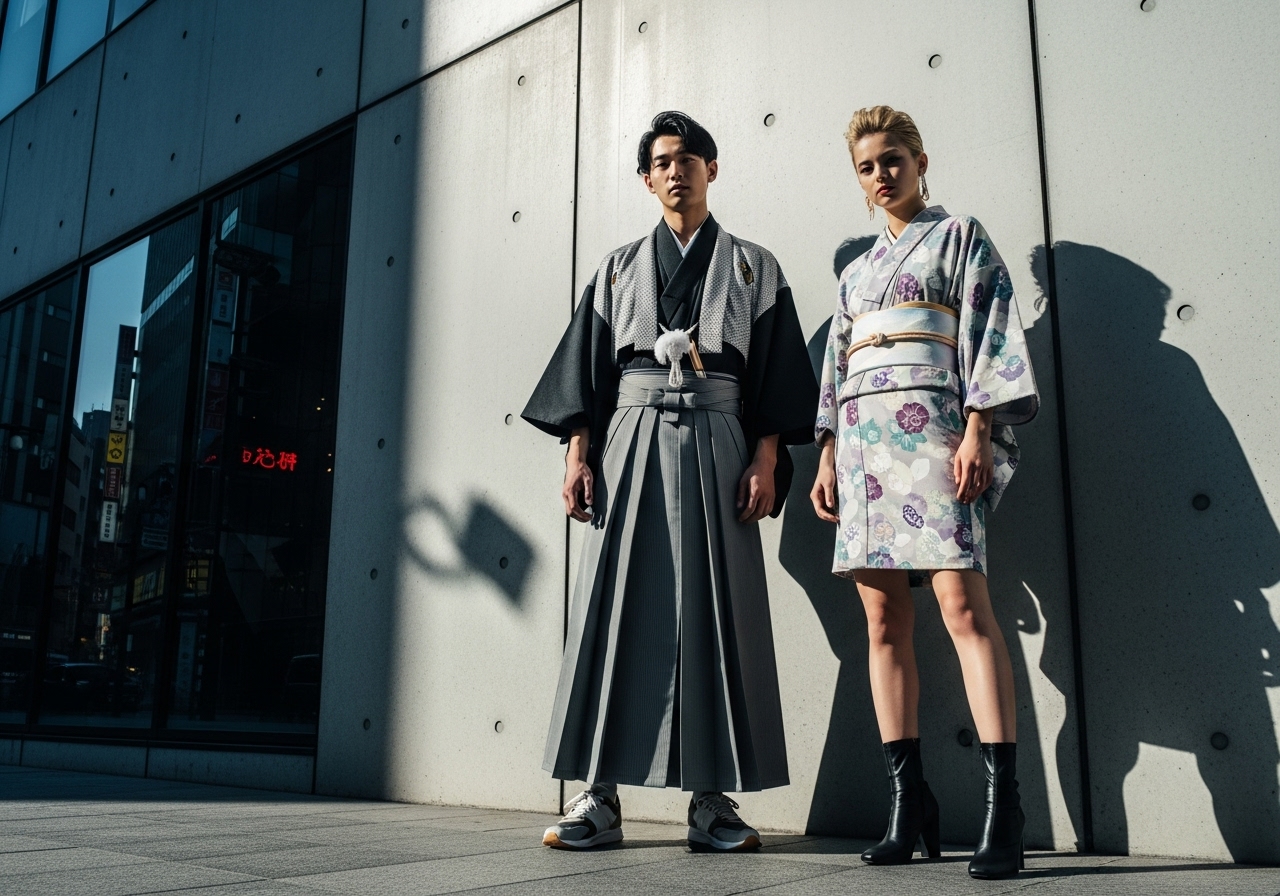
When combined, these garments form Japan’s most formal traditional menswear: the montsuki haori hakama set — a black kimono with family crests, a haori jacket, and striped hakama trousers. This combination is worn at weddings, tea ceremonies, and major life events.
Women also pair kimono and hakama, especially during graduation ceremonies. The blend of elegance and strength in the outfit symbolizes transition — from youth to adulthood, from learning to independence.
Hakama vs Kimono in Modern Life
Today, kimono culture has found new life in tourism, art, and contemporary fashion. Rental shops in Kyoto and Osaka offer both kimono and hakama experiences for travelers, letting visitors step into Japanese tradition for a day.
Meanwhile, modern designers have adapted hakama silhouettes into streetwear, turning the centuries-old pleated design into minimalist trousers and gender-neutral fashion statements. The kimono, too, continues to inspire collections worldwide, from Paris runways to Tokyo boutiques.
Choosing Which to Wear
If you’re planning to try traditional Japanese clothing:
• For sightseeing or casual experiences – Choose a yukata or simple kimono.
• For formal ceremonies or photo shoots – Add a hakama for dignity and structure.
• For martial arts or cultural study – Wear a hakama to honor tradition and discipline.
Each garment tells a story — and when worn with awareness, both kimono and hakama become expressions of respect for Japanese culture.
Final Thoughts
In the conversation of “Hakama vs Kimono,” there’s no competition — only harmony. The kimono provides the foundation of Japanese dress; the hakama completes it with strength and grace. Together, they embody two sides of the same philosophy: elegance through balance, and meaning through simplicity.
Whether you admire them in a Kyoto street, a martial arts dojo, or a graduation hall, these garments remind us that true style never fades — it evolves, carrying centuries of tradition in every pleat and fold.






 BOOK NOW