The Timeless Elegance of the Uchikake Kimono: Japan’s Most Exquisite Bridal Robe
Among all the forms of traditional Japanese clothing, few capture the imagination quite like the uchikake kimono. With its radiant silk fabric, intricate embroidery, and majestic trailing hem, the uchikake stands as one of Japan’s most beautiful and symbolic garments. Worn mainly by brides in traditional weddings or by actors in classical theater, this robe embodies centuries of Japanese artistry, spiritual meaning, and craftsmanship. For travelers, fashion lovers, and cultural enthusiasts alike, learning about the uchikake kimono reveals a deeper understanding of Japan’s timeless elegance.
What Is an Uchikake Kimono?
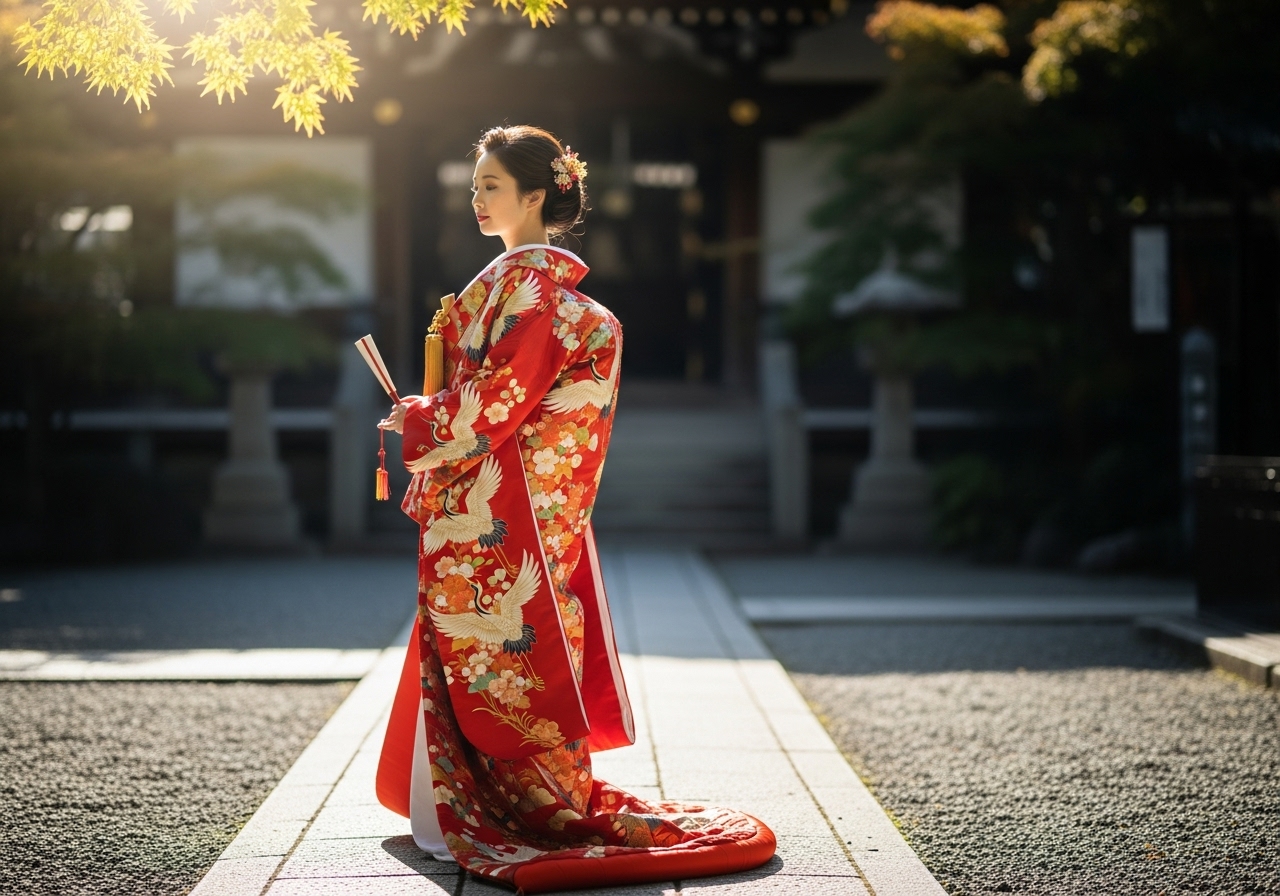
The uchikake kimono is a highly formal outer robe that is draped over another kimono, often during weddings or special ceremonies. Unlike regular kimono, the uchikake is not fastened with an obi belt. Instead, it is worn open, allowing its rich patterns and embroidery to flow freely. The hem is heavily padded to create a smooth, graceful train that glides along the floor, symbolizing dignity and serenity.
In Japanese tradition, the uchikake represents the height of ceremonial beauty. It is not everyday clothing but rather a robe reserved for the most important life events. Historically, only noblewomen and members of the samurai class could wear it, but today it is most commonly associated with brides, making it a symbol of joy, purity, and new beginnings.
The Historical Origins of the Uchikake
The uchikake’s roots stretch back to Japan’s Muromachi period (14th–16th centuries), when it was first worn by court ladies as an elegant outer coat. During the Edo period, it became a marker of high social rank among women of samurai families. The rich brocades and delicate embroidery reflected wealth and status, while the long, trailing hem conveyed grace and refinement.
As Japan’s culture evolved, the uchikake took on new meanings. By the 19th and 20th centuries, it had become firmly established as a bridal garment, symbolizing a woman’s transition from single life to marriage. The visual splendor of the uchikake turned wedding ceremonies into deeply aesthetic events — celebrations not only of union but also of beauty and tradition.
Today, the uchikake is worn primarily for weddings, theatrical performances, and high-end photography sessions. Yet even as its occasions for wear have changed, its essence as a representation of Japanese craftsmanship has remained untouched.
The Beauty of Colors and Motifs
Every uchikake kimono is a masterpiece of symbolism. The colors, designs, and motifs each carry cultural significance deeply rooted in Japanese aesthetics.
Red uchikake are the most traditional, symbolizing happiness, vitality, and celebration. Red is believed to ward off evil and invite good fortune, making it the most popular color for weddings.
White uchikake are equally meaningful, representing purity, spiritual renewal, and the start of a new chapter in life. Brides often wear a white uchikake during the Shinto ceremony, then change into a colorful one (called iro-uchikake) for the reception.
Gold and silver threads add luxury and divine radiance. They are woven into motifs that reflect wishes for longevity and harmony.
Common motifs include:
Cranes, representing marital happiness and long life.
Turtles, symbolizing endurance and stability.
Pine, bamboo, and plum blossoms, known as the Three Friends of Winter, symbolizing perseverance and resilience.
Waves and fans, reflecting movement, flow, and the unfolding of good fortune.
Each design is more than decoration—it is a blessing stitched into the fabric, a silent wish for love, prosperity, and harmony.
The Artistry Behind an Uchikake
Creating an uchikake kimono requires extraordinary craftsmanship. Each robe is handcrafted by artisans who specialize in weaving, dyeing, and embroidery — skills passed down through generations.
The process often takes several months to complete, beginning with the selection of premium silk satin or brocade. The fabric is then dyed, embroidered, and padded. Gold and silver threads are applied by hand using a technique called couching, which ensures that every shimmering detail stays perfectly in place.
The padded hem of the uchikake serves both an aesthetic and practical purpose: it keeps the robe open at the front and spreads the fabric elegantly across the floor. This unique structure allows the bride’s movements to appear smooth and flowing, much like a performer’s dance.
The result is not just a garment, but a work of art — one that combines precision, patience, and poetry.
Uchikake Kimono in Modern Japan
In modern Japan, the uchikake kimono remains an essential part of traditional weddings, particularly in Shinto-style ceremonies. Brides often wear a white shiromuku kimono during the formal ritual and later switch to a vibrant uchikake for the reception or photographs.
Beyond weddings, uchikake kimono appear in cultural exhibitions, museum collections, and kabuki theater. Performers use elaborately decorated uchikake to represent nobility or divine beings. The robe’s grandeur immediately signals authority and beauty to the audience.
Today, travelers visiting Japan can also experience this cultural treasure. Many kimono rental studios in Kyoto, Osaka, and Tokyo offer bridal or formal photo plans where visitors can try on authentic uchikake robes. Standing in front of a temple or garden in one of these magnificent garments provides a rare opportunity to step into Japan’s history — and feel its quiet elegance firsthand.
Caring for and Preserving Uchikake Kimono
Because uchikake are made of delicate silk and metallic threads, they require special care. They are usually stored flat, wrapped in breathable washi paper, and kept away from light and moisture. Many families treat their uchikake as heirlooms, passing them down through generations.
Antique uchikake are also highly collectible. Some are displayed as home décor or museum pieces, admired for their intricate designs and cultural symbolism. Owning an uchikake is like holding a piece of Japanese history — one that speaks without words through its beauty.
Why the Uchikake Kimono Still Matters
The uchikake kimono is more than a traditional wedding robe. It is a symbol of continuity, representing how Japan blends the ancient and the modern, the spiritual and the aesthetic. In a world that changes rapidly, the uchikake reminds us that true beauty lies in patience, craftsmanship, and meaning.
When a bride wears an uchikake, she carries not just fabric, but the legacy of centuries — of artisans, families, and stories woven together. Each crane, flower, and golden thread holds a wish for happiness and harmony that transcends time.
Even if you never wear one, simply seeing an uchikake in person leaves a lasting impression. Its quiet radiance tells the story of Japan itself: elegant, disciplined, and deeply human.






 BOOK NOW