Male vs Female Kimono: Differences, Meanings, and How to Recognize Each Style
When you visit Japan, you’ll see men and women walking gracefully in colorful robes called kimono — but did you know that the male vs female kimono differ in nearly every detail?
From sleeve length and belt style to color and meaning, these differences reflect centuries of Japanese aesthetics, gender expression, and social tradition.
Whether you’re planning to rent a kimono in Kyoto or simply fascinated by Japanese culture, this guide will help you spot — and appreciate — the beauty behind each design.
???? The Essence of the Kimono
The kimono is Japan’s most iconic traditional garment, worn by both men and women for centuries.
Though the basic shape — a long robe with wide sleeves, wrapped left over right — is the same, how it’s styled, colored, and worn changes entirely depending on gender.
Each detail tells a story: who you are, what occasion you’re celebrating, and even the season you’re in.
???? Men’s Kimono: Simple, Straight, and Subtle
Men’s kimono focus on simplicity and structure.
They’re designed to emphasize calmness, balance, and quiet dignity rather than decoration or color.
You’ll notice the following traits in a traditional male kimono:
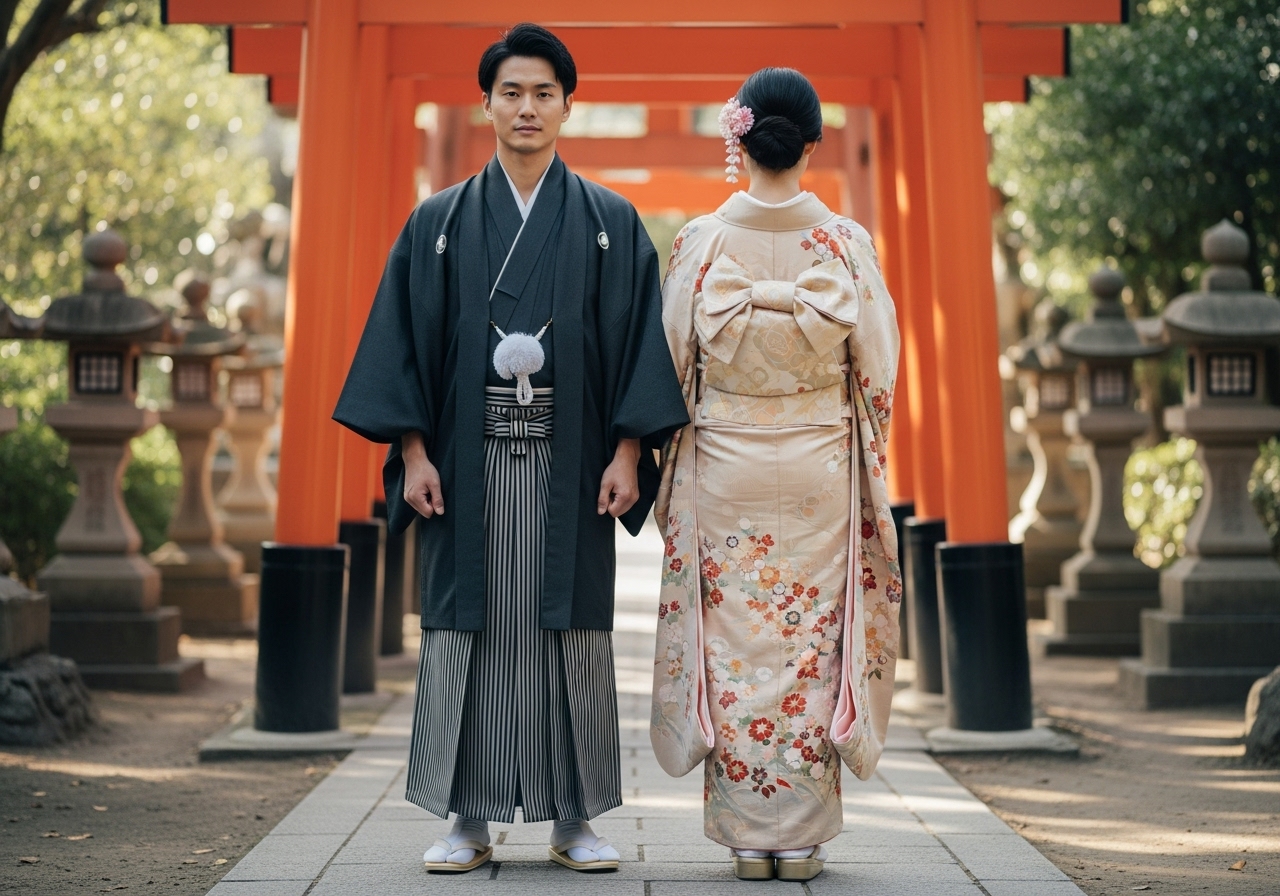
The shape is straight and slightly loose, giving comfort and mobility.
The sleeves are shorter and attached to the body, making the silhouette sharp.
Colors tend to be dark and muted — navy, gray, brown, or black are most common.
Patterns, if any, are small and discreet, often limited to the fabric weave.
The obi belt is narrow and tied low around the hips, never flashy.
The collar is slim and lies flat against the chest.
For formal events, men often wear a haori (a short jacket) or hakama (pleated skirt-like trousers). The most formal version is a black kimono with family crests — a symbol of respect and tradition.
Modern men’s kimono fashion has evolved, but the essence remains the same: quiet sophistication and comfort over decoration.
???? Women’s Kimono: Graceful, Colorful, and Expressive
Women’s kimono, on the other hand, celebrate beauty, movement, and emotion.
Every element — from sleeve length to fabric color — is designed to express personality and occasion.
Typical traits include:
The silhouette is fitted and more curved, created by folding extra fabric at the waist (called ohashori).
Sleeves are long and flowing, especially on younger women’s kimono like the furisode.
Colors are vivid and symbolic — soft pinks and pastels for youth, deep reds and golds for maturity.
Patterns are seasonal or nature-inspired: cherry blossoms, cranes, waves, or autumn leaves.
The obi belt is wide, decorative, and tied high on the back in a beautifully arranged knot.
The collar is slightly wider and open at the neck, adding elegance.
Women often accessorize their kimono with matching handbags, hair ornaments, and zori sandals with white tabi socks.
Each combination is chosen carefully to balance grace and harmony — the heart of Japanese aesthetics.
???? Key Differences Between Male and Female Kimono
When you compare male vs female kimono side by side, the differences become clear even without words.
Men’s kimono are minimal, monochrome, and straight-lined. They convey stability and calm strength.
Women’s kimono, in contrast, are colorful, curved, and layered — a celebration of elegance, life, and emotion.
Here are the main distinctions to look for when identifying them:
Shape: Men’s kimono hang straight from the shoulders; women’s have a folded waistline for shape.
Sleeves: Men’s sleeves are short and attached; women’s are long and flow freely.
Obi belt: Men tie a narrow belt low on the hips; women use a wide obi tied high with decorative bows.
Color and pattern: Men prefer solid, subdued tones; women wear bright, detailed designs that reflect the season.
Movement: Men’s kimono restrict flow, while women’s move rhythmically with each step, enhancing grace.
These distinctions aren’t just visual — they carry deep cultural meaning.
In traditional Japan, men’s clothing represented composure and discipline, while women’s kimono symbolized refinement, beauty, and connection to nature.
???? Kimono in Modern Japan
Today, both men and women wear kimono mainly for special occasions — weddings, coming-of-age ceremonies, tea gatherings, or festivals.
However, the boundaries between male and female kimono are slowly blurring.
Young designers are reinterpreting traditional silhouettes, creating gender-neutral versions that blend the soft elegance of women’s kimono with the clean structure of men’s styles.
Rental shops in Kyoto, Osaka, and Tokyo now offer couple sets or even unisex designs for travelers who want a more personalized experience.
Even so, the classic male vs female kimono distinction remains a powerful symbol of Japanese artistry — where balance and beauty are equally honored.
???? Final Thoughts: Two Styles, One Harmony
The kimono is more than clothing — it’s a living art form.
The difference between male vs female kimono isn’t about contrast, but about harmony.
Men’s kimono whisper with calm dignity; women’s kimono flow with emotion and grace.
Together, they represent the perfect balance that defines Japanese culture — quiet strength and delicate beauty, side by side.
When you wear a kimono, you’re not just putting on fabric.
You’re wearing history, tradition, and a story that continues to unfold with every step.






 BOOK NOW