Hanfu vs Kimono: How to Tell the Difference Between Chinese and Japanese Traditional Clothing
When you see graceful robes with wide sleeves, delicate patterns, and elegant movements, you might wonder — is that Hanfu or Kimono?
Both are stunning symbols of East Asian culture, but they come from very different traditions.
In this guide, we’ll explore the key differences between Hanfu vs Kimono, from history and design to how each garment is worn today.
If you’ve ever been confused by these beautiful outfits, this is your complete answer.
???? What Is Hanfu?
Hanfu (汉服) literally means “Han clothing,” referring to the traditional attire of the Han Chinese people.
It dates back over 3,000 years, evolving through dynasties such as Han, Tang, and Ming.
Hanfu was the daily wear of scholars, nobles, and citizens until the 17th century, when Manchu clothing styles replaced it during the Qing dynasty.
Recently, Hanfu has made a strong comeback — especially among younger generations in China who celebrate cultural heritage.
Common Features of Hanfu
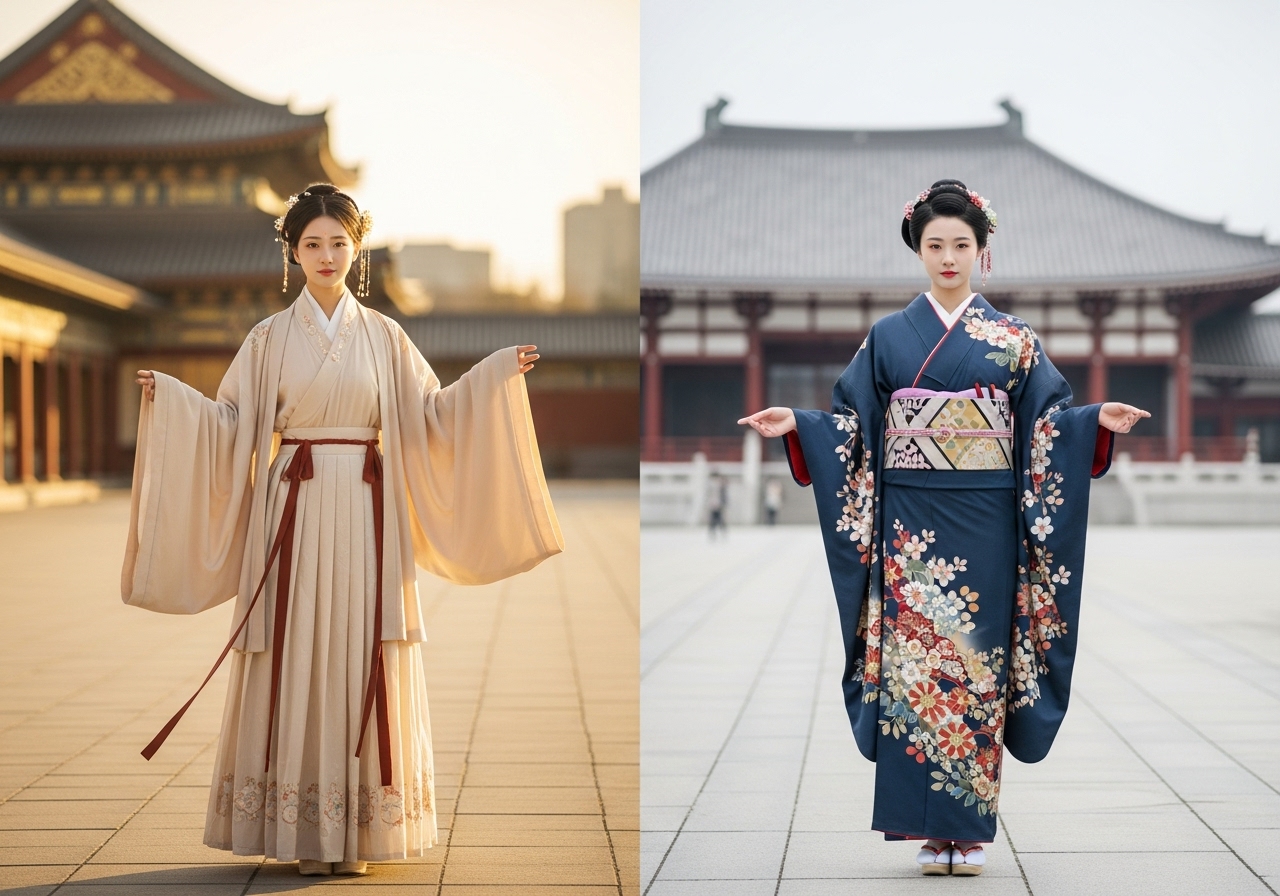
Crossed collars forming a “Y” shape
Flowing, layered fabric that ties with sashes (no obi belt)
Loose sleeves that drape gracefully
Often made of silk, linen, or cotton
Worn by both men and women for festivals, performances, and photoshoots
???? Modern Hanfu often draws inspiration from Tang or Ming dynasty fashion.
???? What Is Kimono?
The Kimono (着物) is Japan’s national dress, recognized worldwide for its refined beauty.
It developed from ancient Chinese robes during Japan’s Heian period (794–1185), but over centuries evolved into a uniquely Japanese art form.
Today, kimonos are worn mainly for special occasions — weddings, tea ceremonies, and festivals.
The word “kimono” literally means “thing to wear.”
Common Features of Kimono
T-shaped, ankle-length garment
Worn left over right (except for funerals)
Secured with a wide sash called an obi
Typically made of silk, featuring seasonal patterns
Accompanied by accessories like zori sandals and tabi socks
???? In summer, the lighter cotton version called a yukata is popular.
???? Hanfu vs Kimono: The Main Differences
Although they share historical roots, Hanfu and Kimono differ in many details — from structure to symbolism.
1. Design and Fit
Hanfu has flowing layers and ribbons tied at the waist. It feels looser and more romantic.
Kimono has a structured form with sharp folds and an obi belt that creates a defined silhouette.
2. Sleeves
Hanfu sleeves are wide and open, often draping freely.
Kimono sleeves are rectangular and attached to the body with smaller openings for the arms.
3. Collar and Overlap
Both have “Y”-shaped collars, but Hanfu collars are usually flat and soft, while kimono collars are stiff and precise.
The kimono is always worn left over right — wearing it the other way is reserved for funerals.
4. Belt or Sash
Hanfu uses ribbons or sashes made of the same fabric as the garment.
Kimono uses a wide obi belt, often beautifully decorated and tied in elaborate shapes at the back.
5. Footwear
Hanfu: Cloth or wooden shoes, sometimes embroidered.
Kimono: Traditional sandals (zori or geta) with white tabi socks.
6. Cultural Meaning
Hanfu represents grace, freedom, and revival of Chinese tradition.
Kimono embodies discipline, elegance, and seasonal harmony in Japanese aesthetics.
???? Hanfu and Kimono in Modern Culture
Both garments have seen a huge cultural revival in recent years.
In China, Hanfu enthusiasts gather for photoshoots, parades, and traditional festivals.
In Japan, Kimono rental shops in Kyoto, Osaka, and Tokyo let visitors experience cultural beauty firsthand.
On social media, both styles inspire global audiences — from cosplay to fashion fusion.
Designers around the world are blending Hanfu and Kimono silhouettes with modern streetwear, making traditional fashion cool again.
???? Hanfu vs Kimono: Which Should You Try?
If you’re visiting Japan, renting a kimono is an unforgettable way to connect with local culture.
Shops like Kawaii Osaka or Kyoto Wargo offer full packages with dressing, hairstyling, and accessories.
If you’re traveling to China, wearing Hanfu in places like Hangzhou or Xi’an lets you experience living history.
Both outfits are stunning for photoshoots — choose depending on where your journey takes you.
???? Final Thoughts: Two Cultures, One Shared Elegance
The debate of Hanfu vs Kimono isn’t about which is better — it’s about appreciating two civilizations that shaped the art of dress.
Hanfu expresses ancient Chinese grace and movement, while Kimono reflects Japanese refinement and harmony.
Both are living traditions that continue to evolve — not relics of the past, but symbols of pride and artistry.
Whether you wear Hanfu or Kimono, you’re not just dressing up — you’re stepping into a story thousands of years in the making.






 BOOK NOW