Kimono Types: Discover Japan’s Traditional Styles and What They Really Mean
When you think of Japan, you might picture a woman gliding through a temple gate in a flowing robe, or a man dressed in elegant traditional clothing during a festival. That image? Most likely it’s a kimono — but did you know there are many different kimono types, each with its own story, formality, and cultural meaning?
Whether you’re planning a trip to Kyoto or Osaka, looking for travel photoshoot ideas, or simply fascinated by Japanese fashion, this guide will help you understand the main kimono types you’ll see — and maybe even wear — during your visit.
Why It Matters: More Than Just a Beautiful Dress
In Japan, a kimono isn’t just clothing. It’s a reflection of identity and respect for tradition.
Every detail — from sleeve length and fabric to color and pattern — conveys meaning about the wearer’s age, marital status, and even the season.
By understanding the differences between kimono types, you’ll not only recognize their unique beauty but also appreciate the deep cultural messages woven into every stitch. It makes your travel experience, your photography, and your fashion knowledge far richer.
The Main Kimono Types You’ll See in Japan
Furisode
This is the show-stopping kimono for young, unmarried women.
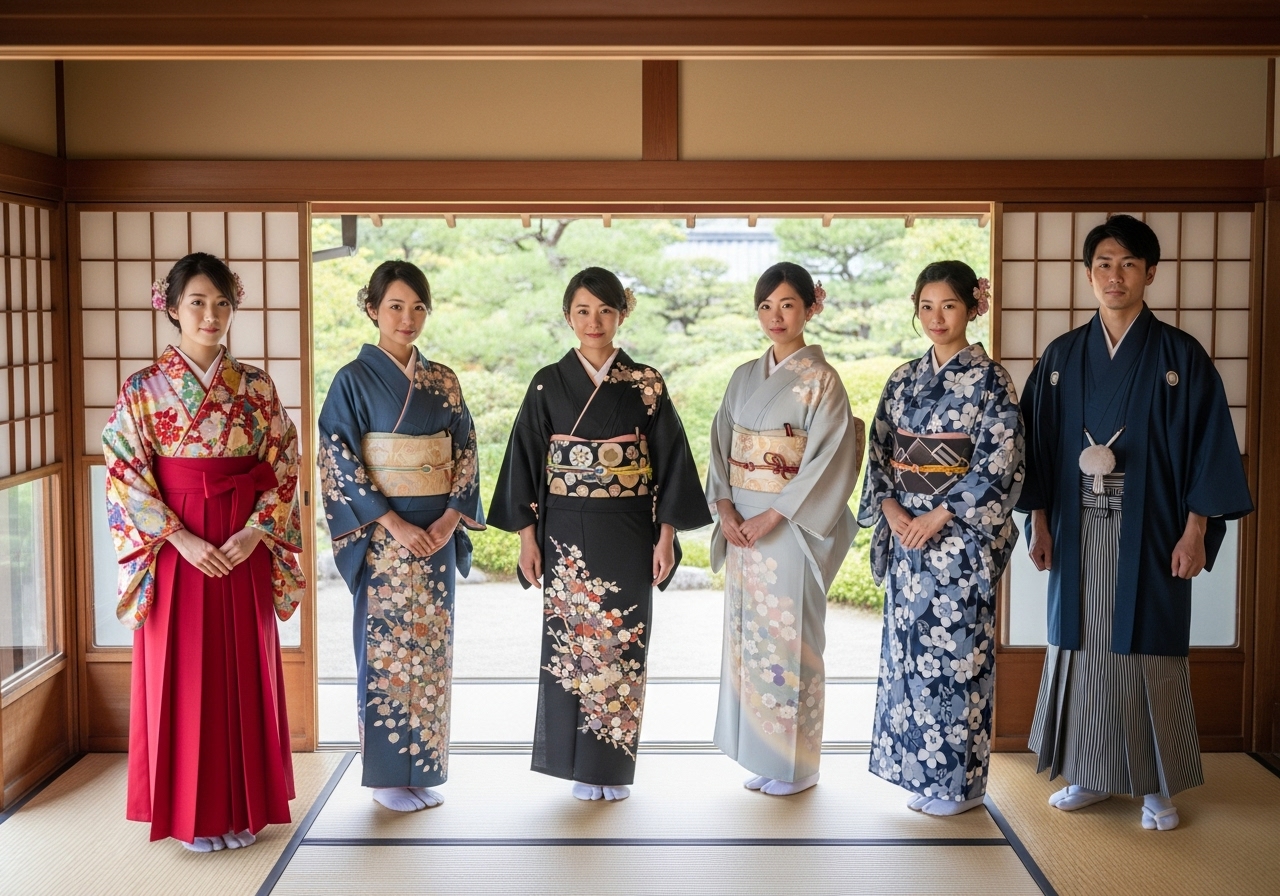
It’s known for its dramatically long sleeves that swing gracefully as the wearer moves. You’ll often see furisode worn during Coming-of-Age ceremonies, weddings, and professional photoshoots.
Because of its elegance and formality, it’s one of the most expensive kimono types to rent or buy.
Tomesode
The tomesode is the most formal kimono for married women.
Typically black with family crests and intricate designs only below the waist, it symbolizes maturity and elegance. Mothers of brides and grooms often wear the kurotomesode, a black variant with gold or silver patterns along the hem.
Houmongi (Visiting Kimono)
The houmongi is a graceful, semi-formal kimono worn by both married and unmarried women.
Its flowing patterns continue across the shoulders and hem, creating a sense of movement and unity. It’s commonly worn to tea ceremonies, receptions, and formal visits — elegant yet approachable.
Iromuji
Meaning “plain color,” the iromuji is a single-colored kimono with no bold designs.
Simple and understated, it’s often worn for tea ceremonies or formal occasions that call for quiet sophistication. Its minimalism highlights the beauty of texture and fabric.
Komon
Komon are casual kimonos covered in small, repeating patterns.
They’re perfect for city strolls, casual lunches, or visiting shrines. Lightweight, easy to wear, and available in many designs, they’re a popular choice for tourists who want a comfortable yet traditional look.
Yukata
The yukata is the summer version of the kimono — lightweight, unlined, and made of cotton.
It’s worn at festivals, fireworks displays, and hot spring resorts.
Because it’s simple to wear and affordable to rent, the yukata is often the first kimono experience for many travelers in Japan.
Men’s Kimono Types
Men’s kimonos are more restrained in design but equally elegant.
Formal attire includes a black kimono with family crests, paired with a haori jacket and hakama trousers.
For casual wear, men often choose subdued colors like navy, grey, or brown — focusing on fabric quality and tailoring rather than patterns.
How to Choose the Right Kimono Type
Visiting Kyoto or Osaka for sightseeing? Choose a komon or iromuji for comfort and style.
Attending a wedding or ceremony? Go for a furisode (if unmarried) or tomesode (if married).
Planning a summer festival? A yukata is perfect — cool, fun, and easy to wear.
For men, a simple kimono set with a haori is ideal for photoshoots or cultural experiences.
Most rental shops in Japan offer full styling packages, including obi belts, hair arrangements, and accessories. Just ask for help — many have English-speaking staff.
Final Thoughts: Appreciating the Layers of Meaning
The phrase “kimono types” might sound simple, but behind it lies centuries of artistry, etiquette, and symbolism.
From the dramatic elegance of the furisode to the quiet grace of the iromuji, each kimono type represents a piece of Japan’s living history.
Next time you visit Japan, take a moment to notice which kimono people wear — or better yet, rent one yourself.
When you slip into a kimono, you’re not just wearing a garment — you’re stepping into a story that has been told for over a thousand years.





 BOOK NOW