Furisode vs Kimono: Understanding the Real Difference, Meaning, and Price in Japan
When visiting Japan, you’ll see many people wearing beautiful traditional outfits — some with long flowing sleeves, others simpler and shorter.
These are all types of kimono, but one in particular stands out: the furisode.
Although they look similar at first glance, furisode and kimono represent different meanings, occasions, and even social status in Japanese culture.
If you’re planning to rent or buy one during your trip, here’s the complete guide that explains what makes them different, when to wear each, and how much they actually cost in Japan.
???? What Is a Kimono?
“Kimono” literally means “something to wear.”
It’s the general term for traditional Japanese clothing — worn by men and women, young and old, in both casual and formal settings.
A typical kimono is made from silk, polyester, or cotton, wrapped around the body with an obi belt, and worn with zori sandals and tabi socks.
The design and fabric indicate its formality: plain and light colors are for everyday use, while vibrant patterns and silk fabrics are reserved for ceremonies.
Today, kimono are often worn during weddings, graduations, tea ceremonies, or cultural experiences such as photo shoots and sightseeing rentals.
???? What Is a Furisode?
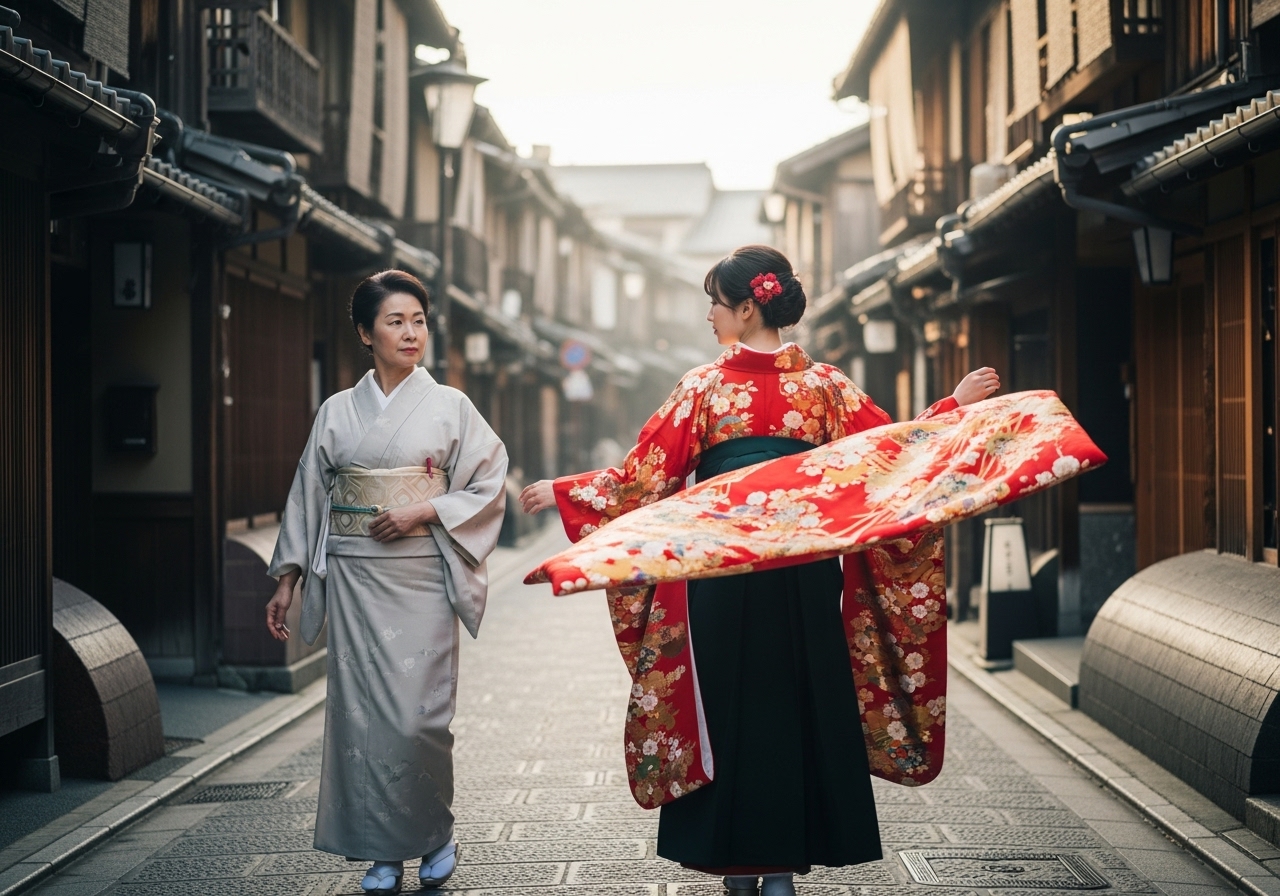
The furisode (literally “swinging sleeves”) is a special type of kimono — longer, more decorative, and deeply symbolic.
Traditionally, furisode are worn by unmarried women as a sign of youth, elegance, and readiness for marriage.
They are characterized by their long sleeves, which can extend 85–114 centimeters.
Made of luxurious silk, furisode are covered in vivid patterns, often hand-painted or embroidered with gold and silver thread.
Because of their beauty and complexity, they are considered the most formal type of kimono for women.
Furisode are commonly worn at:
Coming-of-Age Day ceremonies (Seijin-shiki)
Weddings (by the bride or young guests)
Graduation events
Family celebrations or cultural festivals
???? Furisode vs Kimono: The Key Differences
While both are traditional Japanese garments, their purpose, design, and symbolism are very different.
???? Main differences:
Sleeve length: Furisode have very long, swinging sleeves; kimono have shorter ones.
Who wears it: Furisode are for unmarried women; kimono can be worn by anyone.
Occasions: Furisode are for formal ceremonies; regular kimono can be casual or formal.
Price: Furisode are more expensive due to their silk quality and embroidery.
Symbolism: Furisode represents youth, beauty, and celebration. Kimono represents tradition and everyday elegance.
So if you see a woman wearing a vibrant robe with long, flowing sleeves — that’s a furisode.
???? Furisode vs Kimono: Price Comparison in Japan
Because of the craftsmanship and fabric, furisode are significantly more expensive than regular kimono.
Here’s what you can expect when renting or buying in Japan:
Rental prices:
Kimono: 3,000–10,000 yen per day
Furisode: 13,000–15,000 yen with hair and makeup
Luxury silk furisode: 25,000–30,000 yen or more
Purchase prices:
Cotton yukata: 3,000–10,000 yen
Polyester kimono: 10,000–30,000 yen
Silk kimono: 50,000–200,000 yen
Furisode: 200,000–1,000,000 yen+
For travelers, renting is the best option. You can wear a genuine furisode or kimono, enjoy professional styling, and take beautiful photos — all for a fraction of the cost.
???? Where to Rent a Kimono or Furisode in Japan
If you’re visiting Osaka, one of the most convenient and popular shops is Kawaii Osaka, located near Dotonbori and Namba.
Their rental plans include:
90-Minute Kimono Plan: 4,000 yen
1-Day Kimono Plan: 5,000 yen
Furisode Plan: 13,000 yen (15,000 yen with hair & makeup)
Luxury Furisode Plan: 30,000 yen (with full styling)
All rentals include the kimono, obi belt, sandals, bag, and dressing assistance.
You can keep your outfit until 9 PM, so you have plenty of time to explore the city and capture great photos by the canal or Osaka Castle.
They also offer a professional photo shoot service (18,000 yen/hour), perfect for couples, families, or solo travelers wanting high-quality memories.
Staff speak English, Chinese, and Japanese — so you can relax and enjoy the experience without worrying about communication.
???? When to Choose a Kimono and When to Choose a Furisode
Choose a kimono if you want a comfortable, casual experience while exploring temples, shrines, or city streets.
Choose a furisode if you want to celebrate something special, or experience Japan’s highest level of traditional beauty.
Many travelers rent a regular kimono for one day, then try a furisode for a professional photo session.
Both experiences are unique — one feels peaceful and elegant, the other feels luxurious and ceremonial.
???? Final Thoughts: Furisode vs Kimono
The difference between furisode and kimono isn’t just about sleeve length — it’s about meaning.
A furisode is Japan’s most formal, expressive garment, symbolizing youth, celebration, and art.
A kimono, in contrast, embodies everyday grace and timeless simplicity.
If you’re visiting Japan, rent one and see how it feels.
Walking through Osaka or Kyoto in traditional clothing will make you see the country in a completely new way — not just as a tourist, but as part of its living culture.





 BOOK NOW