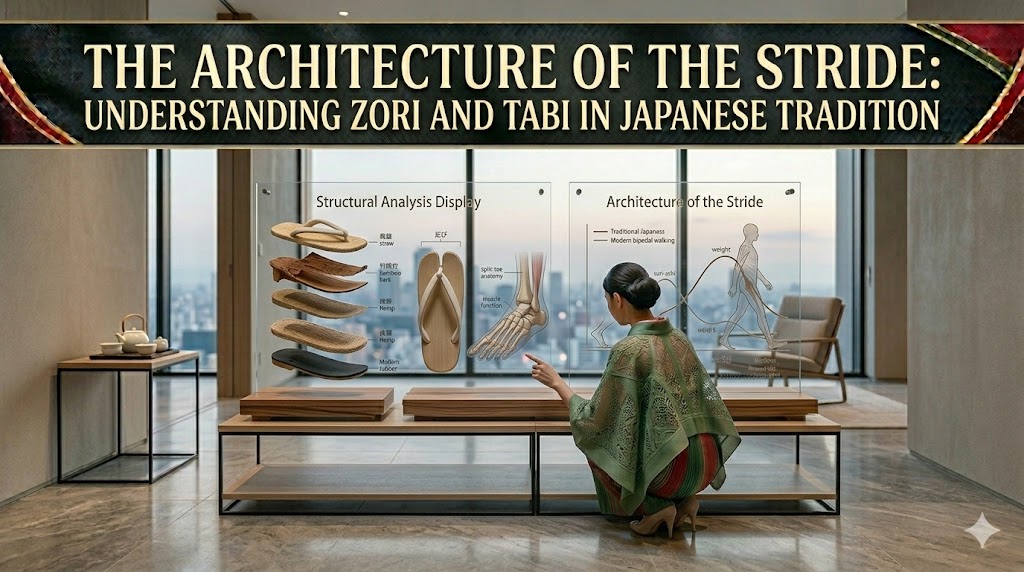
THE ARCHITECTURE OF THE STRIDE: UNDERSTANDING ZORI AND TABI IN JAPANESE TRADITION
When preparing for a traditional Japanese experience, many visitors focus entirely on the intricate patterns of the silk or the complexity of the obi belt. However, the true foundation of the silhouette lies at the feet. The combination of Tabi socks and Zori sandals is not merely a stylistic choice; it is a sophisticated system of dress that has dictated Japanese movement, posture, and social etiquette for centuries. For the modern traveler, stepping into these garments is the first physical step toward understanding the refined pace of Japanese life.
THE EVOLUTION OF THE SPLIT TOE: THE STORY OF TABI
The most distinctive feature of Japanese footwear is the split-toe design of the Tabi sock. This separation between the big toe and the rest of the foot is a functional necessity, designed specifically to accommodate the hanao, or the thong of the sandal. Historically, Tabi were crafted from leather, but during the Edo period, as cotton became more accessible, the fabric socks we recognize today became the standard.
Authentic Tabi do not use elastic. Instead, they are secured by a row of small metal clasps called kohaze, located at the back of the ankle. A standard pair typically features four or five of these clasps. The process of hooking them into the delicate thread loops requires patience and precision, serving as a mindful ritual that prepares the wearer for the day ahead. In formal Japanese culture, the color of the Tabi is strictly regulated; pure white is the absolute standard for formal events and ceremonies, signifying cleanliness and respect. In contrast, patterned or colorful Tabi are embraced for casual outings, allowing for a playful expression of personality.
ZORI VERSUS GETA: KNOWING THE DIFFERENCE
It is a common mistake for travelers to use the terms for Japanese footwear interchangeably, but the distinction is significant. Geta are the iconic wooden clogs, often elevated on two blocks of wood called ha or teeth. These were historically practical tools designed to keep the expensive hem of a kimono above the mud and snow of unpaved streets.
Zori, however, are the more refined and formal counterpart. They feature a flat or gently sloping sole and are made from a variety of materials, including woven straw, leather, or high-quality synthetic resins. The elegance of a Zori is often determined by the height of its sole; generally, a higher, more layered heel indicates a higher level of formality. For the traveler exploring a city like Osaka, Zori provide a much smoother and quieter walking experience than the rhythmic clacking of wooden Geta, making them the ideal choice for visiting shrines or dining in sophisticated restaurants.
THE ERGONOMICS OF THE TRADITIONAL WALK
Wearing Zori for the first time often feels unusual because the weight is distributed differently than in western shoes. Traditional Japanese footwear is designed for a specific style of movement known as suri-ashi, or the sliding gait. In this walk, the feet stay close to the ground, and the center of gravity remains low and stable. This movement is not just about aesthetics; it was developed to navigate the tatami-matted rooms of Japanese architecture without damaging the delicate straw flooring.
From a health perspective, many practitioners of traditional arts argue that the split-toe design of the Tabi and Zori promotes better foot health. By allowing the big toe to move independently, it encourages a more natural alignment of the foot and can help prevent the development of bunions, which are often caused by the narrow toe boxes of modern western footwear. While it may take a few minutes for a first-time wearer to adjust to the sensation of the hanao between their toes, most find that it encourages a slower, more intentional pace of travel.
ETIQUETTE AND THE SANCTITY OF THE FLOOR
Perhaps the most important aspect of Japanese footwear for a visitor to understand is the transition between the outside world and the interior space. In Japan, the floor is a multifunctional surface used for sitting, sleeping, and eating. Consequently, the Tabi sock acts as a crucial barrier. When you enter a traditional ryokan, a temple, or a high-end restaurant, your Zori are left at the entrance, but your Tabi stay on.
This is why having clean, high-quality Tabi is a mark of a sophisticated traveler. To walk into a sacred space or a private home with dirty or torn socks is considered a significant breach of etiquette. This cultural focus on the feet serves as a constant reminder of the boundary between the public and the private, the mundane and the sacred.
CONCLUSION: THE FEELING OF THE GROUND
By trading sneakers for Zori and Tabi, you are doing more than just changing your shoes; you are changing your relationship with the city. You will notice the texture of the stone paths at a shrine, the coolness of the wooden floors in a merchant’s house, and the soft give of a tatami mat. It is a sensory experience that forces you to slow down and notice the details of your surroundings. At the end of the day, when you return to your modern footwear, you may find that the quiet, steady rhythm of the Japanese stride stays with you long after the kimono has been tucked away.






 BOOK NOW