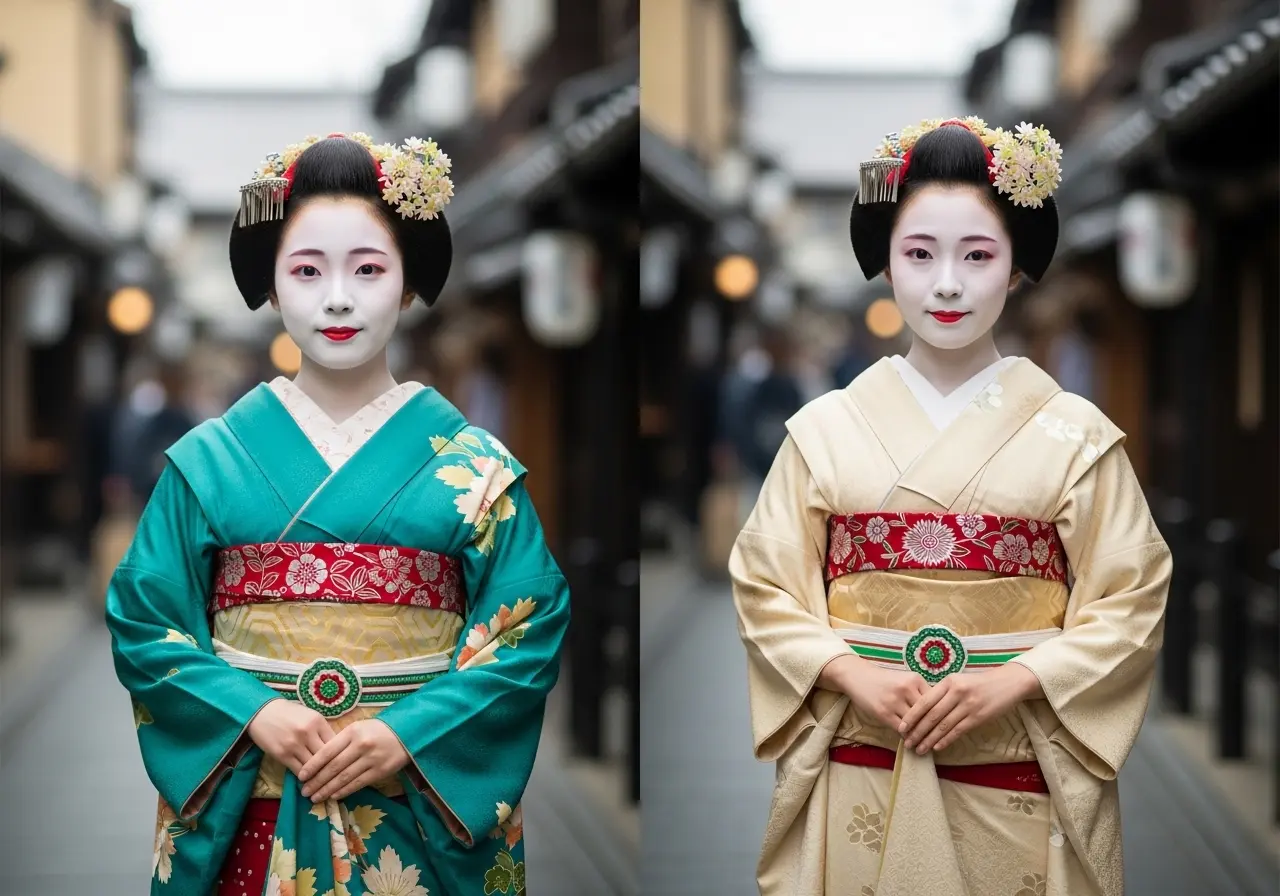
The Art of the Geiko and Maiko: A Guide to Osaka's Traditional Fashion
When people think of Japanese tradition, the image of a Geisha—known as “Geiko” in the Osaka and Kyoto regions—often comes to mind. Their clothing is not merely decorative; it functions as a refined visual language that communicates age, rank, experience, and even the time of year.
In Osaka’s historic entertainment district Nanchi, these traditions continue through extraordinary craftsmanship and careful attention to detail.
――――――――――
Maiko vs. Geiko: Decoding the Silhouette
Although they may appear similar at first glance, the kimono worn by a Maiko (apprentice) and a Geiko (fully trained artist) reflect two very different stages of professional life.
Maiko: The Charm of the Apprentice
Historically, Maiko began training at a very young age. To symbolize youth and growth, their kimono include “Kata-age” (shoulder tucks) and “Sode-age” (sleeve tucks). These folds suggest that the garment could be lengthened as the wearer grew, preserving the visual impression of adolescence.
Furisode Sleeves:
Maiko wear long, flowing sleeves known as furisode. This style is traditionally associated with young, unmarried women. The dramatic movement of the sleeves enhances their youthful and eye-catching presence during performances and public appearances.
Everything about a Maiko’s attire emphasizes vitality and charm.
Geiko: The Elegance of Maturity
When a Maiko graduates to become a Geiko, her silhouette changes significantly.
Kosode Sleeves:
Geiko wear shorter sleeves known as kosode. The reduction in length signals maturity and professional refinement. Rather than relying on dramatic movement, a Geiko’s presence commands attention through poise and experience.
Overall Impression:
More subdued elegance
Shorter sleeves
Smoother, cleaner lines
The transition from furisode to kosode visually marks her evolution from apprentice to accomplished artist.
――――――――――
Hikizuri: The Trailing Kimono
Both Geiko and Maiko wear a special formal kimono called “Hikizuri.” These garments are exceptionally long—often exceeding 200 centimeters—designed to trail gracefully across tatami floors indoors.
This trailing style became popular during the Edo period as a symbol of dignity and status. When walking outdoors, you will notice them lifting the hem with their left hand. While practical—preventing the fabric from touching the ground—this gesture has also become a signature expression of elegance.
Pro Detail: Hiyoku
At the hem, you may notice a second visible layer called “Hiyoku.” This removable lining protects the outer silk layer from wear and can be cleaned separately, preserving the integrity of the expensive fabric.
――――――――――
Dressing for the Occasion: Formal vs. Casual
The level of formality dramatically affects the kimono style.
Formal: Kuromontsuki
For ceremonies and important appearances, they wear “Kuromontsuki,” the highest level of formal attire. This is a black kimono adorned with five family crests (Kamon).
Common auspicious motifs include:
Cranes – Symbolizing fidelity and beauty
Turtles – Representing longevity
Pine Trees – Expressing endurance and resilience
The restrained black base emphasizes dignity while allowing symbolic designs to stand out.
Casual: Komon
When not performing or attending formal events, they may wear “Komon,” a kimono decorated with small, repeating patterns. It serves as a more relaxed daily option.
Even in casual wear, a Maiko can be identified by her signature shoulder tucks, while a Geiko maintains her refined, untucked silhouette.
――――――――――
A Fashion Calendar: Seasons and Motifs
Geiko and Maiko are masters of seasonal dressing. Their wardrobe shifts not only with temperature but also with the natural scenery of Osaka.
Autumn to Spring Motifs:
Chrysanthemums
Plum blossoms
Pine and bamboo
Maples
Cherry blossoms
Summer Motifs:
Hydrangeas
Flowing water patterns to evoke coolness
Reeds
Fireworks
Bellflowers
Dragonflies
Patterns often anticipate the upcoming season rather than simply reflecting the current one. This subtle timing demonstrates cultural sensitivity and refined aesthetic awareness.
――――――――――
Experience the Tradition in Osaka
The next time you walk through Osaka’s historic districts, observe these small but meaningful details. The length of a sleeve, the presence of a tuck, the motif at the hem—each element reveals part of a larger story shaped by centuries of tradition.
A Geiko’s wardrobe is not only fashion. It is a living archive of artistry, discipline, and seasonal poetry that continues to define the cultural identity of the region.






 BOOK NOW