TOPICS

2026.02.04

Why Professional Kimono Dressing Feels Different from DIY

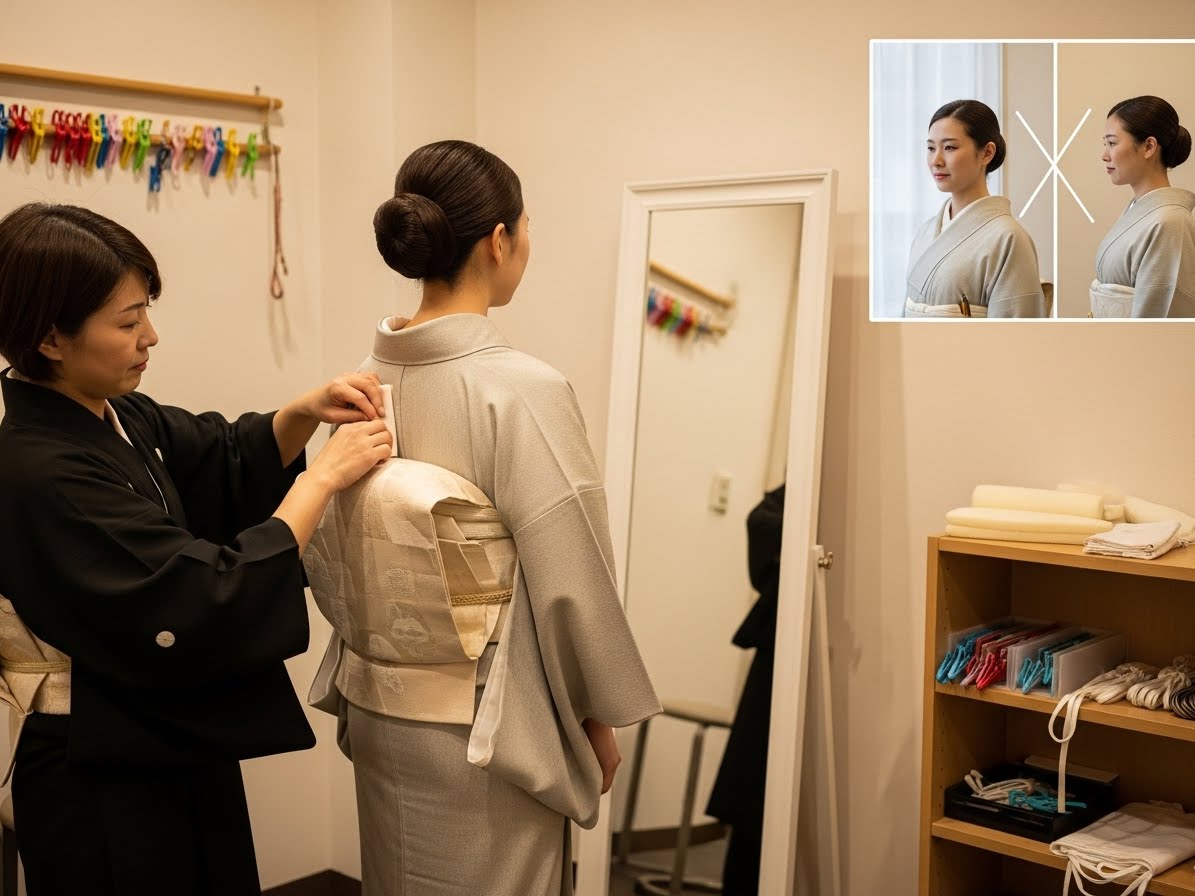
Many travelers try tying a kimono or yukata at home — then wonder why it feels loose, crooked, or tiring after an hour. When a professional dresser helps, everything suddenly feels lighter, straighter, and easier to move in.


1️⃣ Professionals build the fit from the inside out

DIY often starts with: “Wrap, tie, fix what’s wrong.”
Professionals start earlier:

adjust innerwear length

smooth shoulder seams

place small pads so the body becomes straight, not curvy

Why this matters: kimono is designed for a flat cylinder silhouette.
If you skip this, the obi slips, wrinkles form, and the collar collapses.

2️⃣ They use hidden tools you probably don’t have

Pros rely on small, specialized tools:

waist ties (koshihimo)

elastic belts

clips

padding cushions

collar stabilizers

These don’t show — but they control the structure.

DIY with only one belt often feels tight because you’re using “pressure” to hold things instead of structure.

3️⃣ Wrapping order is exact (and forgiving later)

Professionals follow a precise sequence:

underlayer alignment

waist fold placement

front overlap correction

side wrinkle smoothing

obi setup

Because of this order, later adjustments are easy.
In DIY, if the first wrap is wrong, everything else stays wrong and you have to undo it.

4️⃣ The collar looks cleaner — and stays that way

Pros create the neckline by:

controlling shoulder tension

setting the back collar away from the neck slightly

securing it with hidden ties

Result: the collar sits elegantly and doesn’t creep upward.
In DIY, the collar often closes too tightly or rides up — uncomfortable and less formal.

5️⃣ The obi isn’t just “tied” — it’s engineered

Professional obi tying includes:

inner support belt

padding to balance thickness

layers folded to spread weight

knot positioned correctly for your back

This spreads pressure evenly.
DIY obi knots often become heavy “lumps” that dig into the spine.

6️⃣ Fit feels secure without being tight

A good dresser aims for:

firm at the waist, relaxed at the ribs, smooth at the shoulders.

That’s why you can breathe, sit, and walk for hours.
DIY usually compensates mistakes by tightening — which leads to chest pressure and fatigue.

7️⃣ Professionals adjust for your body type automatically

Without talking much, they notice:

shoulder width

torso length

height

posture habits

Then they quietly adjust folds, belt height, and padding.

DIY tutorials rarely cover this level — they show one generic body.

8️⃣ They plan for movement — not just photos

Pros design the wrap so you can:

walk stairs

sit in taxis

bow at shrines

hold bags and phones

DIY often looks good standing still… then shifts as soon as you start walking.

9️⃣ They prevent common emergencies before they happen

Professionals check:

✔ hem won’t step under your heel
✔ sleeves won’t open too much
✔ obi won’t twist
✔ collar won’t collapse

This “prevention work” is invisible — but it’s why the outfit survives a full day.

???? When DIY does make sense

DIY is great for:

casual yukata

short festival visits

practicing at home

creative styling

Just know it won’t feel like full professional dressing — and that’s okay.

Final takeaway

Professional kimono dressing feels different because it’s architecture, not just wrapping.
Layers, tools, sequence, and body-specific adjustments create a secure, flattering, low-stress fit.

DIY can be fun — but when you want to walk all day, take photos, and not worry about wardrobe mishaps, a trained dresser quietly makes all the difference.

BACK pagetop
カワイイオオサカ
TikTok Facebook Pinterest