TOPICS

2026.02.01

Kimono Rental for Older Travelers — Comfort First!

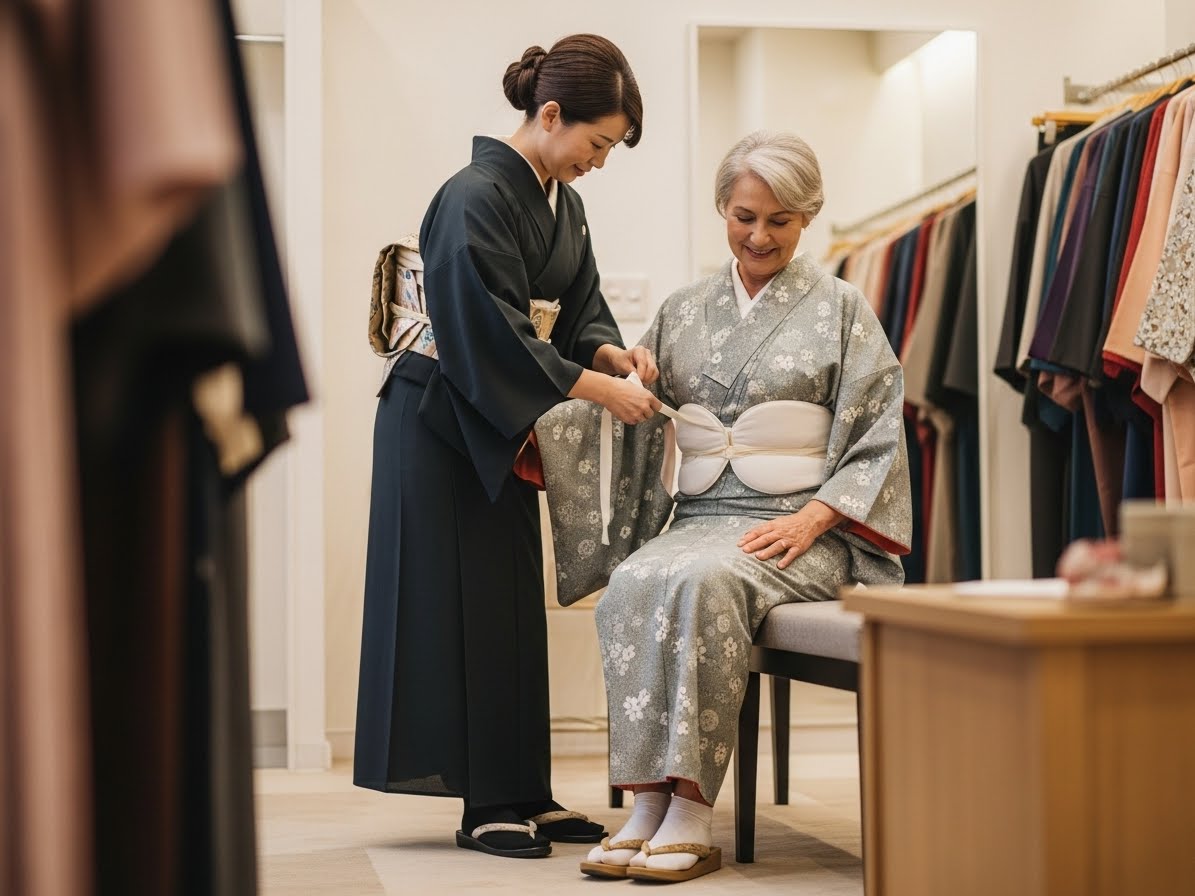
Kimono is beautiful — but if you’re an older traveler, you may worry about tight wrapping, heavy layers, stairs, or long walking. Good news: rental shops can adjust almost everything so you stay comfortable and still look elegant.


1️⃣ Before you book — choose the right plan

Look for rental shops that clearly mention:

✔ “lightweight kimono”
✔ “soft obi” or “comfort obi”
✔ “assistance included”
✔ elevator or ground-floor location

If you have knee, back, or heart issues, write it in the notes:

“Please wrap loosely — comfort is most important.”

Many shops will assign their most experienced dresser.

2️⃣ Arrive a little early (no rushing = safer)

Older travelers benefit from slow dressing.
Arrive 10–15 minutes earlier than the schedule so there’s:

time to sit while changing

extra help adjusting layers

no pressure if you need breaks

Rushing increases fatigue — and accidents on stairs.

3️⃣ Ask for these comfort adjustments (they work)

When dressing, say:

“Please keep the waist padding light.”

“Tie the obi gently — not tight.”

“I’ll be walking slowly, so I need room to breathe.”

Staff can:

reduce waist padding

choose a softer, lighter obi

loosen the chest and rib area

keep the collar slightly open for airflow

All while keeping the kimono secure.

4️⃣ Choose lighter fabrics

Ask for:

✔ cotton or thin silk blends
✔ summer kimono (unlined) if weather allows
✔ yukata style for very hot days

Avoid:

❌ heavy brocade
❌ multi-layer formal kimono
❌ thick winter obi unless necessary

The lighter the layers, the less pressure on your back and shoulders.

5️⃣ Footwear — stability first

Tell the staff you prefer stable sandals.

Look for:

soft straps (no rubbing)

slightly cushioned soles

heel height under 3–4 cm

non-slip bottoms

If balance is a concern, ask:

“Do you have sandals with better grip?”

Many shops do — but they don’t always offer unless asked.

6️⃣ Bring or request support if needed

Consider bringing:

compression socks

small back brace

a folding cane

any regular medication

At the shop, ask for:

“A seat while waiting”
“Help on stairs”
“Extra time for dressing”

You won’t be the first person to ask — staff expect it.

7️⃣ Plan a gentle walking route

Choose locations with:

✔ benches
✔ restrooms
✔ shade
✔ minimal stairs

Examples in most cities: gardens, shrine courtyards, riverside paths, museum grounds.

Avoid:

❌ steep hills
❌ crowded festival streets
❌ long stone staircases

Take breaks every 20–30 minutes — it actually improves posture and energy.

8️⃣ Hydration & temperature control

Carry:

water

small fan or cooling towel in summer

light shawl or haori jacket in cooler months

If you feel warm, say:

“I need to loosen the collar slightly.”

Staff can adjust safely.

9️⃣ Returning the kimono — don’t rush back

Many shops offer next-day return or hotel drop-off.
These options are worth it if:

you want to eat dinner dressed up

you move slowly

you get tired easily evenings

Less rushing = safer and more enjoyable.

???? When NOT to wear a full kimono (honest advice)

Skip full formal kimono and choose yukata or simple styles if you have:

severe back pain

difficulty breathing when wrapped

unstable balance

extreme heat sensitivity

The goal is comfort first, not pushing yourself.

Final reassurance

Older travelers look wonderful in kimono — dignity, warmth, and experience suit the style perfectly.

Just be clear with the shop:

“Comfort is priority. Please adjust for easy walking and breathing.”

With softer fabrics, gentle tying, slow pacing, and frequent breaks, you’ll enjoy the tradition — without discomfort.

BACK pagetop
カワイイオオサカ
TikTok Facebook Pinterest