TOPICS

2026.01.29

Why Japanese People Bow While Wearing Kimono — Posture and Etiquette

Bowing is one of the most recognizable gestures in Japan — and when someone is wearing kimono, it looks even more graceful. But the way people bow in kimono isn’t accidental. The posture, the hand placement, and the movement are all designed for respect, safety, and preserving the shape of the outfit.


1️⃣ Why bowing matters more when wearing kimono

Bowing communicates three things:

respect (thank you, sorry, nice to meet you)

modesty (no big gestures, calm behavior)

sense of formality (kimono = traditional clothing used in important situations)

Kimono restricts large upper-body movement. Bowing is a controlled way to greet without shaking hands aggressively, pulling sleeves, or bumping into others.

2️⃣ The posture rule: Straight lines, not curves

When bowing in kimono, the goal is:

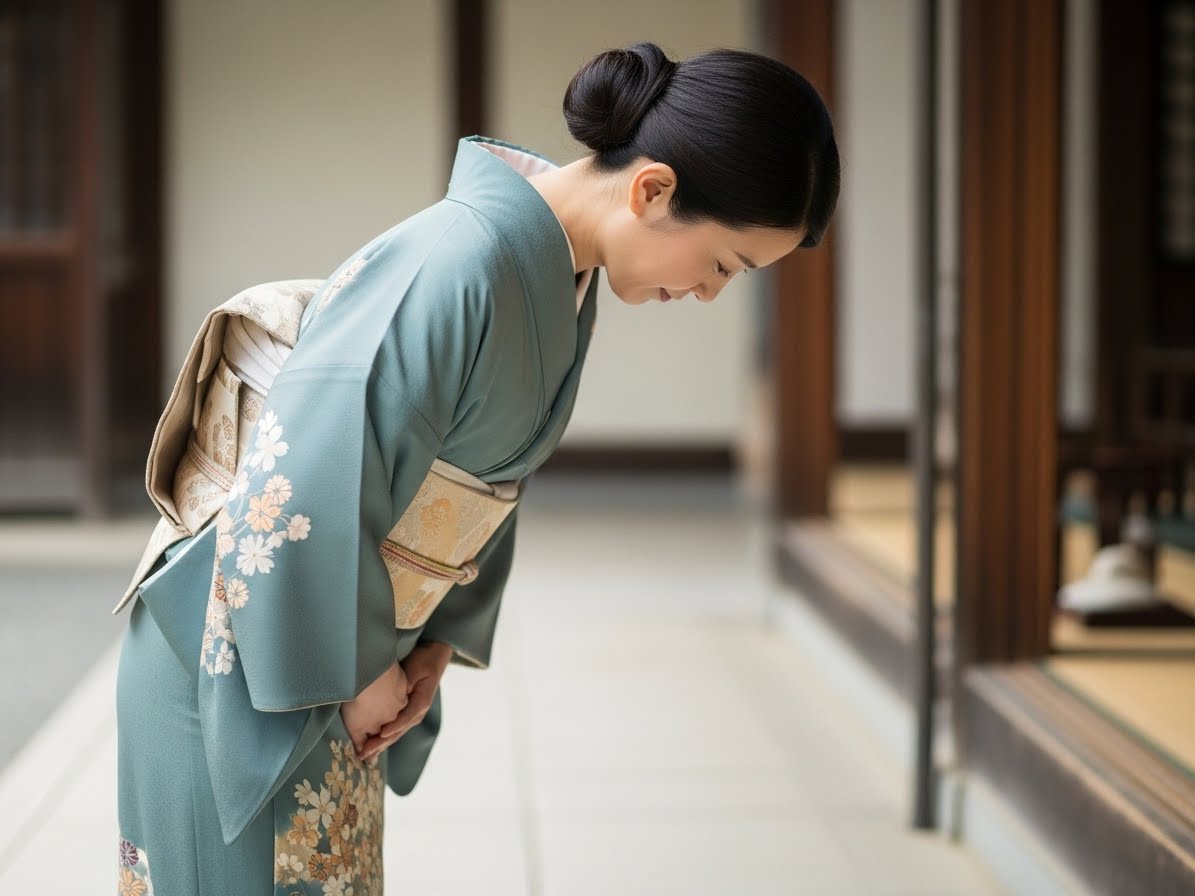
keep the back straight, hinge from the hips.

Why?

a curved back wrinkles the kimono

the obi (belt) shifts and loosens

the neckline collapses and looks messy

A straight spine keeps the kimono neat and avoids pressure on the obi.

3️⃣ Where do the hands go?
???? Women in kimono

place both hands lightly on the front of the kimono (around the thigh area)

fingertips together, not gripping the fabric

elbows close to the body

This prevents sleeves from swinging open.

???? Men in kimono

place hands beside the thighs

keep shoulders relaxed

avoid pushing hands too far forward

Hands create balance — and stop the kimono from shifting.

4️⃣ How deep should the bow be?

There are general levels (you’ll actually see them):

slight bow (15°) — casual greeting, thank you

mid bow (30°) — polite conversation, customer interactions

deep bow (45°) — apology, formal ceremony, weddings/funerals

In kimono, bows are slightly slower than in regular clothes.
Slow movement protects the obi and keeps sleeves controlled.

5️⃣ Steps to bow correctly in kimono (copy this)

stand straight, feet together

place hands (as above)

inhale gently

lean forward from the hips — not the neck

hold one second

rise slowly, exhale

That’s it — graceful and safe.

6️⃣ Common mistakes (and why they’re problems)

???? Bending the neck only
→ looks abrupt and disrespectful, wrinkles collar

???? Hunching shoulders
→ breaks the clean kimono line

???? Holding the fabric tightly
→ makes you look nervous and distorts the silhouette

???? Bowing too quickly
→ sleeves swing, obi shifts, hem may step forward

7️⃣ Why bowing replaces handshakes (especially in kimono)

Handshakes can:

pull the sleeves

drag the fabric

cause accidental stains (food, sweat, lotion)

Bowing avoids physical contact while still showing respect — practical and hygienic.

8️⃣ Bowing at shrines, tea ceremonies, and formal events
⛩ Shrines & temples

Bow slowly before and after praying — it shows reverence.

???? Tea ceremony

Movements are deliberately slower; every bow is part of etiquette.

???? Weddings & celebrations

Deep, calm bows match the solemnity of the moment.

In each case, bowing protects the clothing and expresses cultural values.

9️⃣ Practical tip for visitors wearing kimono

If you’re unsure:

Small, slow bow = always safe.

You don’t need dramatic gestures.
A gentle bow with calm posture will always be received well.

Quick summary

People bow in kimono because:

✔ it shows respect and modesty
✔ it keeps the outfit neat
✔ it avoids unnecessary contact
✔ it suits formal occasions
✔ the posture physically protects the obi and collar

And the correct way is simple: straight back, slow movement, controlled sleeves.

Bowing isn’t just etiquette — it’s a practical way to stay graceful in traditional clothing.

BACK pagetop
カワイイオオサカ
Instagram TikTok