TOPICS

2026.01.27

Why Kimono Belts Are So Wide — The Meaning Behind the Obi

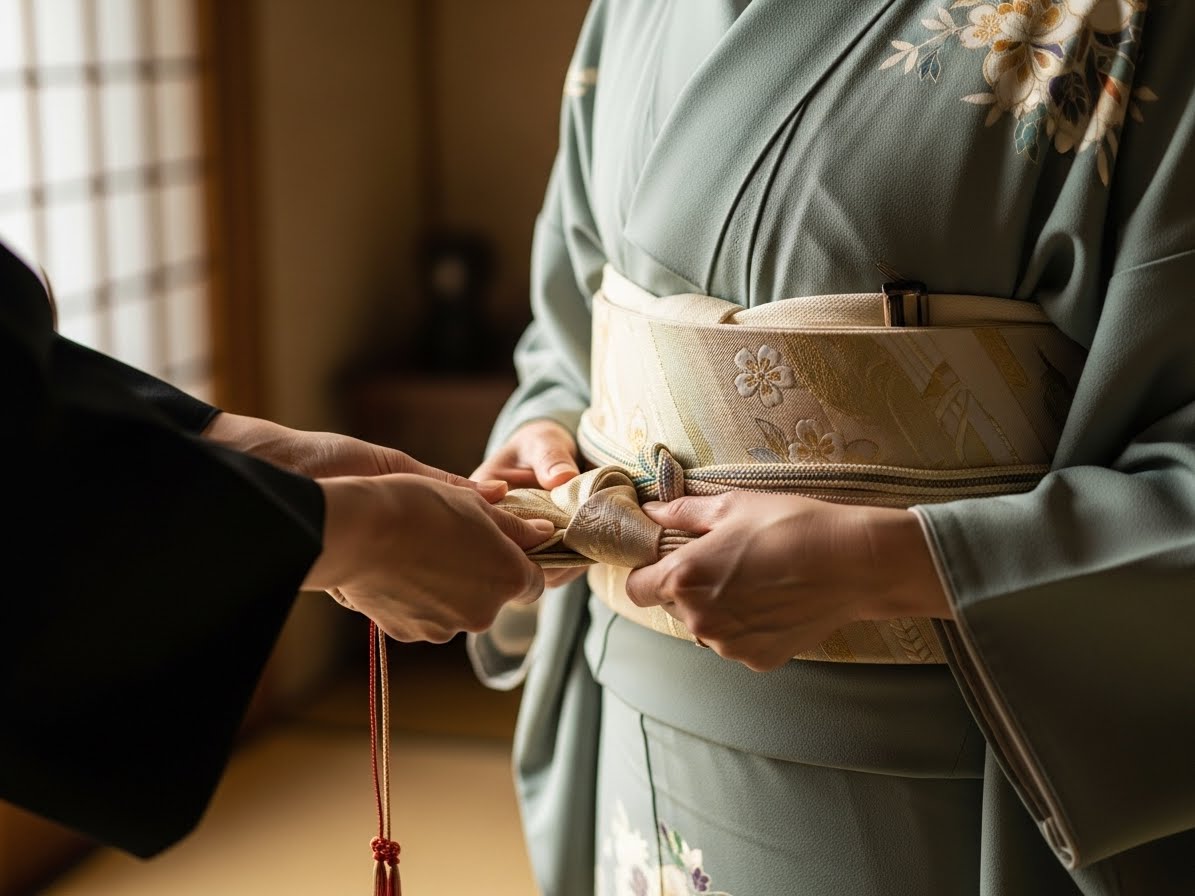
If you’ve ever worn or seen a kimono, one thing stands out immediately:
the obi — the wide belt wrapped firmly around the waist.

It isn’t just decoration. The obi has history, structure, and symbolism, and its width changes how the kimono looks, fits, and moves. Here’s a clear, practical explanation of why the obi is so wide — and what it really means.

1️⃣ First: What Exactly Is an Obi?

The obi is the long, wide belt that:

holds the kimono closed

shapes the body line

creates the “center” of the outfit

Most formal women’s obi are:

25–30 cm wide (10–12 inches)

3.5–4 meters long (11–13 feet)

They’re folded, layered, and tied into a structured bow at the back.

Without the obi, a kimono would look loose — almost like a robe.
The obi is what turns it into formal clothing.

2️⃣ Why Is the Obi So Wide?
✔ To Create a Beautiful Silhouette

Traditional Japanese aesthetics value straight, clean lines.

The wide obi:

flattens the waist area

keeps the body shape vertical

balances the volume of the kimono sleeves and hem

A narrow belt would cut into the waist and distort that elegant line.

✔ To Support the Heavy Fabric

Formal kimono and obi are made from thick silk. The width:

distributes pressure evenly

keeps the kimono from slipping

prevents discomfort during long ceremonies

Think of it like a supportive sash rather than a simple belt.

✔ To Show Status, Taste, and Occasion

Historically, the obi became wider over centuries because it turned into a decorative display area.

The wider it became, the more space there was to show:

embroidery

woven patterns

family symbols

seasonal motifs

In the Edo period, obi designs became fashion statements — similar to luxury accessories today.

3️⃣ The Meaning Behind the Designs

Obi patterns are not random. They often symbolize wishes or blessings:

Cranes → longevity and good fortune

Cherry blossoms → beauty and renewal

Waves → strength and resilience

Peonies → elegance and prosperity

Weddings, tea ceremonies, celebrations — each occasion has obi patterns considered appropriate.

Rule of thumb:

The more formal the event → the more elaborate the obi.

4️⃣ Why Is the Bow Tied in the Back?

Two reasons:

1️⃣ Historically, tying in front was associated with courtesans (who needed quick access to adjust outfits).
2️⃣ Tying in the back looks refined, upright, and modest.

Today, back bows = formal and proper.

5️⃣ Different Types of Obi (You’ll Actually See Them)
???? Fukuro Obi — formal

Wide, long, often richly decorated. Used for weddings and ceremonies.

???? Nagoya Obi — semi-formal

Shorter, easier to wear, popular for everyday kimono.

???? Hanhaba Obi — casual

Half-width, lighter, often used with yukata.

Each one balances comfort vs. formality.

6️⃣ Why Are Men’s Obi Much Narrower?

Men’s kimono focus on simplicity and straight lines.

Their obi:

sit slightly lower

are narrower

tie in modest knots, not bows

Men’s fashion historically emphasized quiet refinement, while women’s fashion evolved into more expressive decoration.

7️⃣ Practical Reason You’ll Feel Immediately When Wearing One

A properly tied wide obi:

supports your posture

keeps your back straight

stops the kimono from twisting

makes walking in short steps easier (on purpose)

Kimono encourages calm, controlled movement — the obi helps create that feeling.

8️⃣ Modern Meaning: More Than Just Fashion

Today, the obi represents:

tradition passed down through families

craftsmanship (many are hand-woven)

cultural identity

celebration moments (graduations, weddings, coming-of-age)

Many families keep obi as heirlooms and pass them to daughters or granddaughters.

Quick Summary

Why is the obi so wide?

✔ to shape the silhouette
✔ to support the kimono
✔ to express formality and status
✔ to display meaningful patterns
✔ to stabilize posture and movement

The obi isn’t just a belt — it’s the heart of the kimono outfit.

BACK pagetop
カワイイオオサカ
Instagram TikTok