TOPICS

2026.01.17

What Happens If It Rains on Your Kimono Rental Day?

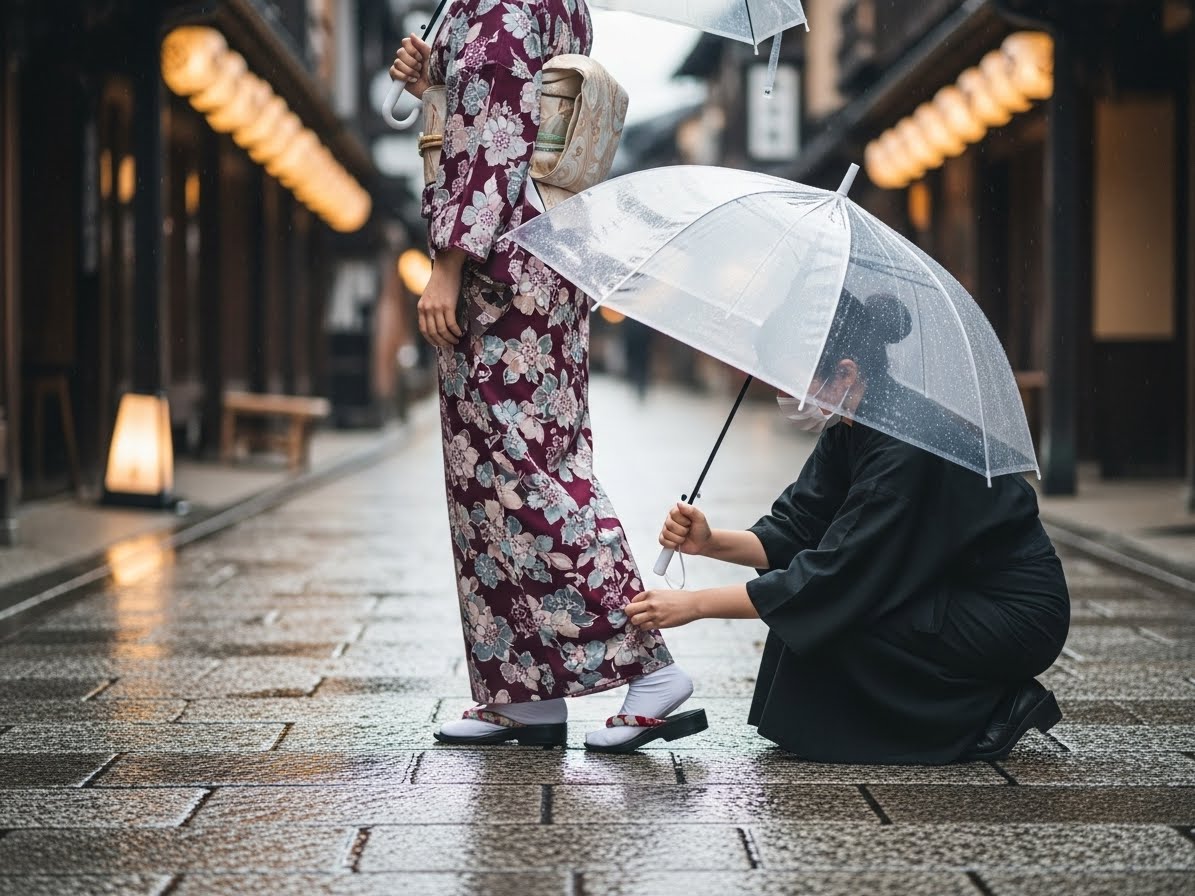
Rain doesn’t have to ruin your kimono experience — but it does change how you plan. Whether you’re renting in Kyoto, Tokyo, or a small historic town, light rain is common, and rental shops handle it all the time. The key is knowing what to expect and how to stay comfortable while protecting the fabric ????????️

Does the Rental Get Canceled If It Rains?

In most cases, no — shops rarely cancel just because of rain.
They’ll usually:

offer rain-friendly accessories

adjust your styling for better coverage

give route suggestions with more indoor spots

Heavy storms or typhoons are the exception. If severe weather is predicted, the shop may suggest rescheduling — and many allow free date changes when conditions are unsafe.

What Happens to the Kimono in the Rain?

Traditional silk kimono can be sensitive to water, but most rental kimono are polyester, which is more durable and easier to clean. Light rain usually isn’t a problem.

Still, water marks and mud splashes can happen. Rental shops expect minor moisture — but serious stains or tears may involve cleaning fees. That’s why protection matters.

What the Shop Usually Provides (Ask Before You Go)

Most reputable kimono rentals can prepare you with:

clear rain ponchos (designed to fit over the obi)

umbrella rentals

hem guards to protect the lower edge

waterproof sandals or covers

haori coats for extra warmth and protection

Tip: message the shop the morning of your booking and say:

“It looks like rain today — do you have rain protection items available?”

They’ll be happy to prepare them in advance.

How to Walk Safely in Rain While Wearing Kimono

Rain makes movement trickier — but a few habits help:

take short, steady steps (kimono hems drag if you rush)

hold the front hem slightly when stepping over puddles

keep the umbrella upright and centered so water runs outward

avoid narrow, slippery stone paths when you can

If the wind is strong, face slightly sideways so raindrops don’t hit your collar and neckline.

Where to Go Instead of Outdoor Spots

Rain can actually make kimono outings quieter and more atmospheric — if you pick the right locations:

covered shopping streets

tea houses and cafés

museums and cultural exhibits

shrine corridors with covered walkways

photo studios with indoor sets

You’ll stay dry and still get beautiful pictures ????

What To Do If Your Kimono Gets Wet

Don’t panic — and don’t try to “fix” it yourself.

gently pat excess water with a tissue (don’t rub)

avoid hair dryers or heaters — heat can set marks

tell the staff when you return the outfit

Rental teams know how to handle water spots better than DIY solutions — honesty helps them help you.

Shoes and Socks in the Rain

Wet pavement and zori sandals aren’t a great match.

If rain is steady, consider:

waterproof overshoes provided by the shop

socks you don’t mind getting damp

carrying a spare pair in your bag

Avoid deep puddles — soaked hems take a long time to dry and may pick up dirt.

Should You Reschedule?

Rescheduling makes sense if:

the forecast shows heavy downpours all day

you planned a long outdoor photography walk

you’re traveling with children or elderly guests

But if it’s only light drizzle, many guests actually enjoy the quieter streets and atmospheric scenery.

Check the shop’s rain policy ahead of time — some allow one free change, others offer partial refunds or different outfit options.

Final Takeaway

A rainy forecast doesn’t mean your kimono day is ruined. With a poncho, umbrella, and a slightly slower pace, you can still enjoy the experience — sometimes even more, thanks to softer light and fewer crowds.

Plan for protected routes, communicate with your rental shop, and move thoughtfully. Do that, and rain becomes part of the story — not the reason you cancel your kimono adventure.

BACK pagetop
カワイイオオサカ
Instagram TikTok