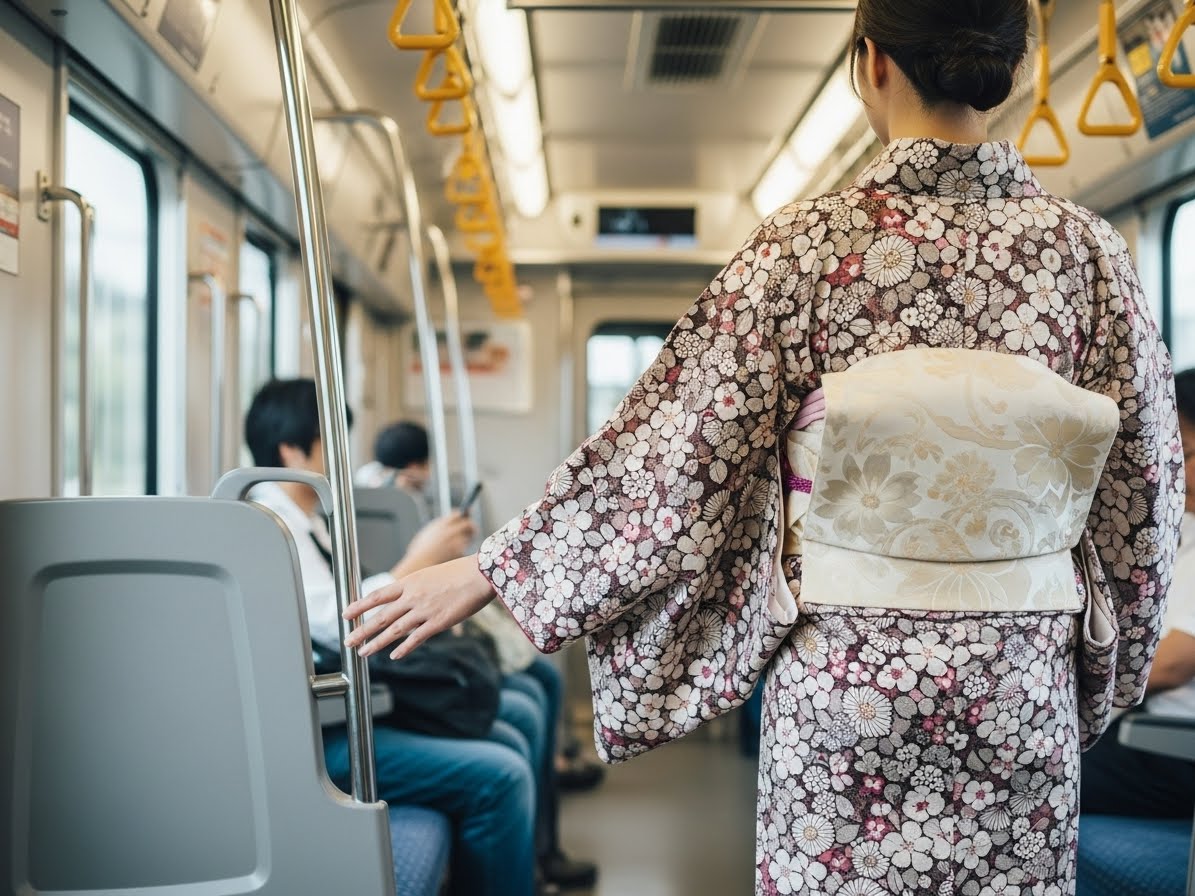
Can You Use Public Transport Easily While Wearing Kimono?
Short answer: yes — it’s completely possible, and often easier than people expect.
But there are a few practical tricks that make buses, subways, and trains much more comfortable when you’re dressed in kimono.
Below is a clear, experience-based guide so you can move confidently through Japan’s public transport — without wrinkling your outfit, tripping on the hem, or feeling out of place.
Is It Normal to Ride Public Transport in Kimono?
Absolutely. Locals wear kimono on public transport for:
festivals and seasonal events
graduation and weddings
shrine visits, New Year celebrations, and ceremonies
casual outings in cultural cities such as Kyoto, Kanazawa, and Kamakura
No one will think you’re strange. In fact, people may smile — kimono is associated with care, elegance, and tradition.
Just remember: kimono limits your stride, so plan for a slightly slower pace when changing trains or climbing stairs.
Getting On and Off Trains Without Stepping on the Hem
The biggest risk is accidentally stepping on your kimono while boarding or exiting.
Use this simple technique:
Hold the front hem lightly with one hand.
Take small, straight steps (avoid big side steps).
Step fully onto the train platform before releasing the hem.
If you’re wearing zori or geta, avoid rushing. The sandals are stable, but they’re not designed for sprinting through turnstiles.
Sitting Properly on Trains and Buses
Kimono is structured — if you sit carelessly, it wrinkles quickly.
To sit comfortably and keep the silhouette clean:
Lower yourself slowly rather than “plopping” down.
Keep both knees together, angled slightly to one side.
Avoid crossing your legs (it twists the obi and hem).
Smooth the fabric gently under your thighs before sitting.
If the seat is crowded, place your handbag on your lap. Avoid putting it on the floor unless necessary.
Standing and Holding Handrails
When trains are full, you’ll likely stand.
Hold the strap or pole with the arm opposite your obi bow (usually the back). Raising the other arm can distort the knot or cause pulling across the chest area.
Keep your feet parallel and shoulder-width apart. Wide stances can tug the hem awkwardly.
Stairs, Escalators, and Platform Gaps
This is where caution matters most.
On stairs, hold the hem slightly and take shorter steps.
On escalators, stand centered — don’t let the hem brush the moving sides.
Use elevators when you can; they’re kimono-friendly and safer.
Watch the gap between the train and platform — lift the hem just enough to clear it.
These habits protect both the fabric and your balance.
Using IC Cards and Tickets
Kimono sleeves (especially long furisode sleeves) can get in the way at ticket gates.
Keep your IC card in a small case or smartphone for quick tap-through.
Hold sleeves forward with your free hand to avoid catching them.
Avoid digging through a deep handbag at the gate — prepare your card in advance.
A smooth pass-through keeps you relaxed and prevents the line behind you from piling up.
Wearing Kimono During Rush Hour
Can you ride during rush hour? Yes — but avoid it if possible.
Morning and evening commuter times can be extremely packed. In crowded trains:
your obi can be pushed
sleeves can get trapped
the hem may brush against shoes
If you must ride then, stand near the doors (but step aside when they open), or choose women-only cars if they’re available and appropriate.
Whenever possible, plan your kimono outing after 9:30 a.m. and before evening rush — the experience is calmer and far more enjoyable.
Weather and Seasonal Considerations
Public transport is climate-controlled, but seasonal tips help:
Summer: yukata is lighter, yet trains can be cool — consider a thin shawl.
Winter: layers matter; wear a haori or coat that doesn’t crush the obi.
Rain: carry a compact umbrella; wet hems stain easily. If it pours, lift the hem slightly while walking.
Rental shops often provide clips, hem guards, or rain covers — ask before you leave.
What to Do With Luggage
Large suitcases and kimono don’t mix well on busy platforms.
If possible:
use coin lockers near stations, or
ship your suitcase to your hotel (a common service in Japan), and
carry only a small handbag with essentials.
You’ll move more safely and keep the fabric cleaner.
Etiquette: How to Blend In Gracefully
Public-transport etiquette matters regardless of what you wear — but kimono naturally draws attention, so it’s worth being mindful:
avoid eating and loud phone calls
turn backpacks or totes to the front so they don’t bump others
give up priority seating when appropriate
keep the obi from bumping people behind you by standing straight, not leaning back
Respectful body language pairs beautifully with traditional clothing.
Final Verdict: Is Public Transport “Kimono-Friendly”?
Yes — trains, subways, and buses are perfectly manageable in kimono.
With slower steps, mindful sitting, and good preparation, you’ll travel comfortably and look elegant from station to station.
Think of kimono not as fragile, but as structured clothing that rewards calm movement. If you give yourself a few extra minutes, choose off-peak times, and protect the hem, public transport becomes part of the experience — not an obstacle.
Enjoy your journey, move thoughtfully, and you’ll discover that traveling Japan in kimono feels natural, practical, and wonderfully memorable.






 BOOK NOW