TOPICS

2025.12.31

Best Time of Day for Kimono Photos in Dotonbori

Dotonbori is one of Osaka’s most photographed areas — neon signs, lantern-lit alleys, reflections on the river, and constant energy. But depending on the time of day, your kimono photos can look dramatically different. Light, color, and crowd levels all change hour by hour, so choosing the right timing makes a huge difference.

Here is a practical guide to the best times of day for taking beautiful kimono photos in Dotonbori, based on lighting quality, atmosphere, and how busy the area becomes.

■ Early Morning (Around 7:00–9:00) — Best for Clear Streets and Soft Light
If you want photos without crowds, this is the golden window.
The light is soft, flattering, and gentle on kimono colors. The famous Glico sign area is almost empty, allowing full-body shots without people blocking the background.
The riverwalk also looks peaceful, making traditional kimono stand out beautifully against the quiet scenery.

Ideal for:
• solo portraits
• calm, elegant mood
• kimono patterns with pastel or soft colors

■ Late Morning to Early Afternoon (10:00–14:00) — Bright Colors but Busy Streets
This is the busiest time in Dotonbori. The strong daylight makes colors pop, especially vivid kimono like red, navy, or gold. However, shadows can be harsh, and editing may be needed afterward.

Expect lines of tourists behind you, especially on the bridge. If you prefer energetic city-style kimono photos, this time works, but patience is required.

Ideal for:
• bold kimono colors
• energetic, city-life atmosphere
• food shots (street snacks with kimono)

■ Late Afternoon (15:00–17:00) — Warm Light and Balanced Crowds
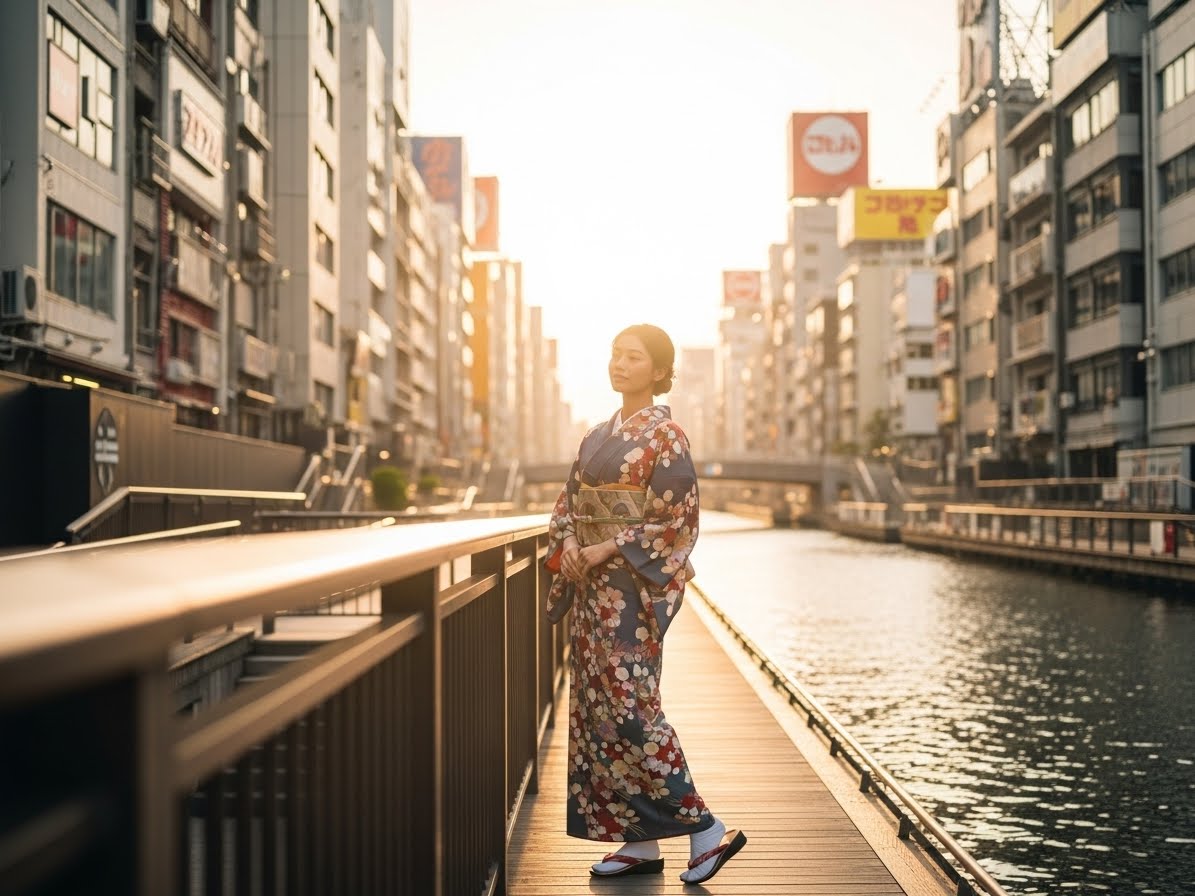
This is one of the most flattering times for kimono photography. The sunlight becomes warm and soft, making skin tones look smoother and patterns appear richer. Crowds are still present, but slightly easier to manage compared to midday.

The glow along the river creates stunning backlit shots that flatter any kimono design.

Ideal for:
• natural portraits
• colorful kimono with gold or warm accents
• couples’ kimono photos

■ Blue Hour (Sunset–30 Minutes After) — Cinematic and Romantic
Just after sunset, the sky turns blue while neon signs begin to light up.
This moment creates a cinematic contrast between the kimono’s texture and the glowing Dotonbori backdrop. Long-exposure photos look especially impressive.

Because neon signs are bright, faces stay visible even in low light. A tripod helps, but many smartphones can capture blue-hour shots beautifully.

Ideal for:
• dramatic backgrounds
• urban-night kimono photography
• couples and group photos

■ Night (After 18:00) — Iconic Neon Sign Atmosphere
Nighttime is when Dotonbori truly comes alive.
The neon lights reflect off the river and add a futuristic, vibrant feel to kimono photos. The environment is crowded, but the colorful lights create unforgettable images.

Dark-colored kimono (black, navy, deep green) look especially elegant under neon lighting. If the bridge is too busy, try shooting from the riverside walkway for a calmer angle.

Ideal for:
• neon-themed kimono shots
• modern/traditional contrast photos
• night portraits with glowing backgrounds

■ Tips for Getting the Best Photos at Any Time
• Arrive early if you want clean backgrounds
• Use the riverwalk for less crowded angles
• Step slightly away from the main bridge for better composition
• Take close-ups of patterns — neon reflections make them shine
• Try walking shots; movement enhances kimono elegance

■ Final Recommendation
• For classic, soft kimono photos → Early morning or late afternoon
• For dramatic, iconic Dotonbori photos → Blue hour or night

Choosing the right time of day can completely transform your kimono experience in Osaka. Whether you love peaceful traditional vibes or glowing nightlife shots, Dotonbori offers the perfect backdrop — you just need the right light.

BACK pagetop
カワイイオオサカ
Instagram TikTok