TOPICS

2025.12.30

How to Pose in a Kimono: 12 Photo Poses That Always Look Good

Kimonos photograph beautifully — the colors, the patterns, the elegant silhouette. But if you’re not used to wearing one, posing can feel a little intimidating. The good news is that kimono-friendly poses actually follow simple rules: keep movements soft, show the obi (belt), and create clean lines with your body.

Below is a traveler-friendly guide to 12 easy poses that always look good in photos, whether you’re strolling through Osaka Castle Park or exploring the lantern alleys of Dotonbori.

■ Why Kimono Poses Look Different
Kimono limits big movements, so the most flattering poses:
• create gentle curves
• avoid lifting arms too high
• highlight the back and obi
• use feet and head angle for balance

Think “subtle elegance,” not exaggerated poses.

■ Pose 1: The Slight Turn + Soft Smile
Turn your body about 45 degrees from the camera, look back lightly over your shoulder.
This makes the obi visible and slims the profile naturally.

■ Pose 2: Hands Together in Front
Hold your hands loosely in front of you near the waist.
This traditional pose is simple, gentle, and works for anyone — especially in narrow streets.

■ Pose 3: The Walking Shot
Walk slowly, one small step at a time. Keep your toes pointed slightly inward.
This creates natural movement in the hem and looks great with long paths or nature backgrounds.

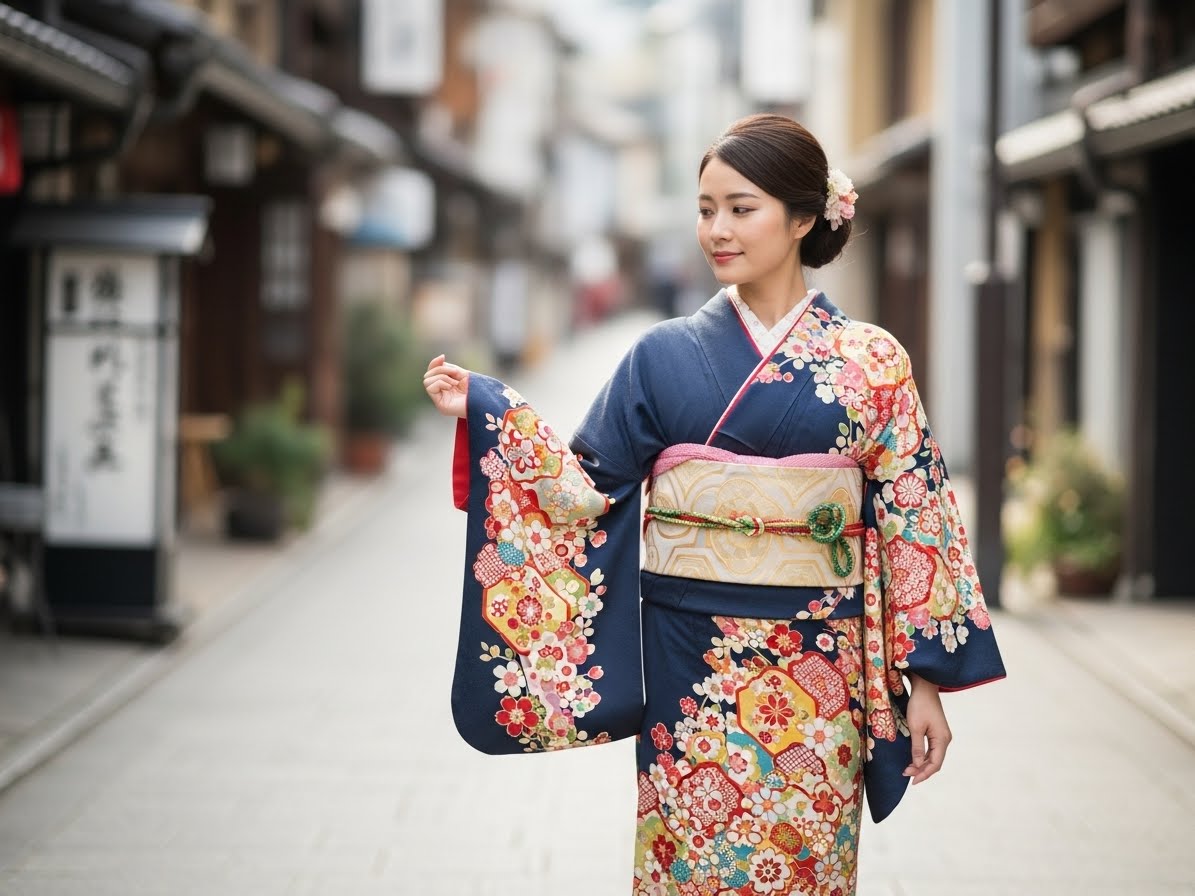
■ Pose 4: Holding the Sleeve (Sode Pose)
Lift the sleeve slightly with fingertips (not too high).
Shows off the fabric pattern without breaking kimono etiquette.

■ Pose 5: Looking Down at the Hem
Tilt your head forward gently as if you’re admiring your kimono.
It adds a soft, elegant mood and works beautifully in close-up portraits.

■ Pose 6: Back Shot + Looking Over the Shoulder
Turn your back to the camera to fully show the obi, then look back.
Perfect in temples, gardens, and traditional architecture.

■ Pose 7: Touching the Hair Ornament
Lightly adjust a hairpin or touch your hair.
This brings attention to your hairstyle and creates a candid, natural feeling.

■ Pose 8: Holding the Bag
Place the bag in front of you with both hands and relax your shoulders.
Ideal for formal-style photos or when you want a tidy, composed look.

■ Pose 9: Leaning Slightly on One Foot
Shift your weight onto one leg to create a gentle curve.
Subtle posture changes make kimono photos more dynamic without looking forced.

■ Pose 10: Side Profile with a Fan or Sleeve
If you have a fan, hold it lightly near your chest or cheek.
If not, just let your sleeve fall naturally.
Side profiles are extremely flattering in kimono due to the straight lines of the collar.

■ Pose 11: Sitting Pose (Tatami or Steps)
Sit with knees together and back straight.
If on stairs, turn slightly sideways for a soft silhouette.

■ Pose 12: The “Stroll and Look Back”
Walk ahead a few steps, then look back and smile.
This is one of the most popular kimono shots for travelers — relaxed, natural, and cinematic.

■ Extra Tips for Better Kimono Photos
• Stand tall — posture changes the entire silhouette
• Relax your shoulders and fingers
• Avoid wide steps; small movements look more graceful
• Show the obi whenever possible (it’s the star of the outfit)
• Natural light makes kimono colors richer and softer

■ Best Places in Osaka for Kimono Photos
• Osaka Castle Park (wide paths + greenery)
• Dotonbori (lanterns and river views)
• Shinsaibashi-suji Arcade (urban contrast)
• Hozenji Yokocho (stone alleys + lanterns)

Each spot works well with different poses — for example, walking shots near Osaka Castle or elegant sleeve poses in Hozenji Yokocho.

■ Final Thoughts
Posing in a kimono doesn’t require experience. With a few gentle movements and small adjustments, anyone can look elegant and confident. Try these poses, experiment with angles, and enjoy capturing your kimono day in Osaka.

BACK pagetop
カワイイオオサカ
Instagram TikTok