How to Stay Warm in a Kimono During Osaka’s Winter
Osaka’s winter is beautiful but can be surprisingly cold, especially from December to February. Many travelers worry that wearing a kimono outdoors will feel chilly, but with the right layers and simple techniques, you can stay warm and comfortable while still enjoying the elegance of traditional Japanese clothing. Winter kimono walks can be charming—soft air, clear skies, and peaceful shrines create the perfect atmosphere for memorable photos.
This guide explains how to keep warm without disrupting the kimono’s silhouette, what to wear underneath, and how to enjoy Osaka’s winter landscapes in comfort.
■ Understanding Why Kimono Can Feel Cold in Winter
Kimono are made from woven fabrics that breathe well, but they don’t insulate the way modern winter coats do. The obi holds the layers in place, but your shoulders, arms, and neckline remain more exposed. Winter wind can slip through the sleeves, and long walks in Osaka Castle Park or Dotonbori may become chilly if you’re not prepared.
However, the kimono shape also allows layering in ways that keep warmth close to the body without being visible. Most rental shops understand winter conditions and prepare accessories specifically for cold weather.
■ The Most Effective Layers to Wear Under a Winter Kimono
The key to warmth is invisible layering. Thin thermal tops and leggings are ideal because they trap heat without adding bulk. Modern heat-tech fabrics work extremely well; they stay hidden under the kimono collar and allow the main garment to drape naturally.
A long-sleeve base layer with a shallow neckline prevents cold air from touching your chest and back. Soft leggings or tights keep the legs warm while maintaining ease of movement. These inner layers make the largest difference in comfort during a full day outdoors.
■ Essential Accessories Provided by Kimono Rental Shops
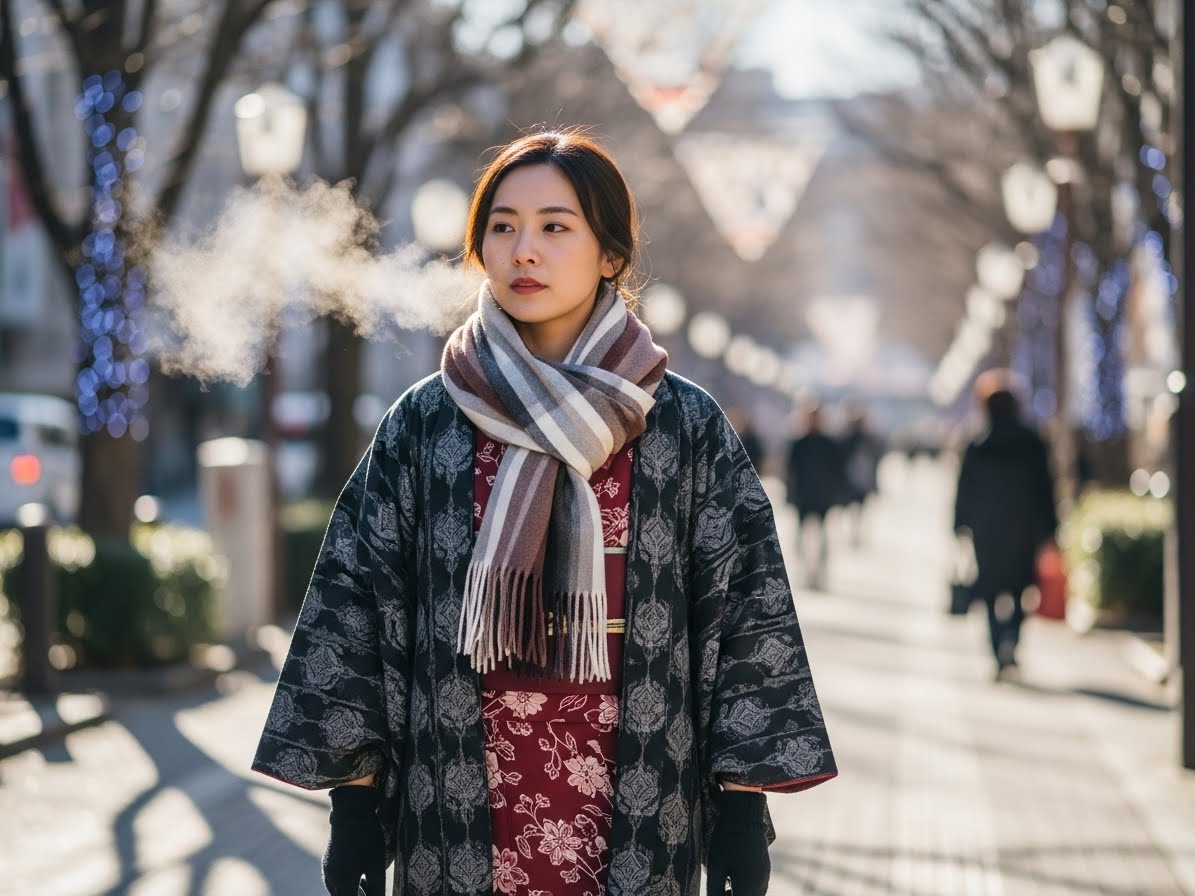
Many rental shops in Osaka offer winter accessories to enhance warmth. Shawls and stoles wrap around the shoulders and provide immediate relief from cold winds. They add elegance to the outfit and look beautiful in photos. Some shops also provide haori jackets—traditional outer coats that are stylish, warm, and perfect for winter.
Hand warmers and discreet waist warmers can be tucked under the obi. These items stay secure throughout the day and provide stable heat without affecting the silhouette.
■ Keeping Your Neck, Hands, and Feet Warm
The areas most affected by winter cold are the neck, hands, and toes. A soft scarf or shawl around the neck keeps warmth trapped without interfering with the kimono collar. Gloves are useful during long walks, and many travelers remove them only for photos.
Kimono sandals expose the top of the foot, so wearing tabi socks with an extra inner pair makes a noticeable difference. Some rental shops sell or rent thicker winter tabi, which help insulate against cold stone paths and pavements.
■ Moving Comfortably in Cold Weather
Walking generates natural warmth, but kimono encourage smaller steps, so it helps to keep a steady pace. Standing still for long periods can feel cold, especially near rivers or open plazas, so alternating between movement and short breaks inside cafés works well.
Tucking your hands inside the sleeves—a traditional gesture—keeps them warm and gives your body heat a place to circulate. This pose also looks timeless and elegant in photos.
■ Where to Enjoy Winter Kimono Walks in Osaka
Winter adds a peaceful atmosphere to Osaka. Osaka Castle Park is crisp and bright under winter skies. Shrines like Sumiyoshi Taisha and Shitennoji feel calm, and the contrast between winter trees and kimono colors creates striking photos.
Namba Yasaka Shrine looks dramatic even in cold weather, and Dotonbori’s neon lights reflect beautifully in winter air. Because crowds are lighter than in other seasons, you can take your time and enjoy the city at your own pace.
■ Protecting the Kimono From Wind and Moisture
Winter in Osaka is mostly dry, but occasional wind or drizzle can appear. Holding a shawl across the shoulders protects the outer fabric from cold gusts. If rain begins, an umbrella keeps both the obi and sleeves safe. Rental kimono are durable and professionally cleaned, so light winter moisture is not a concern.
Avoid dragging the hem in damp areas by taking slow, small steps. This not only keeps the kimono clean but also retains warmth around the legs.
■ Warm Food and Indoor Stops That Make the Experience Better
Osaka is famous for warm, comforting food—ramen, udon, takoyaki, and hot matcha drinks are perfect during a winter kimono walk. Short stops inside cafés or markets help warm your hands and face before stepping back outside.
Because kimono encourage slower movement, these breaks become a natural part of the day and make the whole experience feel relaxed rather than rushed.
■ Common Questions Travelers Ask About Winter Kimono
Many visitors wonder whether the cold will ruin the experience. In reality, dressing properly underneath solves most issues. Others worry that layering will affect the fit of the kimono, but thin thermals are invisible once the obi is tied.
Some fear that the sleeves will feel drafty. A shawl or haori jacket handles this instantly. Most travelers find they stay surprisingly warm once fully dressed.
■ Final Thoughts: Winter Is One of the Best Seasons for Kimono
Winter in Osaka may be chilly, but it is also one of the most beautiful times to enjoy a kimono. Clear air enhances photos, crowds are smaller, and warm accessories add charm to your outfit. With the right underlayers, a shawl or haori, and gentle movement, you can explore the city comfortably from morning to evening.
A winter kimono walk isn’t just manageable—it’s memorable. The contrast between crisp air and warm colors creates stunning images and a uniquely peaceful experience. With a bit of preparation, Osaka’s winter becomes the perfect stage for your kimono adventure.






 BOOK NOW