Kimono on Rainy Days: How to Protect Your Outfit and Still Enjoy Osaka
Rain can be unpredictable in Osaka, especially during spring and early summer. Many travelers worry that a rainy day will ruin their kimono experience, but the truth is more reassuring: kimono can absolutely be enjoyed in the rain as long as you know how to protect the fabric, manage your movement, and choose the right items. Rain often adds atmosphere to photos, softens the light, and gives Osaka’s streets a reflective charm that many visitors end up loving.
This guide explains how to wear kimono safely on rainy days, how to walk without damaging the hem, and how to enjoy Osaka even under an umbrella.
■ Why a Rainy Day in Kimono Isn’t Something to Fear
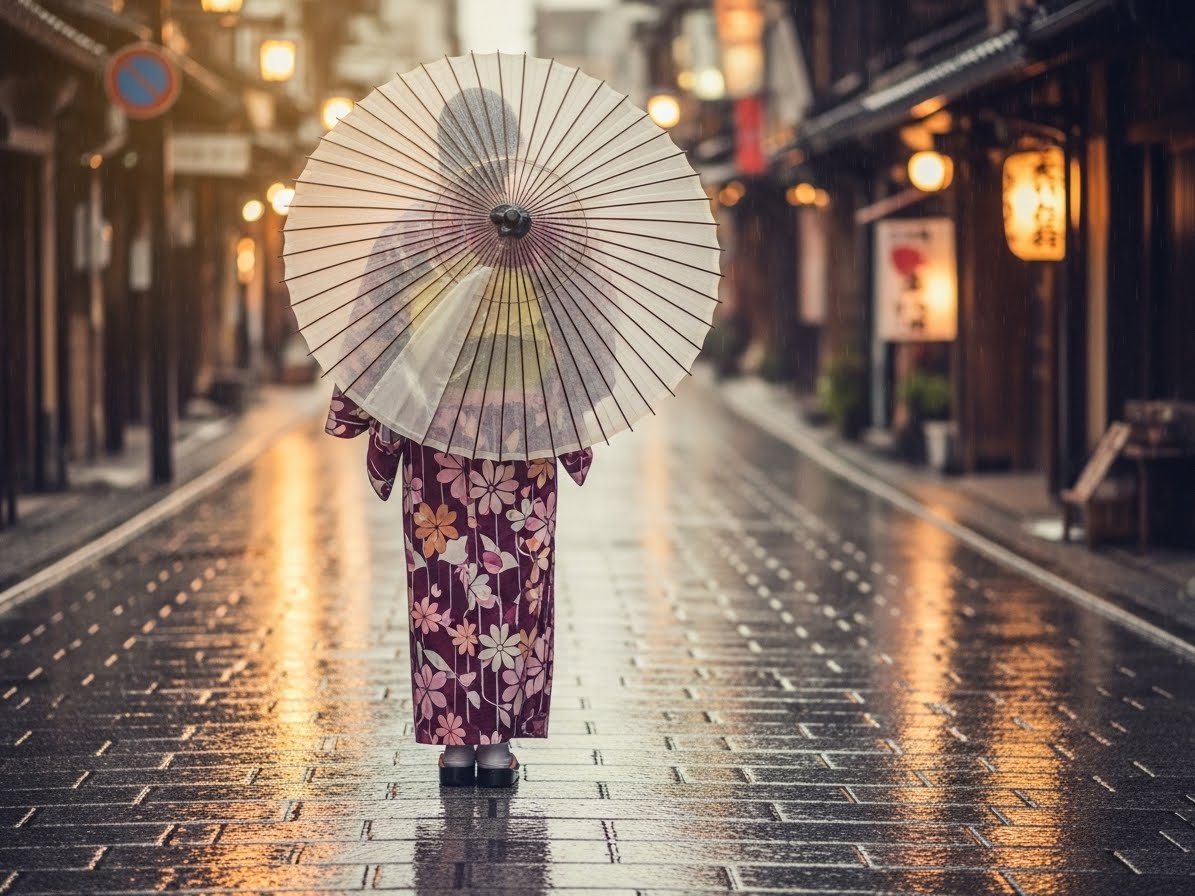
A drizzle or even steady rain does not automatically damage kimono. Most rental shops prepare their garments for everyday outdoor use and know how to secure the hem so it stays off the ground. Rain also enhances the city’s mood—lanterns glow more softly, stone paths shine, and the colors of kimono look surprisingly vibrant under an umbrella.
Rather than canceling your plans, many visitors discover that a rainy-day kimono walk becomes one of their favorite memories.
■ Choosing the Right Items Before You Walk Outside
Rental shops in Osaka typically offer umbrellas, sometimes even traditional-style ones that photograph beautifully. Using a wide canopy helps keep the sleeves dry and prevents water from landing on the obi. Wearing short boots or waterproof sandals is sometimes allowed depending on the shop’s policy, and they provide better grip on wet surfaces.
A small hand towel in your bag is useful for gently blotting moisture. Light dabbing—not rubbing—keeps the fabric safe.
If the rain is strong, the staff may secure your hem slightly higher or recommend styles less likely to drag. These adjustments keep the outfit comfortable without changing the overall look.
■ How to Walk in the Rain Without Damaging the Kimono
Walking slowly is the simplest way to protect your kimono in wet weather. Quick steps cause splashes, but steady movement keeps the hem from catching water. Holding the front panel lightly with one hand, especially near puddles, prevents the fabric from shifting.
Stairs and stone walkways in Osaka—such as those around temples and castle grounds—may become slippery. Keeping your feet flat and taking small, grounded steps improves stability. Kimono sandals have firm soles, but paying attention to footing is essential.
If the wind picks up, positioning the umbrella slightly forward helps shield the hem. This not only protects the garment but also improves visibility.
■ Keeping the Sleeves and Obi Dry
Sleeves can brush against moisture if you’re not careful. Keeping your elbows slightly closer to your body helps prevent accidental contact with rails or wet surfaces. When taking photos, staff or friends can hold the umbrella a little wider to protect the top portion of the kimono.
The obi, which sits at the center of the outfit, is particularly important to keep dry. Umbrellas with longer spokes offer better coverage, and standing under eaves or shop signs while waiting for the rain to lighten helps protect the decorative fabrics.
■ Best Places in Osaka for Rainy-Day Kimono Photos
Rain transforms Osaka into a reflective, cinematic landscape. Certain locations become even more photogenic when wet.
Streets like Hozenji Yokocho glow with lantern reflections on stone pathways. Osaka Castle Park becomes quiet, and soft rain across the stone walls adds a peaceful atmosphere. Dotonbori, with its neon lights reflecting on the pavement, looks vibrant and dramatic behind the kimono’s subtle patterns.
Umbrella photos—especially with clear or traditional wagasa-style umbrellas—capture the gentle mood of rainy Japan. Instead of fighting the weather, embracing the atmosphere often results in your best images.
■ How to Stay Comfortable During a Long Rainy Walk
Thin underlayers make a big difference in comfort. Even in cool weather, waterproof outer accessories like shawls or coats may not be worn over kimono, so relying on light but warm inner clothing is helpful.
Taking short breaks in cafés or covered shopping arcades gives the kimono time to dry naturally. Osaka’s many indoor spaces—Namba Parks, Dotonbori’s walkways, and Shinsaibashi’s endless arcade—allow you to enjoy the city without staying in the rain for long periods.
If the obi begins to feel tight after carrying an umbrella for a while, resting your arms occasionally relieves pressure.
■ What to Do if Your Kimono Gets a Bit Wet
Light rain is rarely a problem. Rental kimono are durable, and small water droplets simply evaporate. If the hem becomes damp, lift the fabric slightly with both hands and allow it to air dry under shelter. Do not rub or squeeze the fabric—the fibers dry best with natural airflow.
Staff at the rental shop are used to returned kimono that experienced rain. They clean and care for the garments professionally, so even if the hem is damp, it’s not considered damage.
■ Common Misconceptions About Rain and Kimono
Many travelers believe rain automatically ruins kimono, but the fabric is more resilient than expected. The biggest risks—mud splashes and strong winds—are easily avoided with calm walking and a good umbrella.
Others worry that they won’t enjoy their outing if it rains. In reality, the quieter streets, reflective lights, and unique mood often make rainy-day kimono experiences especially memorable.
■ Final Thoughts: Rain Changes the Mood, Not the Experience
Wearing a kimono in the rain adds a poetic touch to your visit to Osaka. The sound of rainfall on stone alleys, the glow of lanterns on wet pavement, and the gentle weight of the kimono create a calm, atmospheric journey through the city. With a few simple precautions—steady steps, hand support for the hem, and a wide umbrella—you can move comfortably and confidently.
Rain doesn’t diminish the kimono experience; it transforms it. Instead of canceling your plans, let the weather shape a quieter, more reflective version of Osaka. Many travelers look back and say their rainy-day kimono walk was the most beautiful part of their trip.






 BOOK NOW