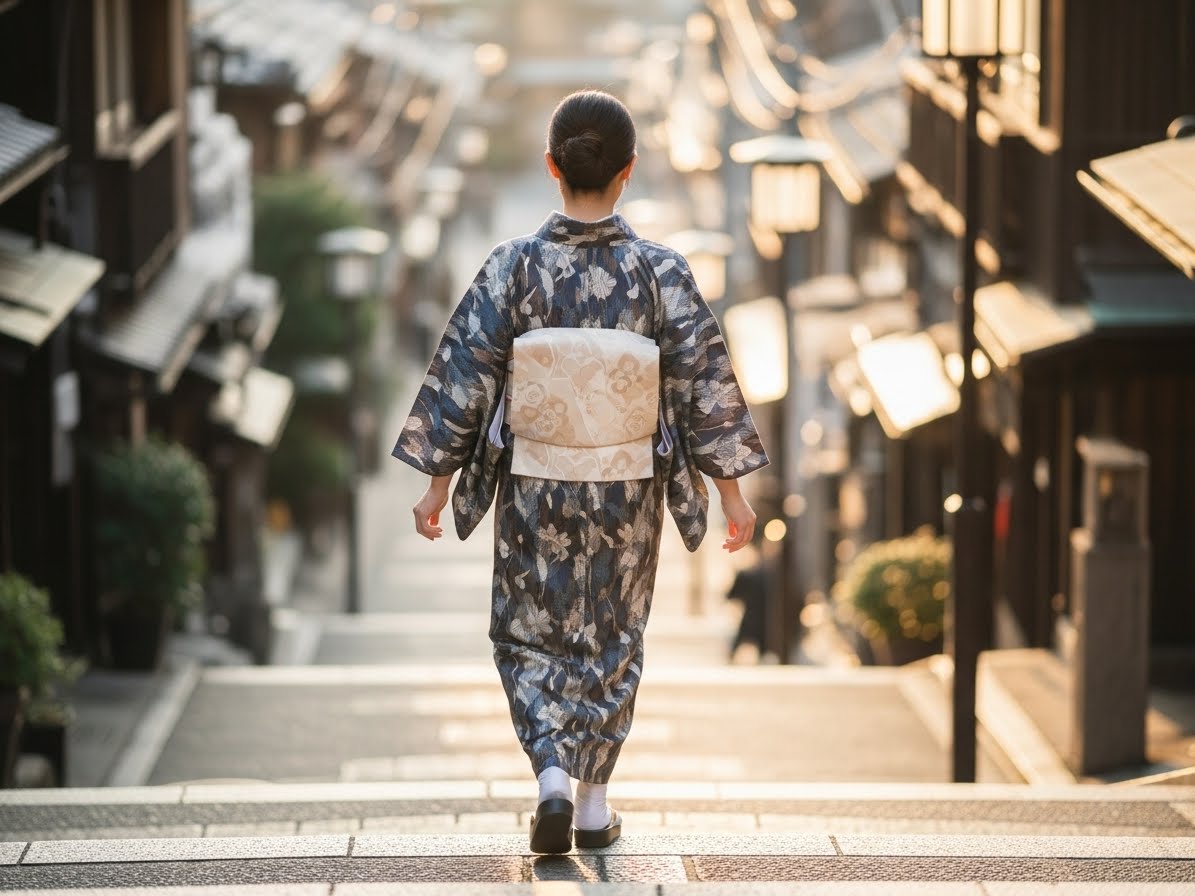
Walking Comfortably in a Kimono: Tips for Slopes, Stairs, and Long Walks in Osaka
Many travelers imagine that walking in a kimono will feel restrictive, but the reality is more gentle and manageable than expected. Kimono encourage slower, more deliberate movement, which not only protects the garment but also changes the way you experience the city. In Osaka, where sightseeing often involves slopes, stairs, and lively streets, learning a few simple walking techniques can make your day far more comfortable.
This guide explains how to walk smoothly in a kimono, how to handle uphill paths and steps, and how to enjoy long walks without feeling tired or worried about the garment shifting.
■ Understanding Why Kimono Walking Feels Different
The structure of a kimono encourages smaller steps. The front panels overlap, the obi secures the waist, and the hem falls in a straight column. This design is elegant but naturally limits wide strides. Once you adapt to the rhythm, walking becomes graceful rather than constrained.
Because the garment sits close to the body, posture also plays a role. Standing tall with relaxed shoulders allows the kimono to drape correctly and keeps the collar from shifting. Many travelers find that they automatically adopt calmer movements as the day goes on.
■ Moving Through Osaka’s Streets With Ease
Osaka is full of varied terrain—flat shopping arcades, narrow alleys, shrine steps, and gentle hills. To move through these comfortably, it helps to adopt a steady pace. Taking slightly smaller steps than usual prevents the hem from opening or catching. If you feel the fabric shift, pausing for a moment and adjusting the overlap with your hands keeps everything aligned.
Kimono sandals, although different from everyday shoes, are surprisingly easy to walk in once you find your rhythm. Keeping the foot low and gliding rather than lifting helps maintain balance.
■ Tips for Walking Long Distances in a Kimono
Osaka Castle Park, Namba Riverside, and Umeda Sky Garden all involve a fair amount of walking. To stay comfortable, it helps to maintain an even pace and avoid quick, sudden movements. Long walks are easier when your underlayers are soft and breathable, as this prevents friction.
Short breaks also make a difference. Stopping for a drink or to take photos allows your body to reset. Because the obi wraps around the waist, rest moments help avoid fatigue. If anything feels too tight, rental shops can adjust the fit quickly when you return.
■ How to Handle Stairs Safely and Gracefully
Stairs are one area where kimono-specific movement is useful. To walk up stairs, place one hand lightly on the front panel to prevent the hem from rising too high. Lift your feet steadily and avoid rushing. Going down, keep your body slightly centered, focusing on balance rather than speed.
The key is calmness. Whether you’re climbing to a shrine or descending into a subway station, slow steps help the garment stay in place and reduce pressure on the obi.
■ Navigating Slopes and Hills in Osaka
Areas like Shitennoji, Osaka Castle’s stone paths, and certain old neighborhoods include gentle slopes. When going uphill, leaning forward slightly can cause the hem to rise, so keeping an upright posture helps maintain coverage. Uphill walking feels smoother when steps remain small and consistent.
Downhill paths require extra attention because gravity naturally pulls the fabric forward. Keeping your pace slow and lightly touching the front overlap prevents shifting. Many travelers find that these techniques become instinctive after a few minutes.
■ Using Your Hands to Support the Kimono While Moving
It is completely normal—and even expected—to use your hands occasionally. Holding the front panel lightly while stepping over obstacles, adjusting the collar after bending, or touching the obi to check alignment are all part of the experience. These gestures look natural and appear often in traditional kimono etiquette.
Rather than thinking of it as “fixing” the kimono, it helps to think of it as guiding the garment so it works with your movement.
■ Staying Comfortable During All-Day Sightseeing
Wearing a kimono for several hours is entirely possible as long as you listen to your body. If the obi begins to shift or your shoulders feel tired, stopping for a moment allows the layers to settle. Eating, drinking, and resting normally will not disturb the garment.
Many travelers say that walking in kimono changes the pace of their trip in a good way. Instead of rushing, they find themselves paying attention to small details in the city—lanterns, shop signs, stone paths, and everyday sounds. This slower rhythm becomes part of the charm.
■ Weather Considerations: Heat, Cold, and Osaka’s Seasons
Summer in Osaka can be warm and humid. Choosing moisture-wicking underlayers helps keep the body cool and reduces discomfort during long walks. In winter, thin thermal layers allow you to stay warm without adding thickness that interferes with walking.
Windy days may cause the hem to shift more often, so walking with one hand lightly guiding the front can be helpful. Rain is also manageable as long as steps remain stable; many shops offer umbrellas that match the kimono style.
■ Common Concerns Travelers Have (And the Reality)
Some visitors worry that they won’t be able to walk comfortably. Others imagine the kimono coming loose or the obi becoming painful. In reality, professional dressers secure everything carefully, and as long as your movement is calm and steady, the garment stays in place.
Even on busy streets, most travelers quickly forget they’re wearing something unfamiliar. They simply adjust their pace and enjoy the sights.
■ Final Thoughts: Walking in Kimono Is Part of the Experience
Moving through Osaka in a kimono isn’t just about looking elegant—it’s about experiencing the city with a different rhythm. Slopes, stairs, and long walks become surprisingly manageable when you understand the basic techniques. Small steps improve balance, hand support keeps the fabric aligned, and steady breathing creates a relaxed posture.
With these simple habits, you can explore Osaka Castle, Namba, Umeda, and traditional alleys comfortably and confidently. Walking in kimono is not a limitation—it is a graceful way of discovering the city, one deliberate step at a time.






 BOOK NOW