What to Wear Under a Kimono: Practical Guide for Travelers
Many travelers renting a kimono in Japan wonder what they’re supposed to wear underneath. Because kimono looks structured and elegant, it’s easy to imagine that the layers are complicated. In reality, the underlayers are simple, comfortable, and designed to make dressing quick. With the right clothing, your kimono fits better, stays neat, and feels easier to move in throughout the day.
This guide explains what to wear under a kimono rental, what to avoid, and how to prepare for different seasons in Japan.
■ Understanding Why Underlayers Matter
Kimono fabric is typically smooth and doesn’t stretch, so what you wear underneath affects both comfort and mobility. Proper underlayers help the kimono sit correctly on your body, prevent irritation, and keep the garment clean. They also allow staff to dress you more quickly because they don’t have to work around bulky seams or thick clothing.
Contrary to what some visitors expect, you do not need traditional Japanese undergarments. Rental shops provide any essential inner pieces. What matters most is choosing clothing that is thin, comfortable, and easy to adjust during dressing.
■ What Rental Shops Usually Provide
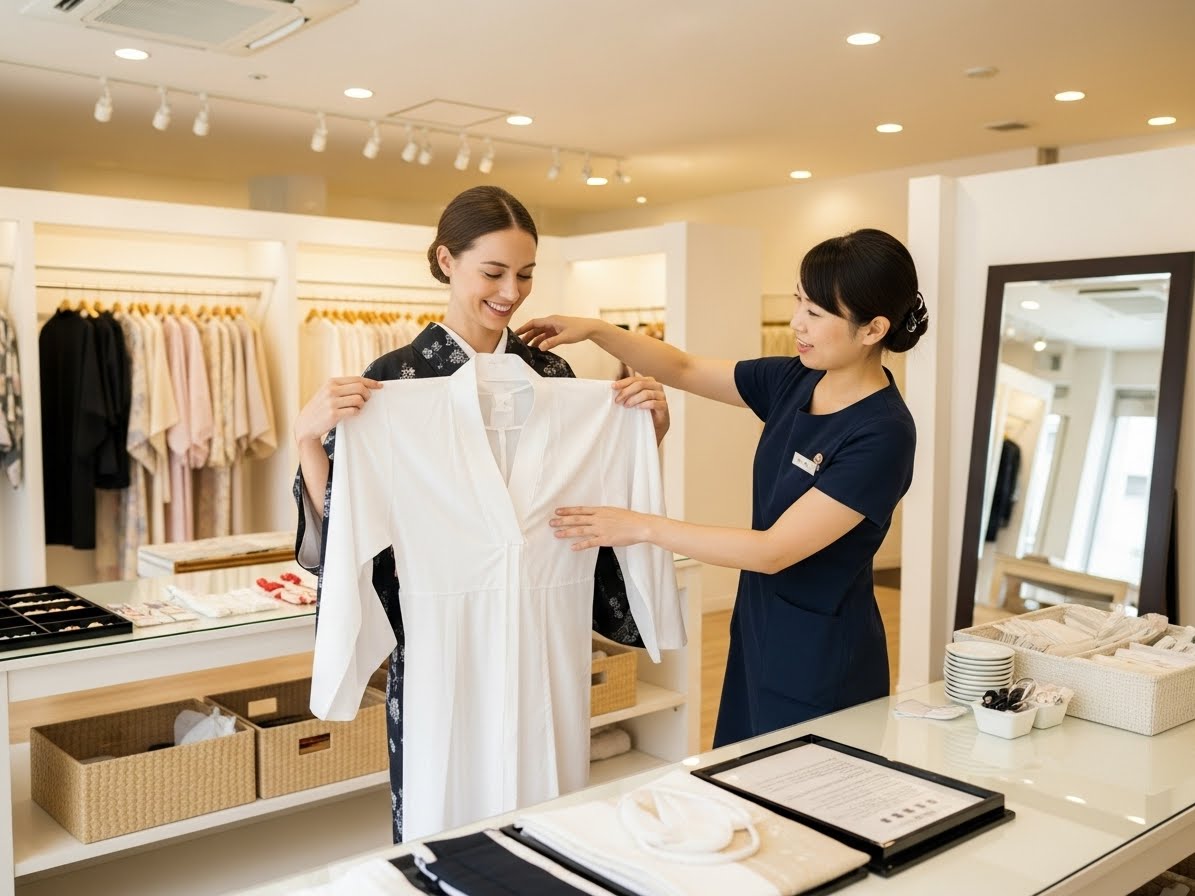
Most kimono rental shops in Osaka give guests a few key items: an inner robe or slip, soft waist ties, padding if needed, and sometimes a collar piece. These are worn beneath the outer kimono to help shape the silhouette.
These pieces are designed to be breathable and lightweight. Since they come as part of the rental, you don’t need to pack anything special unless you have personal preferences.
■ The Best Clothing to Wear Under a Kimono
The ideal underlayers should follow three simple principles: thin, smooth, and easy to move in. The most comfortable options for travelers are leggings, thin shorts, tank tops, camisoles, and soft T-shirt-style tops with shallow necklines.
A thin top is especially useful because kimono dressing involves adjusting the neckline, shoulders, and back. Smooth fabrics allow dressers to guide the collar evenly and prevent bulges.
Leggings or shorts make walking easier and give you peace of mind when moving or sitting. They also help keep you warm in cooler seasons without adding noticeable bulk.
■ Clothing to Avoid
Some types of clothing make kimono dressing more difficult. Thick sweatshirts, hoodies, bulky sweaters, and lace-textured tops create uneven lines under the kimono. Deep V-necks or wide scoop-neck shirts may show through the collar.
Sports bras with lots of padding or stiff structure can also disrupt the smooth silhouette, while wired bras sometimes shift uncomfortably with the kimono ties. Simple, soft-fitting undergarments work best.
Heavy winter tights may also feel too warm or make the lower layers stiff. Thin layers provide warmth without compromising mobility.
■ Seasonal Tips: Staying Comfortable in Any Weather
Japan’s climate changes dramatically through the year, so what you wear underneath can help you enjoy your walk comfortably.
In summer, Osaka is warm and humid. Lightweight, breathable fabrics are essential. Many travelers choose moisture-wicking tops to stay cool without affecting the kimono’s appearance.
In winter, adding thin thermal layers under the rental garments makes a big difference. Rental shops sometimes provide shawls or stoles, but warm inner layers help keep the body insulated without thickening the silhouette.
In spring and autumn, when temperatures vary, layers you can easily remove or adjust are helpful. Soft long-sleeve tops or light leggings usually provide enough coverage.
■ What About Traditional Kimono Underwear?
Some travelers wonder whether they need to buy traditional items such as hadajuban or susoyoke. These garments are elegant and functional but not necessary for casual kimono rental. Shop staff provide inner robes that serve the same purpose.
If you want to try traditional undergarments for a more authentic experience, you’re welcome to. However, most renters find that modern innerwear is more comfortable and easier to move in.
■ Dressing Room Etiquette and What to Expect
Inside the dressing room, staff help you step into the kimono’s inner layers and adjust your posture gently. Wearing clothing that’s easy to take on and off speeds up this process. Because privacy is respected, visitors can change comfortably even if they’re unfamiliar with the dressing style.
You may be asked to lower the neckline of your top slightly so the kimono collar lies flat. This is normal and done with care. If something feels too tight or warm, staff can adjust the ties within seconds.
■ How Your Underlayers Affect Photos
What you wear beneath the kimono influences how polished your photos look. Smooth clothing helps the outer fabric drape beautifully and keeps the back line clean. Because kimono emphasizes posture and symmetry, eliminating bumps and folds beneath the garment enhances the entire outfit.
With the right underlayers, your kimono photos will feel natural, balanced, and flattering from every angle.
■ Final Thoughts: Keep It Simple and Comfortable
You don’t need special garments to enjoy wearing a kimono in Osaka. Thin tops, soft undergarments, and simple leggings are usually perfect. The rental shop provides everything else needed to create a clean silhouette and comfortable fit.
By choosing the right underlayers, you’ll feel at ease throughout your day—free to explore Osaka Castle, stroll through Dotonbori, or capture memorable photos among traditional streets. Preparing well underneath ensures the beauty of the kimono shines on the outside.






 BOOK NOW