Kimono and Shrine Walk: Discover Osaka’s Hidden Spiritual Spots
In autumn, when Osaka’s air turns crisp and maple leaves color the shrines in gold and red, the city reveals a quieter, spiritual side often missed by travelers.
Walking through these sacred places in kimono or hakama is not just a cultural experience — it’s a slow pilgrimage that connects you with Japan’s history, prayer, and calm energy.
This route takes you beyond the busy city center, into peaceful sanctuaries where tradition lives on: from ancient bridges to centuries-old trees and sacred rituals that still bless the present day.
Sumiyoshi Taisha — 1800 Years of Light and Stillness
Located in southern Osaka, Sumiyoshi Taisha is one of Japan’s oldest shrines, founded over 1800 years ago.
Its four main halls, built in the *sumiyoshi-zukuri* architectural style, stand as national treasures, simple and symmetrical, facing the sea breeze.
The shrine honors the three Sumiyoshi deities who protect travelers, artists, and those seeking love, success, or safe childbirth.
Walking through the grounds feels like stepping into another era — quiet, bright, and deeply rooted in gratitude.
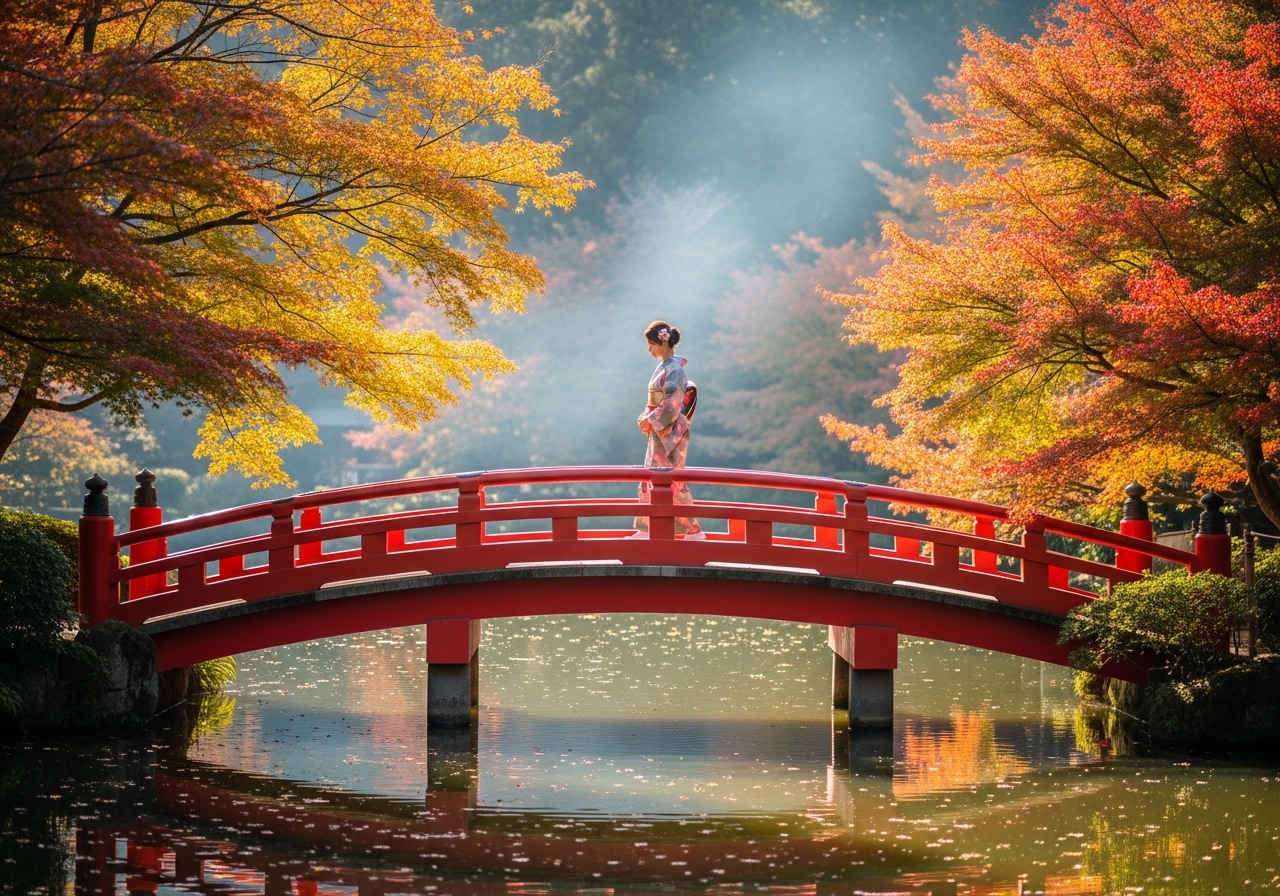
Crossing the famous *Sorihashi Bridge*, with its high red arch and reflection over the pond, is said to purify the spirit. The steep curve represents renewal, and the gentle sound of your footsteps on the bridge echoes through the calm air.
Visitors often pause mid-bridge, letting the reflection of the arch ripple beneath them like a gateway between the earthly and the divine.
Nearby, the small area called *Goshogozen* invites you to collect three lucky stones engraved with “go,” “dai,” and “riki” — symbols of health, wisdom, and happiness. You return the stones once your wish comes true, a simple gesture of thanks that completes the circle of prayer.
If you visit in early autumn, you might catch the Moon-Viewing Festival, when traditional music and poetry fill the grounds under the night sky.
Sukunahikona Shrine — The Hidden Temple of Healing
Tucked between modern buildings in Doshomachi, Sukunahikona Shrine is a quiet sanctuary devoted to health and medicine.
Founded in the 18th century, it honors both the Japanese deity Sukunahikona no Mikoto and the Chinese god Shennong. Together, they watch over those seeking healing and protection.
During autumn, the shrine hosts peaceful ceremonies like the *Hot Spring Festival* in October and the *Shinno Festival* in November, where paper tiger talismans are given to wish for good health.
Even amid the tall office towers, the faint scent of incense and the sound of bells create an oasis of calm.
The surrounding streets once formed Osaka’s “Medicine District,” where pharmacists traded herbal remedies during the Edo period. After your visit, you can stroll through the narrow alleys in kimono, stopping by the Doshomachi Pharmaceutical Museum to learn about the city’s long history of healing.
This small shrine, glowing under yellow gingko leaves, is ideal for quiet prayer and reflection — a reminder that strength often hides in small, humble places.
Toyokuni Shrine and Osaka Castle — Tracing the Path of the Samurai
North of the city center lies Toyokuni Shrine, dedicated to Toyotomi Hideyoshi, the samurai leader who built Osaka Castle.
The shrine sits within the castle park, surrounded by ancient stone walls and autumn maples.
Visitors often include it in the “Osaka Castle Pilgrimage,” a walking route that begins at Aoyamon Gate and continues past Hideyoshi’s statue, plum gardens, and historical landmarks.
Dressed in kimono or hakama, you can follow the same paths samurai once walked, reflecting on ambition, legacy, and impermanence.
In the evening, when the castle is illuminated, the entire park transforms into a quiet sea of amber light. The rhythmic sound of geta on the stone pavement, the rustling leaves, and the soft glow of lanterns create a moment that feels almost timeless.
This is not a tourist stop — it’s a place to breathe, to honor those who built the city, and to let your thoughts settle like falling leaves.
Suggested Route: The Autumn Pilgrimage Walk
For those wishing to connect these shrines in one afternoon, the following route offers a blend of culture, reflection, and photography — a spiritual walk through Osaka’s sacred heart.
1. Begin with a kimono or hakama rental in Namba or Shinsaibashi.
2. Visit **Sumiyoshi Taisha** to cross the *Sorihashi Bridge* and offer prayers at *Goshogozen*.
3. Travel to **Sukunahikona Shrine** in Doshomachi to join an autumn ceremony or simply rest in the quiet courtyard.
4. End your journey at **Toyokuni Shrine**, walking beneath Osaka Castle’s autumn canopy at sunset.
The entire walk takes about three to four hours. Each stop tells a different story — of purity, healing, and courage — but together they form a complete spiritual experience.
Reflections
Osaka is known for its food, energy, and laughter, but behind that brightness lies an old soul — steady, compassionate, and deeply spiritual.
Wearing a kimono while walking through its shrines allows you to slow down, breathe, and feel that rhythm.
As the red leaves flutter around you and the last sunlight glows against the shrine roofs, you might find yourself whispering a small prayer — not for miracles, but for balance, warmth, and gratitude.






 BOOK NOW