Boho Meets Kimono: How Japanese Designs Inspire Global Fashion
At first glance, the boho-chic aesthetic — flowy fabrics, earthy tones, and free-spirited layering — might seem a world apart from the refined structure of the kimono.
But step onto any runway or scroll through Instagram in 2025, and you’ll see a surprising harmony:
the Bohemian world and Japanese tradition are merging, creating a new global language of effortless elegance.
???? 1. From Kyoto Looms to California Boutiques
For centuries, the kimono has been a canvas of storytelling — each pattern and fold reflecting Japanese philosophy: simplicity, impermanence, and balance.
Today, that same philosophy is being reinterpreted by Western designers seeking authenticity in an age of fast fashion.
In Los Angeles, sustainable fashion label Christy Dawn uses handwoven Japanese silk for loose-fitting robes that resemble vintage kimonos.
In London, Free People and Anthropologie collaborate with Kyoto artisans to produce limited-edition haori jackets, dyed with natural indigo.
These aren’t mere trends — they’re proof that global fashion is rediscovering craft.
“Japanese design reminds us that luxury isn’t about excess — it’s about care,”
says stylist and designer Mara Leone.
“That’s why kimono silhouettes fit so naturally into the boho aesthetic.”
???? 2. The Shared DNA of Boho and Kimono
The connection isn’t accidental.
Both styles celebrate freedom, comfort, and self-expression — but through different cultural lenses.
The bohemian look emerged in 1960s Europe as a symbol of creative rebellion, with flowing shapes and handmade embroidery.
The kimono, centuries older, embodies harmony and respect for materials — with straight seams, fluid lines, and minimal cutting waste.
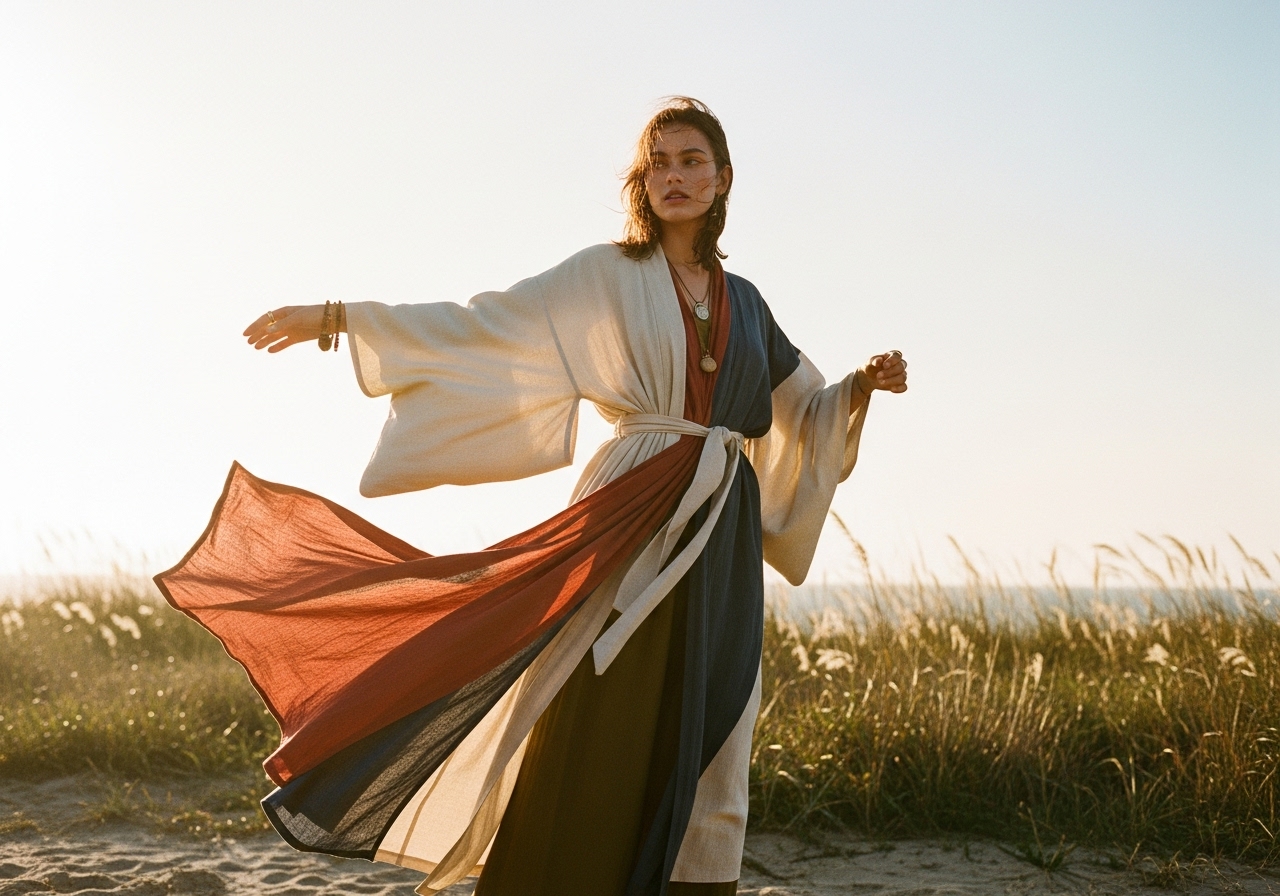
When combined, they create a look that feels both earthy and elevated: loose layers, wide sleeves, natural dyes, and belts that echo the traditional obi.
It’s not fusion — it’s evolution.
???? 3. The Rise of the “Global Kimono Jacket”
Between 2022 and 2025, searches for “kimono jacket” and “boho kimono” grew over 300% worldwide (Google Trends).
On Pinterest, boards tagged #bohokimono now feature over 2 million saves, reflecting a deep fascination with the garment’s relaxed silhouette.
Modern versions use lightweight linen, Tencel, or organic cotton — materials aligned with the sustainable fashion movement.
The kimono jacket’s loose structure allows for reuse and layering, fitting naturally into capsule wardrobes and eco-lifestyles.
“It’s the perfect cross-cultural garment,” explains designer Hiroko Nakata, founder of Tokyo-based brand Sazanka.
“You can style it like a cardigan in Paris, or wear it as a robe in California. It adapts — just like the Japanese concept of ma, the space between things.”
???? 4. The Influence of Japanese Patterns in Western Fashion
Global designers have long admired Japan’s textile artistry — but in 2025, that influence is more visible than ever.
Kimono-inspired prints now dominate boho collections across brands like Zara Studio, Sézane, and Spell Byron Bay.
Motifs such as:
Asanoha (hemp leaf) – symbolizing vitality and growth,
Kikkō (tortoise shell) – longevity and protection,
are being reimagined with watercolor textures and earthy palettes.
These patterns don’t just decorate — they mean something.
In an era when consumers crave authenticity, Japanese symbolism adds emotional depth to Western fashion.
????♀️ 5. The Spiritual Side of Simplicity
Boho fashion often embraces mindfulness — and in this sense, it naturally aligns with Japanese aesthetics like “wabi-sabi” (the beauty of imperfection) and “iki” (refined simplicity).
Designers are increasingly referencing these philosophies.
Brands such as Eileen Fisher Japan Edition and Muji Labo merge Zen minimalism with bohemian comfort: oversized linen kimonos, muted neutrals, and unstructured silhouettes that feel calm yet alive.
In Tokyo’s Daikanyama district, concept stores like 1LDK and Maison de Soil curate global collections where traditional noragi jackets and European boho dresses hang side by side — visual proof of a shared aesthetic language.
???? 6. Sustainability: The Thread That Binds
Both kimono-making and bohemian fashion value sustainability by tradition, not trend.
A single kimono can last decades, passed through generations; similarly, boho garments emphasize longevity, repair, and personalization.
In 2025, this alignment has fueled the rise of upcycled kimono fashion — Western brands sourcing vintage fabrics from Kyoto and giving them new life.
Australian label Kimono Reclaimed transforms antique obi belts into handbags and scarves.
In California, ReKimono Studio reworks discarded silk robes into genderless coats.
It’s not about nostalgia — it’s about rewriting what luxury means.
????️ 7. Influencers and the Kimono Revival Online
Social media has accelerated the kimono’s global renaissance.
On Instagram and TikTok, creators like @boho.elle, @tokyo.mori, and @wearjapan_daily mix traditional Japanese garments with vintage denim, straw hats, and modern jewelry.
Their posts aren’t cosplay — they’re lifestyle storytelling.
They show that the kimono’s beauty isn’t locked in formality; it thrives when lived in, photographed in sunlight, worn with ease.
This cultural cross-pollination has helped young audiences see the kimono as something inclusive, not exclusive — a garment that belongs to anyone who respects its history.
???? 8. The Future: Bohemian Zen
As global fashion shifts toward introspection and sustainability, the Boho × Kimono hybrid looks less like a passing aesthetic and more like the blueprint of modern elegance.
Loose silhouettes allow freedom.
Natural fabrics encourage mindfulness.
And every pattern tells a story rooted in both craft and consciousness.
In 2025, the kimono isn’t just a garment from Japan —
it’s become a global muse, bridging continents through softness, symbolism, and soul.
✨ Final Reflection
When boho meets kimono, something remarkable happens:
Western wanderlust meets Eastern calm.
Flow becomes structure. Simplicity becomes statement.
The result is not just fashion — it’s philosophy you can wear.
And in that gentle fold of fabric, somewhere between Kyoto and California,
the world finds a shared rhythm — slow, graceful, and beautifully human.






 BOOK NOW