2026.07.23
MACHIKO KIMONO: Vintage Kimono, Upcycled Designs and Where to Buy
kimono rental
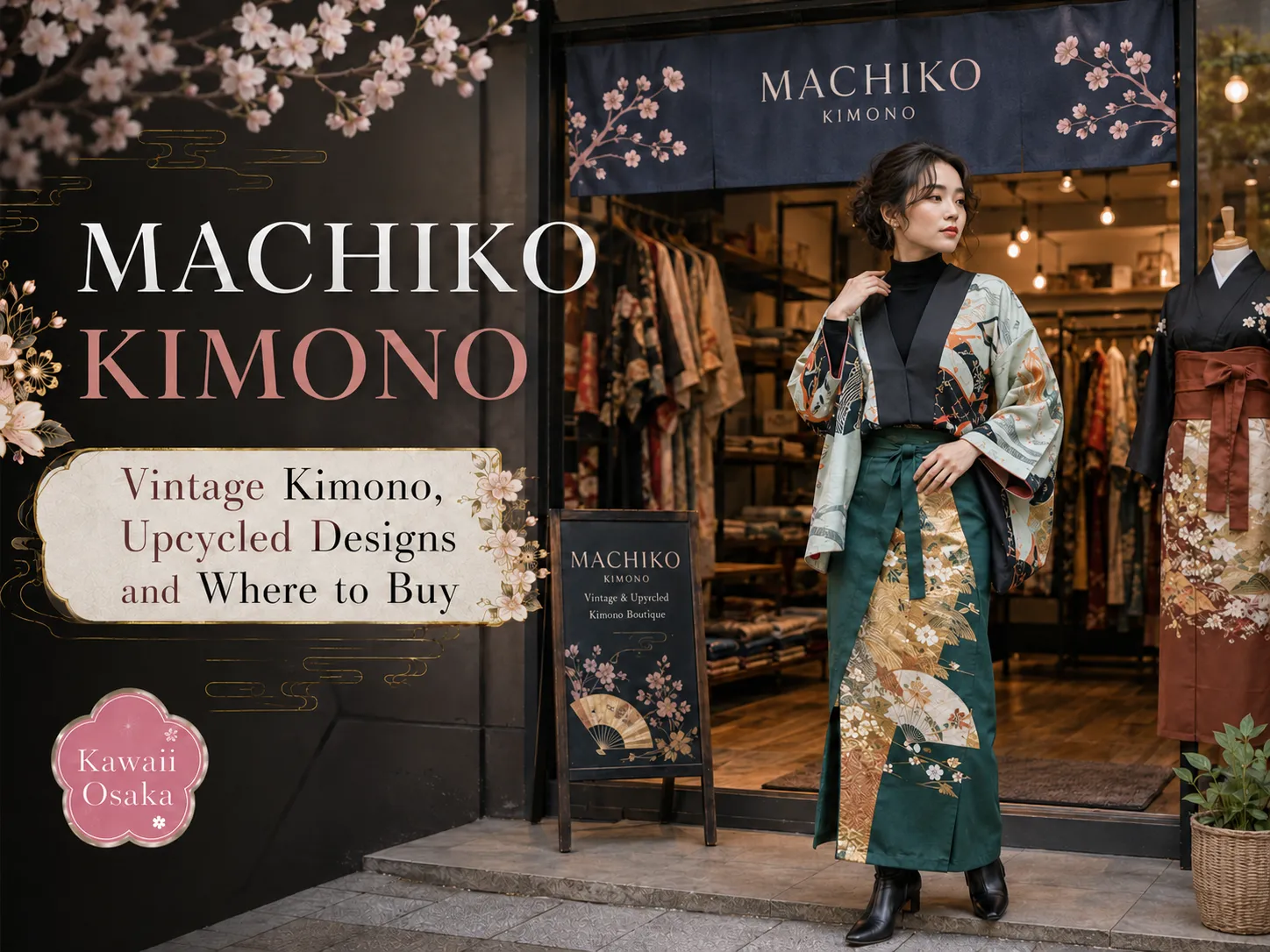
MACHIKO KIMONO, sometimes searched for as Machiko Kimono, マチコ着物, マチコキモノ or 真千子きもの, is a Japanese brand specialising in vintage kimono, haori jackets and contemporary clothing made from vintage kimono textiles.
Founded by Machiko Shime in Yamagata, the brand offers pieces that can be worn beyond traditional ceremonies. A haori might be layered over jeans and a shirt, while an upcycled kimono skirt or gown can bring Japanese textiles into a more familiar modern wardrobe.
You may have first come across MACHIKO KIMONO through Instagram, TikTok, customer styling photos or an event in Japan. International customers can shop through the official online store, while visitors to Osaka can see selected items at Kawaii Osaka near Namba and Dotonbori.
This guide is published by Kawaii Osaka, an authorised MACHIKO KIMONO stockist in Osaka. Online purchases are completed through the official MACHIKO KIMONO website.
Find the Official MACHIKO KIMONO Store and Osaka Stockist
If you are looking for the brand you saw on social media, the official name is
MACHIKO KIMONO.
The brand’s official website carries its wider online collection and provides current product details, measurements, materials, shipping conditions and payment options.
Visitors who would rather look at the fabric and proportions in person can visit Kawaii Osaka, which is listed by MACHIKO KIMONO as an authorised Osaka stockist operating under an official retail agreement. Kawaii Osaka is located in Soemoncho, within walking distance of Nippombashi, Namba, Shinsaibashi and Dotonbori.
Official online shopping: MACHIKO KIMONO website
Osaka stockist: Kawaii Osaka Kimono Rental & Sales
Osaka address: 1-9 Soemoncho, Chuo-ku, Osaka
Business hours: 10:00 AM to 10:00 PM
Nearest areas: Kintetsu-Nippombashi, Namba, Shinsaibashi and Dotonbori
Online and in-store stock may not be identical. If you saw a particular colour, pattern or item online, contact the relevant store before travelling specifically to see it.
What Is MACHIKO KIMONO?
MACHIKO KIMONO gives vintage Japanese garments more than one possible future.
Some pieces are preserved in their original form and sold as wearable vintage kimono or haori. Others are carefully taken apart and reconstructed as skirts, gowns, trousers, jackets and other modern garments.
The brand’s approach is especially suited to people who appreciate kimono textiles but do not necessarily want to learn formal dressing or reserve the garment for a traditional occasion.
Meet Founder Machiko Shime and the Brand’s Yamagata Roots
Machiko Shime founded the brand in Yamagata, a mountainous prefecture in northern Japan.
Her work combines several roles: she selects vintage kimono, develops styling ideas, creates upcycled designs and works with specialists in Japanese and Western tailoring.
She is also registered as a licensed secondhand-goods dealer with the Yamagata Prefectural Public Safety Commission. This is relevant because MACHIKO KIMONO handles vintage garments rather than only newly manufactured clothing.
On social media, Machiko often shows haori and kimono worn with contemporary clothing. Instead of presenting Japanese garments only as formal dress, she pairs them with trousers, boots, dresses, shirts and other everyday pieces.
That approach has helped overseas customers imagine how vintage Japanese clothing might fit into their own wardrobes.
Vintage, Upcycled and New Creation Lines
MACHIKO KIMONO divides its work into three main lines.
Vintage
These are hand-selected vintage Japanese kimono and haori kept in their original form. They are intended to remain wearable rather than being treated only as decorative antiques.
Upcycled
These pieces are made from genuine vintage kimono that have been reconstructed into contemporary garments. Examples include kimono dress gowns, skirts, elastic-waist trousers, mantles and two-piece designs.
New Creation
These are original pieces that express the brand’s modern interpretation of kimono. Materials and construction vary by item, so the individual product description should be checked before purchase.
The brand states that its vintage and upcycled garments are professionally cleaned and that the upcycled line is created in Yamagata with a team that includes Japanese and Western sewing specialists.
What Can You Buy from MACHIKO KIMONO?
The available collection changes because many products are one of a kind.
The official online shop may include original vintage garments, reconstructed clothing, accessories and limited designs. Some pieces sell quickly and may not return in the same fabric or pattern.
Vintage Kimono and Haori Jackets
The vintage range includes different types of kimono, haori, michiyuki coats, obi and traditional accessories.
A full kimono can appeal to collectors, experienced wearers, performers, photographers or customers who want to explore traditional dressing.
A haori is often easier for a first-time international buyer.
It is a jacket traditionally worn over kimono, but it can also be worn open over Western clothing. You do not need an obi or a formal dressing lesson to add one to an outfit.
Depending on current stock, the collection may include:
・Black formal haori
・Colourful floral haori
・Shibori tie-dyed pieces
・Oversized haori
・Sheer summer garments
・Tsumugi kimono
・Formal tomesode or furisode
・Bridal uchikake and shiromuku
・Vintage obi and obijime cords
Small differences in pattern placement, lining, family crests and handwork can make two otherwise similar garments feel completely different.
Upcycled Kimono Clothing
Upcycled pieces retain the textile and visual identity of the original kimono but use a shape that may feel more familiar to customers used to Western clothing.
The range can include:
・Kimono dress gowns with belts
・Edo-zuma and irotome skirts
・Elastic-waist kimono trousers
・Two-piece kimono outfits
・Kimono mantles
・Modern jackets
・Haori-and-trouser combinations
When a kimono is reconstructed, the placement of the original pattern matters.
A large embroidered or painted motif may need to be positioned across the front of a skirt, along the hem of a gown or across the back of a jacket. The design therefore begins with the existing textile rather than treating it like an unlimited roll of new fabric.
The official collection describes many upcycled designs as one-of-a-kind pieces created from hand-selected vintage kimono.
New Creations and Made-to-Order Pieces
The New Creation line is not limited to preserving an existing garment or remaking it into a familiar shape.
It allows the brand and its collaborators to explore new interpretations of kimono construction, Japanese textiles and modern clothing.
Because this category can include different fabrics and production methods, check the individual page for:
・Material composition
・Finished measurements
・Fastenings
・Lining
・Care instructions
・Production time
・Whether the piece is ready-made or produced to order
Do not assume that every New Creation item has the same material or construction as a vintage kimono.
Check Current Stock and New Arrivals
Returning customers and people who follow the brand on social media may be more interested in current stock than in a general introduction.
The official online collection is the best place to check the broadest range, while the Kawaii Osaka product page shows the brand’s presence at the Osaka store.
Kawaii Osaka notes that every MACHIKO KIMONO piece is unique. Product photographs may be representative, and if the exact item is unavailable, another piece from the same collection may differ in colour, motif or pattern placement.
See MACHIKO KIMONO at Kawaii Osaka
See MACHIKO KIMONO in Osaka
Shopping for vintage clothing online requires a certain amount of imagination.
A photograph can show the motif and general shape, but it cannot fully communicate the weight of the fabric, the movement of the sleeves or how the colours respond to different light.
Visitors to Osaka have the option of seeing selected MACHIKO KIMONO pieces at Kawaii Osaka near Namba and Dotonbori.
What You Can Check in Person at Kawaii Osaka
Seeing a garment in person can help you assess details that are difficult to judge on a screen.
You can look more closely at:
・The true colour of the textile
・The level of shine or softness
・The thickness and weight of the fabric
・Embroidery, weaving or dyed details
・The condition of the lining
・The placement of family crests
・Small marks associated with age
・The relationship between sleeve length and your arms
・How the garment looks over your usual clothing
For a haori, bring or wear a similar type of outfit to the one you plan to style it with. A jacket that looks balanced over a fitted shirt may feel different over a thick sweater or structured blazer.
Ask the staff before trying on a sales item, particularly when it is delicate, light-coloured or one of a kind.
Store Stock vs the Online Collection
Kawaii Osaka does not function as a physical display of every product on the MACHIKO KIMONO website.
The official online shop and the authorised Osaka stockist may carry different pieces, and available items can change when one-of-a-kind garments are sold.
This distinction is useful:
Use the official online store when:
・You want to browse the widest current collection
・You already understand the measurements you need
・You live outside Japan
・You are looking for a particular online product code
Visit Kawaii Osaka when:
・You are already staying in Osaka
・You want to examine a vintage textile in person
・You are unsure whether a haori suits your proportions
・You want to compare colours and styles
・You would prefer to ask questions face to face
Some Kawaii Osaka collaborations have included original kimono gowns and two-piece designs offered through the Osaka store. As collaboration pieces and stock can change, treat previous announcements as examples rather than a current inventory list.
What to Confirm Before You Visit
Contact Kawaii Osaka in advance if your visit depends on a particular item.
Ask about:
・The product or collection name
・Preferred colour
・Approximate size
・Whether the item is still available
・Whether you may try it on
・Accepted payment methods
・Whether the item can be taken home on the same day
・Whether English assistance is available at your planned time
Kawaii Osaka is listed as open from 10:00 AM to 10:00 PM and is approximately three minutes from Kintetsu-Nippombashi Station and about ten minutes from Osaka Metro Namba and Shinsaibashi stations. Opening conditions may change around the year-end and New Year holidays.
Which MACHIKO KIMONO Piece Is Right for You?
The best choice depends less on which item looks most traditionally Japanese and more on how you plan to wear it after purchase.
Consider your existing wardrobe, comfort with kimono dressing, storage space and willingness to use specialist cleaning.
Choose a Haori for Everyday Styling
A haori is often the most approachable option for someone buying vintage Japanese clothing for the first time.
It can be layered over:
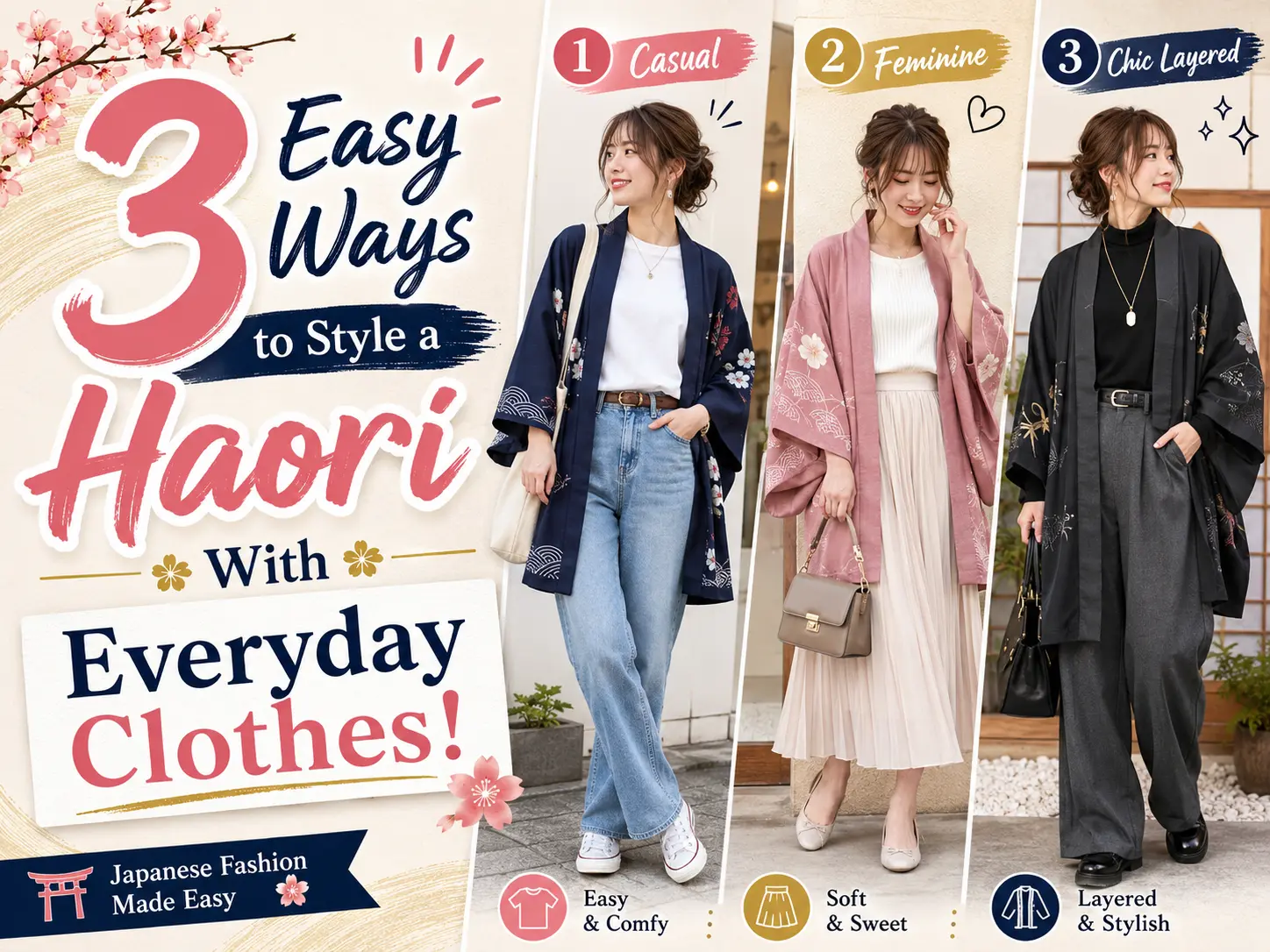
・Jeans and a plain T-shirt
・Wide-leg trousers and a fitted top
・A simple black dress
・A turtleneck
・A shirt and tailored trousers
・An evening outfit
Because it is normally worn open, the fit can be more forgiving than a full kimono. However, shoulder width, back width and sleeve reach still matter.
A haori that is too narrow may pull across the upper back, while short sleeve-to-sleeve measurements can look unbalanced on a tall wearer.
Online discussions among international kimono buyers repeatedly show that height alone is not enough. Shoulder width, back width and arm reach can be the deciding measurements, especially for taller or broad-shouldered shoppers.
Choose an Original Kimono for Dressing or Collecting
An original kimono may be the right choice when you want:
・A garment for traditional dressing
・A collectible textile
・A formal or ceremonial piece
・A photography or performance costume
・A large decorative display
・A garment whose original construction remains intact
Traditional dressing requires more consideration than wearing a haori open over ordinary clothing.
The kimono must have enough length and width to wrap and form the correct shape. You may also need an obi, undergarments, cords, accessories and dressing knowledge.
When buying mainly for display or open-robe styling, the fitting requirements may be less strict, but the garment’s condition and proportions still deserve careful review.
Choose an Upcycled Piece for a Familiar Modern Fit
An upcycled skirt, gown, pair of trousers or two-piece outfit may be easier to integrate into a contemporary wardrobe.
These garments can offer:
・Elastic or adjustable waists
・Belts and familiar fastenings
・Separate tops and bottoms
・Less need for traditional dressing accessories
・Clearer Western-style garment measurements
・A shape that works with shoes and accessories you already own
An upcycled garment is not automatically easier to fit, however.
Check the waist, hip, rise, garment length, shoulder width and armhole measurements according to the design. A one-of-a-kind piece cannot always be exchanged for the next size.
How to Check Fit, Material and Condition
Vintage kimono shopping requires more attention to measurements and condition than buying a standard-sized modern jacket.
The label may not provide a familiar size, and in many cases there is no modern fibre-content tag.
Why S, M and L Are Not Enough: Measurements to Check
Traditional kimono were often made for an individual owner.
A familiar size such as S, M or L cannot fully describe the proportions.
For a full kimono, useful measurements include:
・Total length from shoulder to hem
・Sleeve-to-sleeve width
・Sleeve length
・Front panel width
・Back panel width
・Overall body width
For a haori or modern jacket, compare:
・Shoulder width
・Flat body width
・Back width
・Sleeve-to-sleeve reach
・Garment length
・Armhole size
For an upcycled garment, check the measurements used for that specific shape rather than applying kimono rules to a skirt or pair of trousers.
The safest method is to compare the listed measurements with a garment you already own and wear comfortably.
What Tall and Broad-Shouldered Buyers Should Check
Tall buyers often focus on garment length, but upper-body proportions may cause more problems with a haori.
Pay particular attention to:
・Width across the back
・Shoulder placement
・Sleeve-to-sleeve reach
・Upper-arm room
・Where the hem falls on your body
・Whether you plan to wear thick layers underneath
A haori can be worn open, so it does not always need to meet across the chest. It still needs enough room to sit smoothly across the back and shoulders.
If you have a broad upper body, do not assume that a men’s and women’s garment with identical measurements will fit very differently. The construction details may vary, but the actual width remains the most useful starting point.
When uncertain, send your height, shoulder width, chest measurement and intended styling method to the seller before ordering.
Silk, Synthetic Fibres and Unconfirmed Vintage Fabrics
Many vintage kimono do not have sewn-in composition labels.
MACHIKO KIMONO explains that it assesses materials using experience, visual examination, texture and other methods. When the brand is confident that a piece is silk, it may be described as 100% silk. When there is uncertainty or evidence of mixed fibres, it may be labelled “silk & more.” These assessments are not laboratory certification.
This distinction matters when:
・You have a fibre allergy
・You need certified material information
・You are buying for museum or archival use
・You plan to dye or alter the garment
・You need to follow textile import rules
・You are deciding how to clean it
Read the product description for the individual piece. Do not assume that every item sold by the brand is pure silk.
Signs of Age, Professional Cleaning and Care
Vintage does not mean factory-new.
A wearable vintage garment may still show:
・Small spots
・Faint discolouration
・Storage folds
・Wear near the collar or cuffs
・Changes in the lining
・Old hand-sewn repairs
・Slight differences in colour between panels
・Minor irregularities in embroidery or stitching
The importance of a mark depends on where it appears and how you plan to wear the garment.
A faint spot hidden inside the lining may matter less than discolouration across the front panel. A small repair may also be part of the garment’s history rather than a reason to reject it.
MACHIKO KIMONO states that its vintage kimono and haori are professionally cleaned. Most online orders may require up to ten business days before dispatch because cleaning can take place after purchase. The brand recommends specialist dry-cleaning rather than ordinary home washing.
Never place a silk or unconfirmed vintage kimono in a washing machine unless a qualified specialist has confirmed that the specific garment can be washed safely.
What Does Upcycled Kimono Mean?
Upcycling gives an existing textile a new function without reducing it to raw fibre.
With kimono, this may involve carefully taking apart the original garment and using the panels to create clothing that is easier to wear in modern life.
Preserving a Kimono or Giving the Fabric a New Purpose
Not every kimono collector agrees on when a garment should be altered.
Some prefer intact, wearable kimono to remain in their original form. Others support reconstruction when a garment is damaged, difficult to fit or unlikely to be worn again.
Both views come from respect for the textile.
Discussions among kimono enthusiasts often distinguish between cutting an intact, wearable garment and finding a new use for one whose condition, size or demand makes traditional wear unlikely. Japanese upcycling creators also describe remaking as a way to move meaningful textiles out of storage and back into everyday life.
A responsible buying decision can therefore consider:
・The condition of the original garment
・Whether it could still be worn traditionally
・How much of the original design is preserved
・The quality of the reconstruction
・Whether the finished piece will actually be used
Upcycling should not be treated as automatically better in every situation. Its value depends on the garment, the method and the life the textile gains afterward.
How MACHIKO KIMONO Reworks Vintage Textiles
MACHIKO KIMONO calls its upcycled line
Ichiyou Raifuku, written 一陽来福.
The phrase refers to good fortune returning after hardship and reflects the idea of giving an overlooked garment another chapter.
The brand states that it selects vintage kimono, has them professionally cleaned and works with a sewing team in Yamagata. Its listed collaborators include a nationally certified first-grade Japanese kimono dressmaker as well as specialists in Western tailoring.
A thoughtful reconstruction should respond to the original kimono rather than forcing every textile into the same template.
The maker may need to decide:
・Which motif should appear at the front
・How to preserve embroidery
・Whether the original collar can be retained
・How to use the lining
・Where seams can be opened safely
・How to balance pattern placement across two legs or sleeves
・Whether the textile needs reinforcement
These decisions help explain why a one-of-a-kind upcycled garment differs from mass-produced clothing printed with a kimono-style pattern.
How to Style Haori, Kimono Gowns and Upcycled Pieces
MACHIKO KIMONO’s modern styling is one of the main reasons overseas customers discover the brand.
The garments do not need to be surrounded by other Japanese items.
Try allowing one textile to become the focus.
For a patterned haori:
Wear it over a simple black, white or neutral outfit. Let the sleeves and back pattern provide the visual detail.
For a black formal haori:
Pair it with tailored trousers, a fitted dress or monochrome separates. Family crests can become subtle design details rather than making the outfit feel ceremonial.
For an upcycled skirt:
Choose a plain top that picks up one colour from the kimono pattern. Keep jewellery simple when the embroidery is already prominent.
For a kimono gown:
Wear it belted as a dress, open over a narrow silhouette or layered as an evening coat, depending on the construction and opacity.
For a two-piece design:
Wear the pieces together for a stronger statement or separate them across different outfits.
The goal is not to disguise the garment’s Japanese origin. It is to give the textile enough space to work naturally with the clothing you already wear.
Buying MACHIKO KIMONO from Outside Japan
The official Shopify store is designed for international customers and allows the displayed country or currency to be changed.
Before ordering, read the current product page and shipping policy rather than relying on an older social media post.
Worldwide Shipping and Currency Options
The official website offers a broad country and currency selector, including options for USD, EUR, GBP, AUD, CAD and other currencies.
MACHIKO KIMONO states that it ships worldwide and has used Japan Post EMS, FedEx and DHL. The seller selects the carrier according to the destination and current shipping conditions.
Check:
・Whether your destination appears at checkout
・The currency currently displayed
・Whether shipping is included in the product price
・The delivery address format
・Whether a signature is required
・Whether the carrier can deliver to a PO box
・The contact details used for customs clearance
If your country is not available, contact the brand before attempting payment.
Dispatch Time, Customs, VAT and Import Charges
Shipping time and dispatch time are not the same.
The shipping policy asks customers to allow up to ten business days before dispatch because many garments are sent for professional cleaning after purchase. International delivery can then take additional time and may be delayed by customs.
Order well in advance when the garment is needed for:
・A wedding
・A birthday
・A performance
・A holiday
・A photo shoot
・A flight or departure date
The buyer is responsible for VAT, import duty, customs charges and other destination-country fees that may be collected on arrival.
These charges are determined by local authorities, not by Kawaii Osaka or MACHIKO KIMONO.
Check your country’s rules before ordering a high-value garment. The amount shown on the website may not be the final amount you pay after import.
Returns and What to Confirm Before Ordering
The official policy describes sales as generally final and asks buyers to check measurements and condition carefully.
It also recognises that consumer law in some regions, including the European Union and the United Kingdom, may provide certain return rights. Custom-made and upcycled items may be treated differently.
Before ordering, confirm:
・Every relevant measurement
・Material description
・Condition notes
・Whether the piece is one of a kind
・Whether it is custom-made or altered
・Cleaning and dispatch time
・Import charges
・Return rights in your country
・What costs would be deducted if a parcel is returned
When one measurement is unclear, ask before paying. A short message can prevent an expensive sizing mistake.
Frequently Asked Questions About MACHIKO KIMONO
Is MACHIKO KIMONO the Same as マチコ着物?
Yes.
MACHIKO KIMONO is the official Roman-letter brand name. People may also search for Machiko Kimono, マチコ着物, マチコキモノ or 真千子きもの.
The founder is Machiko Shime, written 七五三真千子 in Japanese.
Where Can I Buy MACHIKO KIMONO in Osaka?
Selected pieces are available at Kawaii Osaka Kimono Rental & Sales in Soemoncho, near Nippombashi, Namba and Dotonbori.
MACHIKO KIMONO lists Kawaii Osaka as an authorised Osaka stockist.
Because many pieces are one of a kind, contact the store before visiting when you are looking for a specific product or collection.
Does MACHIKO KIMONO Ship Internationally?
Yes.
The official website states that it ships worldwide and uses services including EMS, FedEx and DHL.
Availability, delivery time, customs charges and import requirements depend on the destination.
Are MACHIKO KIMONO Pieces One of a Kind?
Many vintage and upcycled products are one of a kind because they are made from individual vintage garments.
Once a piece is sold, an identical replacement may not be available.
A later item from the same collection may use a similar shape but have different colours, motifs, measurements or fabric condition.
Are All MACHIKO KIMONO Products Made from Silk?
No blanket answer applies to the entire collection.
Many vintage kimono are made from silk, but older garments often have no composition label. MACHIKO KIMONO may describe a piece as 100% silk when the assessment is confident, or as “silk & more” when the fibre content cannot be confirmed precisely.
New Creation pieces should be checked individually.
Can I Wear a Haori with Western Clothing?
Yes.
The brand actively promotes styling vintage haori with modern clothing.
A haori can be worn open over jeans, trousers, dresses, shirts and other everyday outfits without a traditional obi.
Are the Vintage Garments Professionally Cleaned?
MACHIKO KIMONO states that its vintage kimono and haori are professionally cleaned.
Some online orders may require additional preparation time before dispatch.
Can I Check the Latest Stock in Osaka Online?
The Kawaii Osaka MACHIKO KIMONO product page provides the main online route to its Osaka offering, but one-of-a-kind stock may change.
Contact the store directly when the availability of a specific piece will determine whether you visit.
MACHIKO KIMONO offers several ways to approach Japanese clothing.
You can choose an original vintage garment, an easy-to-style haori, a reconstructed skirt or gown, or a newer design inspired by kimono construction.
The best purchase is not necessarily the most formal or elaborate piece. It is the one that fits your body, your wardrobe and the way you genuinely intend to wear it.
Explore the Official MACHIKO KIMONO Online Store
See MACHIKO KIMONO at Kawaii Osaka
 06-6732-8070
  KIMONO RENTAL
SET CONTENT
KIMONO RENTAL
SET CONTENT

 KIMONO RENTAL
HAIR SET/MAKE UP
KIMONO RENTAL
HAIR SET/MAKE UP
 KIMONO RENTAL
Accessories for Kimono & ITEMS
KIMONO RENTAL
Accessories for Kimono & ITEMS
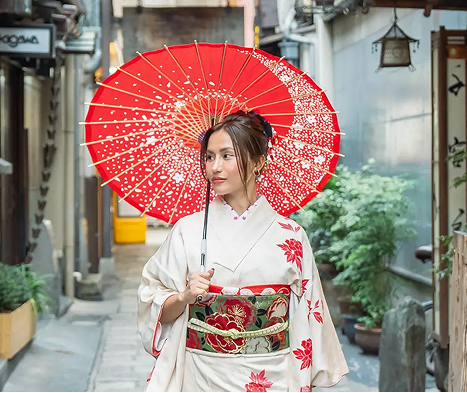 WAGASA
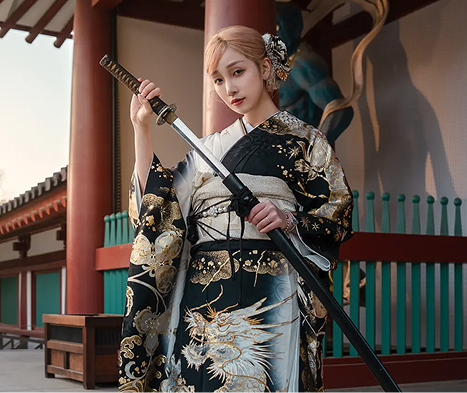 KATANA
 LOCATIONSHOOTING